

Ask for "a truck" to move eight pallets and you could get anything from a 4 tonne rigid that's slightly too small to a semi-trailer that's mostly empty. Neither is ideal. One means a second trip, the other means paying for space you're not using.
Australian freight vehicles come in a fairly standard set of sizes, and once you know roughly how much each one takes, it gets much easier to describe your job and to understand the vehicle that turns up. Here's how truck sizes compare in Australia, from small rigids to B-doubles, with typical deck dimensions and pallet capacities.
How Truck Sizes Are Described in Australia
Rigid trucks in Australia are usually described by how much they carry, so you'll hear "a 4 tonne truck", "an 8 tonne" or "a 12 tonne". That figure is roughly the payload, not the overall weight of the truck. Articulated vehicles are described by their configuration instead: semi-trailer, B-double, road train.
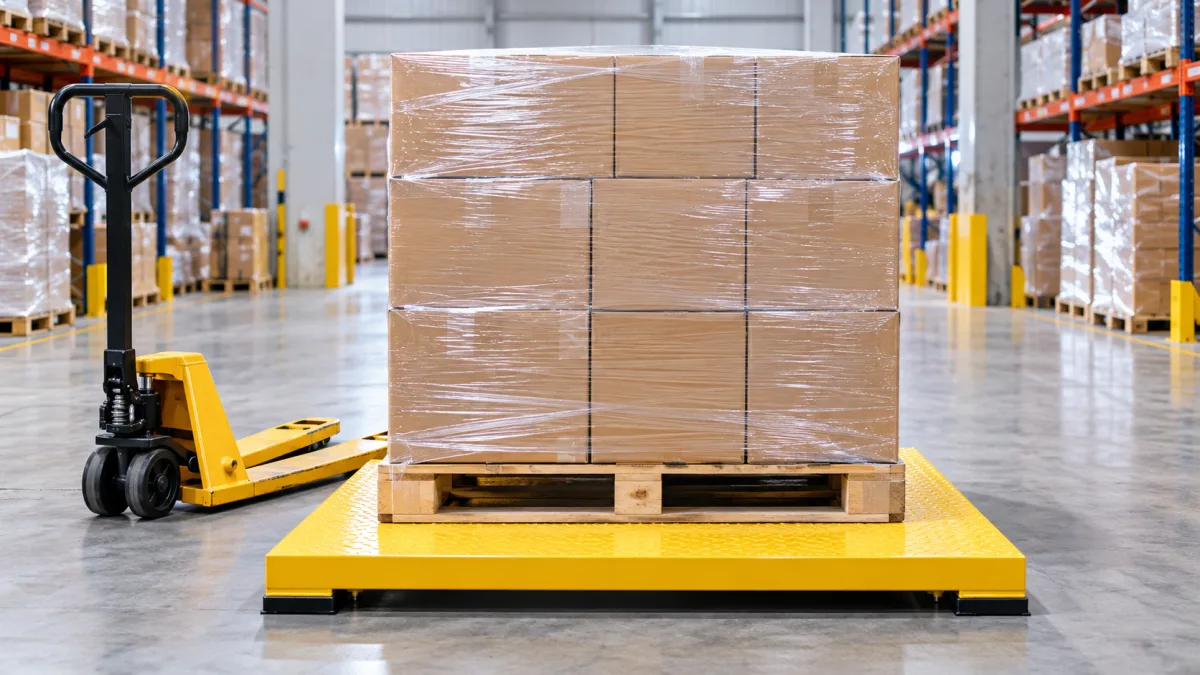
For freight planning, the more useful measure is usually pallet spaces, meaning how many standard 1165 × 1165 mm Australian pallets fit on the deck in a single layer.

Typical Truck Sizes and Pallet Capacity
These are typical figures for common Australian freight vehicles. Actual deck sizes and capacity vary between manufacturers, body builders and fleets, and payload depends on the specific truck's ratings.
| Vehicle | Typical deck size | Typical pallet spaces | Typical uses |
|---|---|---|---|
| Light van or small truck (1 to 3 tonne) | Small box or tray | 1 to 4 | Parcels, a few cartons, single pallets in town |
| 4 tonne rigid | Short tray or body | About 6 to 8 | Small multi-pallet metro deliveries |
| 8 tonne rigid | About 6.0 m × 2.4 m | Up to about 10 to 12 | Metro and regional distribution, tail-lift deliveries |
| 12 tonne rigid | About 7.2 m × 2.4 m | About 12 to 14 | Larger metro runs, part loads |
| Semi-trailer | About 13.6 m × 2.4 m or more | 22 to 24 | Interstate and intrastate linehaul, full loads |
| B-double | Two trailers | Around 34 | High-volume linehaul on approved routes |
The jump from a 12 tonne rigid to a semi-trailer is the biggest step in the range. A semi takes roughly 20 pallets more, which is why part loads between about 14 and 22 pallets often need some thought about whether to split them or book a semi.
Semi-Trailer Dimensions
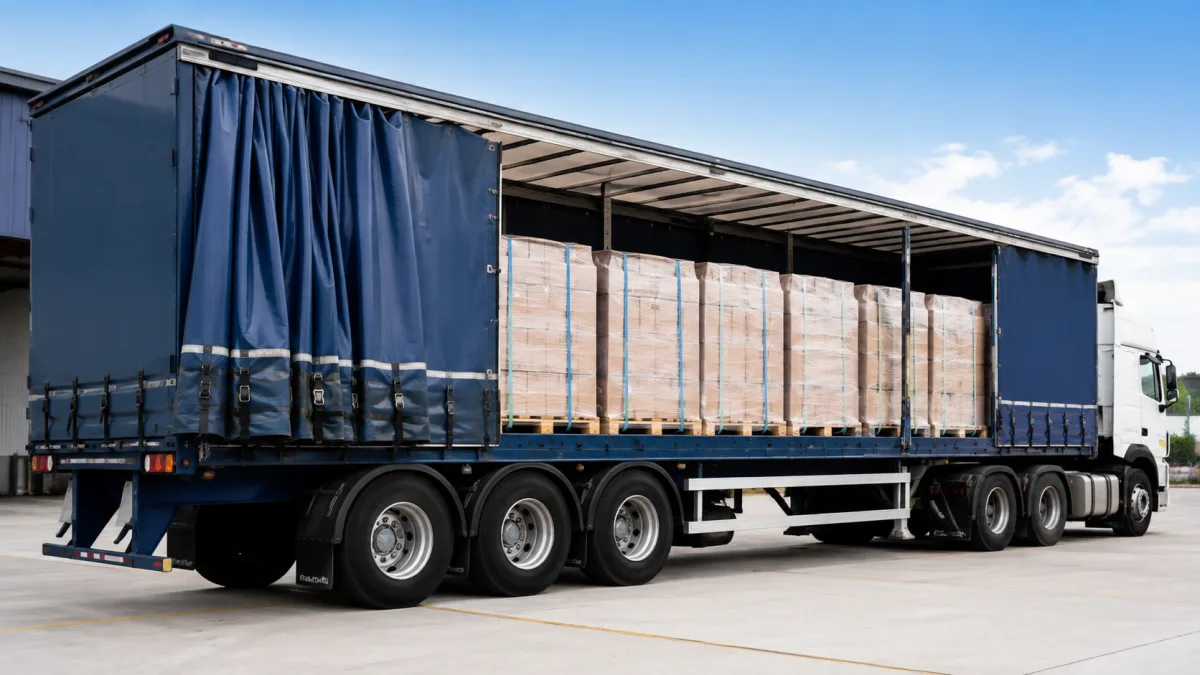
A standard semi-trailer in Australian general freight has a deck of roughly 13.6 metres or more, and internal width of about 2.4 metres on a typical curtainsider. That's what produces the familiar figure of 22 pallets: two pallets across (2,330 mm) and eleven rows deep (about 12.8 m). Some longer trailers fit twelve rows, about 14.0 m, for 24 pallets.
The whole prime mover and semi-trailer combination is limited by law. Under the Heavy Vehicle National Law, a combination like this can generally be up to 20 metres long, or 19 metres if the trailer doesn't have braking that meets the specified Australian Design Rule.
Semi-trailers come in several body types, including curtainsiders, flat tops, drop decks, refrigerated vans and pantechs. Our guide to freight vehicle types explains what each is used for.
B-Double Dimensions
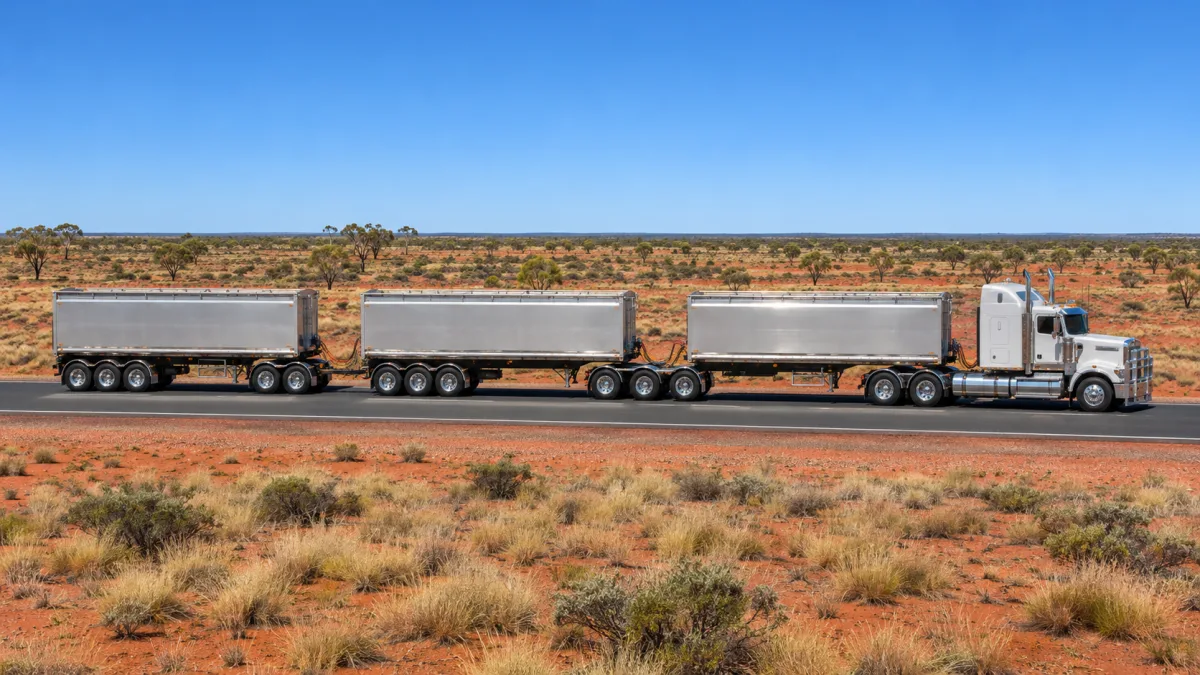
A B-double is a prime mover towing two semi-trailers connected by a fifth wheel on the rear of the first trailer. Under the NHVR's length rules, a B-double is generally limited to 25 metres, and can be up to 26 metres where the trailer setup and prime mover meet specific conditions, including under-run protection and a compliant cab. B-doubles typically carry around 34 pallets and run on approved B-double routes, which include most major cities.
Beyond B-doubles are road trains, which are longer again and limited to their own networks. Our guide to road trains covers their configurations and lengths.
Rigid Truck Dimensions
A rigid truck has its cargo area on the same chassis as the cab. Under the general dimension limits, a rigid truck can be up to 12.5 metres long. In practice, most rigids used in metro and regional freight are well under that, with decks of roughly 4 to 8 metres depending on the class.
Rigids are the workhorses of local and regional delivery because they're easier to manoeuvre in tight streets and loading areas. Many are fitted with tail-lifts for deliveries where there's no forklift.

Width and Height Limits Apply to All of Them
Whatever the size of the truck, the same general limits apply to the vehicle and its load:
- Width: 2.5 metres generally, or 2.55 metres for certain new trucks fitted with specified safety features.
- Height: 4.3 metres generally, with 4.6 metres allowed for some vehicles on approved networks.
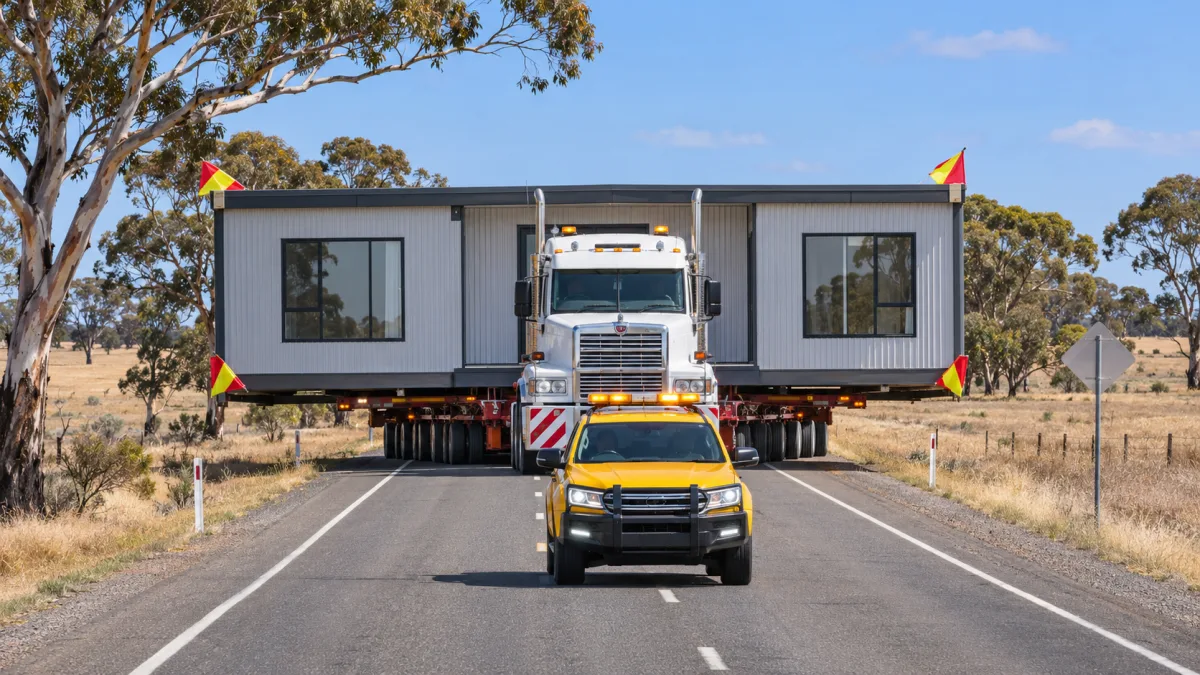
Our post on the 2026 mass and dimension changes explains this year's changes to those limits. Anything wider, taller or longer than the general limits becomes an oversize load with its own rules, which our oversize load guide covers.
Weight Limits Change the Answer for Heavy Freight
Pallet spaces only tell you how much fits on the deck. For heavy freight, weight runs out first. A 4 tonne rigid with six pallets of tiles is likely to be over its payload long before the deck is full. That's why it matters to give real weights, including the pallet, which weighs around 35 to 40 kg empty, as our pallet weight guide explains.
The opposite happens with light, bulky freight. A truck can be full by volume while carrying very little weight. That's where cubic weight comes into the price.
Which Truck Does Your Freight Need?
As a rough guide, work from your pallet count and then check weight and access:
| Your consignment | Usually suits |
|---|---|
| 1 to 4 pallets, metro delivery | A small or 4 tonne rigid, often with a tail-lift |
| 5 to 12 pallets | An 8 or 12 tonne rigid |
| 12 to 14 pallets | A 12 tonne rigid, or part of a semi on a shared run |
| 15 to 24 pallets | A semi-trailer, either full load or shared |
| More than 24 pallets on a busy lane | A B-double, or more than one semi |
Two things can change the answer:
- Site access. A semi can't always get into a narrow street, a small industrial unit or a site with a tight turning area, so a rigid might be the only option even for a larger load. That can mean two trips.
- Shared vs dedicated. On interstate and depot-based freight, you're not booking a whole truck. You're booking space on one. Pallet counts matter most when deciding between a shared consignment and a dedicated vehicle. Our guide to linehaul explains the difference.
Matching the Truck With Ozcoast
Our fleet runs from rigid trucks through to B-doubles, including tail-lift trucks, curtainsiders and flat-beds, and we match the vehicle to the weight, volume, access and timeframe of each job. When you ask for a quote, give us the number of pallets, their dimensions and weight, and anything we should know about access at either end. We'll confirm the vehicle and whether a shared or dedicated service makes more sense for your general freight or interstate freight.