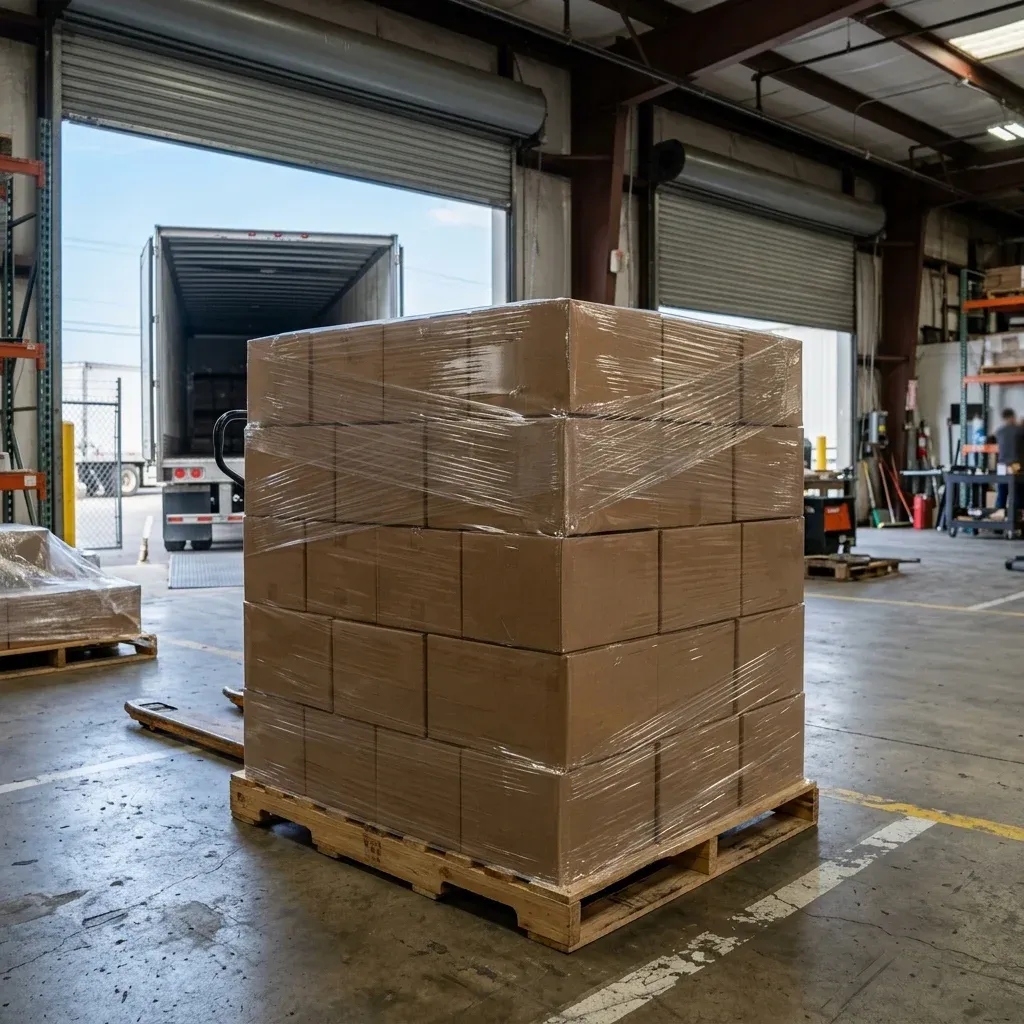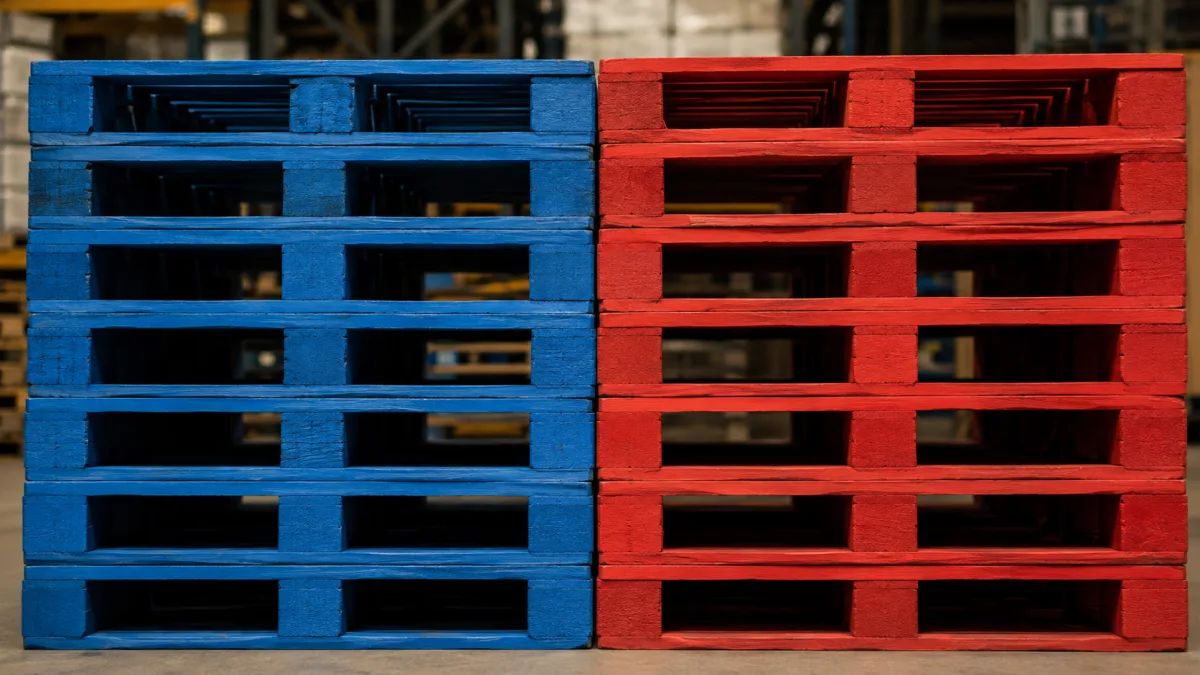
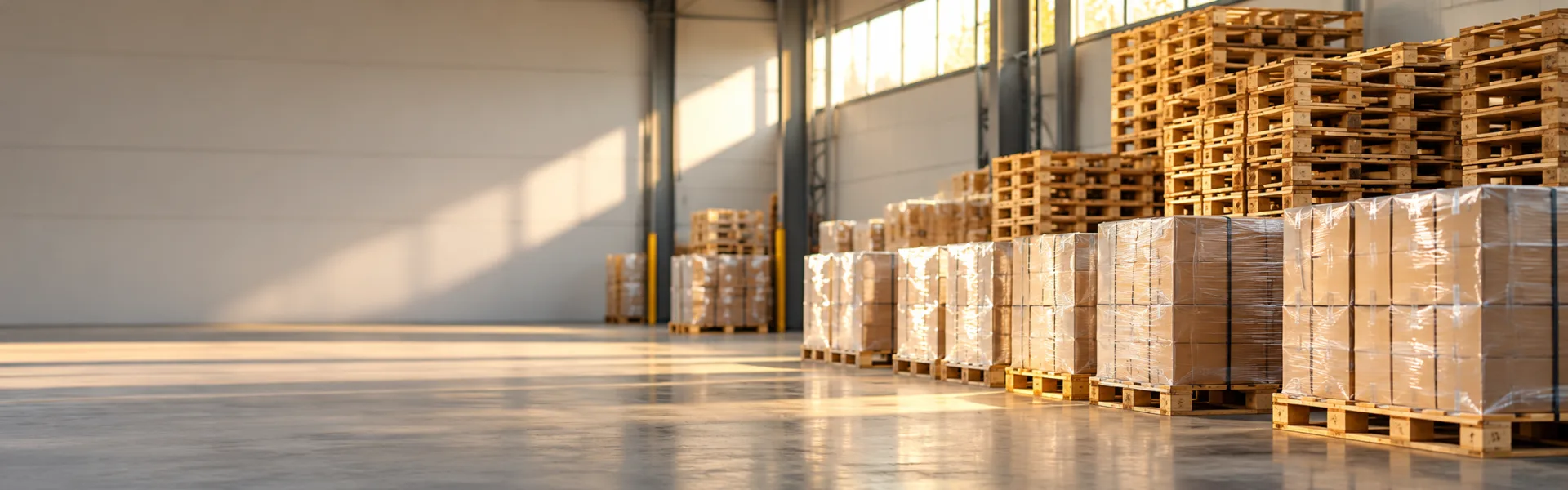
A full semi-trailer of Australian pallets is carrying somewhere around 750 to 850 kg of timber before a single carton goes on. Nobody books freight thinking about the pallets, but they're part of every weight on every consignment note, and they decide more about how freight is handled than most people realise.
Here's what common Australian pallets weigh, how much they're rated to carry, how tall a loaded pallet should go, and how all three affect your freight.
How Much Does a Pallet Weigh?
These are the manufacturers' published tare (empty) weights for the most common pallets in Australian freight:
| Pallet | Footprint | Height of base | Published tare weight |
|---|---|---|---|
| CHEP Australian wooden pallet | 1165 × 1165 mm | 150 mm | 38 kg |
| Loscam Australian pallet (radiata pine) | 1165 × 1165 mm | 150 mm | 34 kg |
| CHEP plastic pallet | See CHEP specification | See CHEP specification | 29 kg |
Why the actual weight varies
Timber pallets aren't uniform, so the published CHEP pallet weight of 38 kg is a nominal figure. CHEP gives a tolerance of plus 25 kg and minus 8 kg on it, and notes that moisture, age and timber characteristics all affect it. A pallet that's been sitting out in the rain can weigh noticeably more than a dry one. Loscam says its pine pallets are 8 to 10 kg lighter than a typical hardwood pallet.
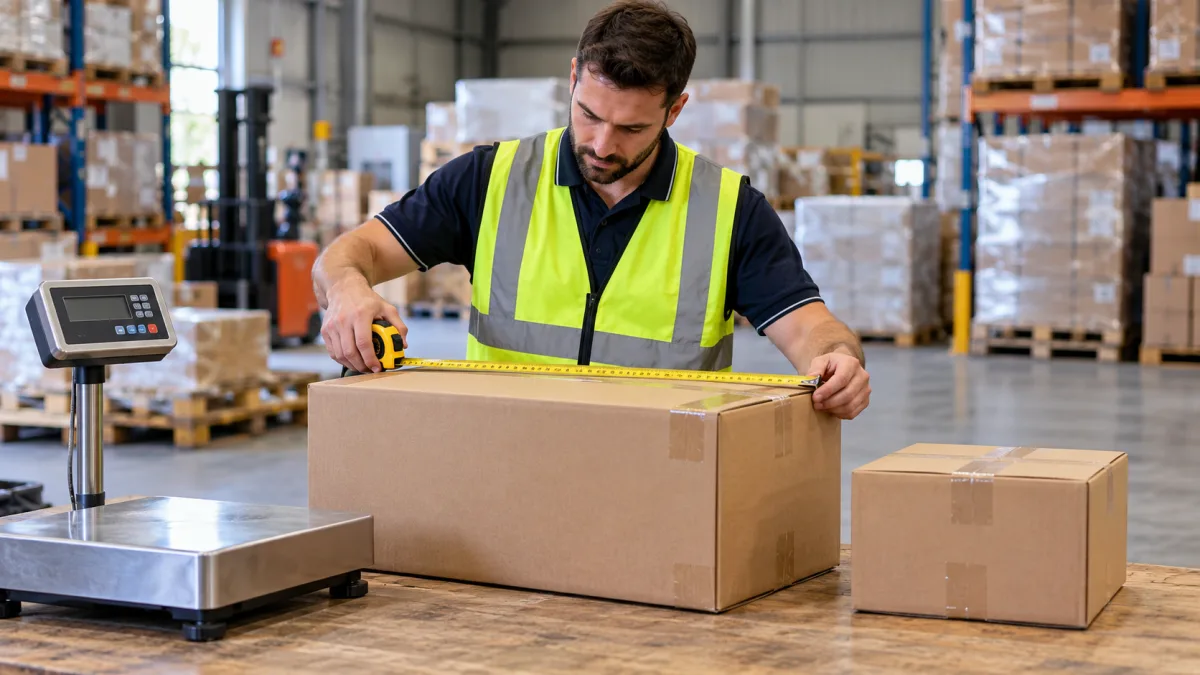
The practical point is that you should weigh the loaded pallet, base included, rather than adding a guessed pallet weight to a product weight. If you're not sure which pallet you're using, our guide to standard pallet dimensions in Australia explains how to tell the main types apart.
Why the Pallet's Weight Matters for Freight
It's part of your dead weight
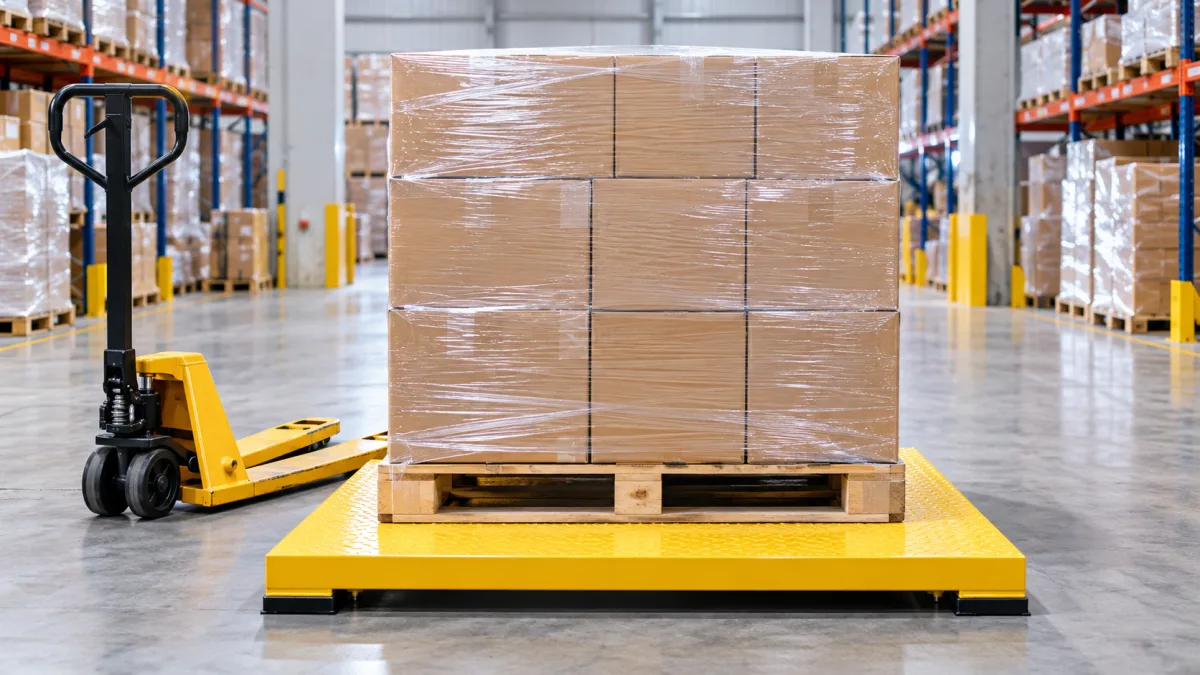
The weight you declare for a pallet consignment is the gross weight: product, packaging, wrap and the pallet itself. Leave the pallet out and every pallet is under-declared by around 35 to 40 kg, more if it's wet. Across a few pallets that's enough to trigger a re-weigh adjustment, and an inaccurate weight on the consignment note also matters for how the load is planned and restrained.
It adds up across a load
Using the published figures, 22 CHEP pallets come to around 836 kg of pallet alone and 22 Loscam pine pallets to around 748 kg. Loscam's own estimate is that its pine pallets save about 220 kg on a 22-pallet load compared with typical hardwood pallets. For light freight that hardly matters. For dense freight that's already close to a vehicle's mass limit, it can be the difference between fitting one more pallet or not.
The base counts in your height
A standard Australian pallet base is 150 mm tall. When you measure a pallet for a quote, measure from the floor to the top of the load, not from the top of the base. Leaving off those 150 mm makes your cubic weight too low as well. Our guide to cubic weight shows how height feeds into the charge.
How Much Weight Can a Pallet Hold?
Pallets are rated for different situations, and the numbers are very different:
| Load rating | What it means | CHEP Australian wooden pallet |
|---|---|---|
| Static load | Pallet sitting on a flat, solid floor, not being moved | 10,000 kg |
| Racking load | Pallet supported in racking, such as drive-in racking | 2,000 kg maximum payload |
| Dynamic load | Pallet being lifted and moved by a forklift or pallet jack | Commonly cited at around 2,000 kg |
The 10,000 kg static figure is what the pallet can bear sitting still on a warehouse floor. It isn't a sensible guide to how much to load onto one for freight. Once a pallet is being lifted, moved, loaded onto a truck and driven across the country, the dynamic figure is the more relevant one, and in practice the pallet's own rating is rarely the limit.
What actually limits pallet weight in freight
The pallet can usually take more than everything around it:
- The forklift or pallet jack at pickup and delivery has its own rated capacity.
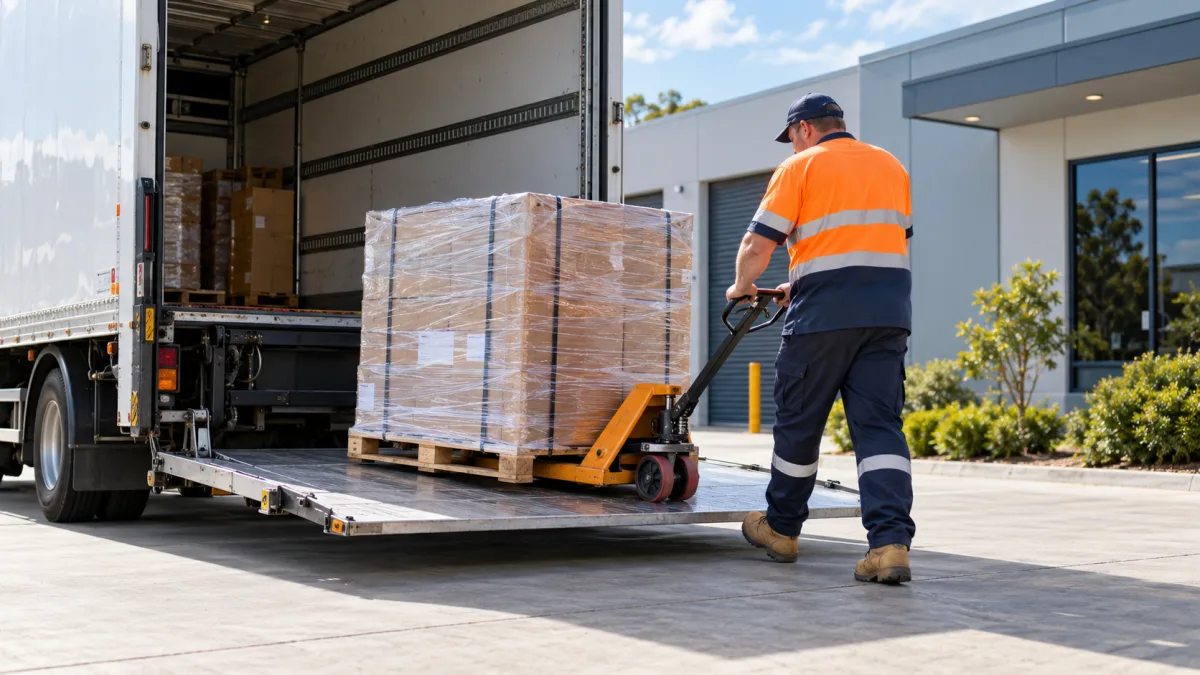
- A tail-lift has a lifting limit that's often well below what a pallet can carry. If the receiver has no forklift, check the pallet weight against the tail-lift before booking. Our guide to tailgate delivery covers this.
- The service you're booking. Pallet freight services often assume pallets within a normal weight range. A very heavy pallet may need confirming, a different vehicle or special handling.
- The vehicle's mass limits. A load of very heavy pallets reaches the truck's legal mass well before it fills the deck.
- The goods themselves. Many products crush, deform or become unstable long before the pallet's limit is reached.
If a single pallet is going to weigh more than you'd normally send, say so at booking and give the actual weight.
How Tall Should a Loaded Pallet Be?
There's no single legal height for a pallet of freight, but there are practical limits, and going over them affects price and handling.
Stability. A tall, narrow stack on a 1165 mm base is far more likely to lean, shift or topple under braking and cornering than a shorter, squarer one. Heavy items belong at the bottom, and the load should sit square within the footprint.
Vehicle and handling space. The internal height of the truck, the receiver's dock and racking, and whether pallets will be double stacked all set an upper limit. Two pallets stacked on top of each other need to clear the vehicle's internal height with room to load them safely.
Price. Over-height and over-width pallets take up more of the truck, so they're priced for the space they use. On our pallet delivery service, a pallet that stays within the standard footprint and a normal height is the most cost-effective way to send.
Stackability. A pallet labelled "do not stack" reserves all the space above it. If your freight can safely take another pallet on top, say so. If it can't, say that too, because it changes how the load is planned.
As a rule, ask your freight provider what height counts as a standard pallet space on the service you're booking, and build to it.
A Quick Pallet Prep Checklist
- Weigh each loaded pallet with the base included, on reliable scales.
- Measure height from the floor to the highest point of the load.
- Keep the load square and inside the 1165 × 1165 mm footprint, with nothing overhanging.
- Put heavy items low and keep the stack stable.
- Note whether the pallet can be stacked on or must not be.
- Check the weight against the forklift or tail-lift at both ends.
- If you're using hired pool pallets (CHEP or Loscam), record the pallet type and count for your pallet account.
Our guide to preparing goods for pallet delivery covers wrapping and stacking in more detail.
Quoting Pallet Freight With Ozcoast
For pallet freight across our national network, send us the pallet count, the dimensions of each pallet including the base, the weight of each, and the pickup and delivery suburbs, and we'll give you an itemised estimate. If any pallet is unusually heavy, over-height or can't be stacked, or the receiver has no forklift, tell us when you ask for the quote so the right vehicle and equipment are booked from the start. Tail-lift trucks are available where there's no forklift on site.