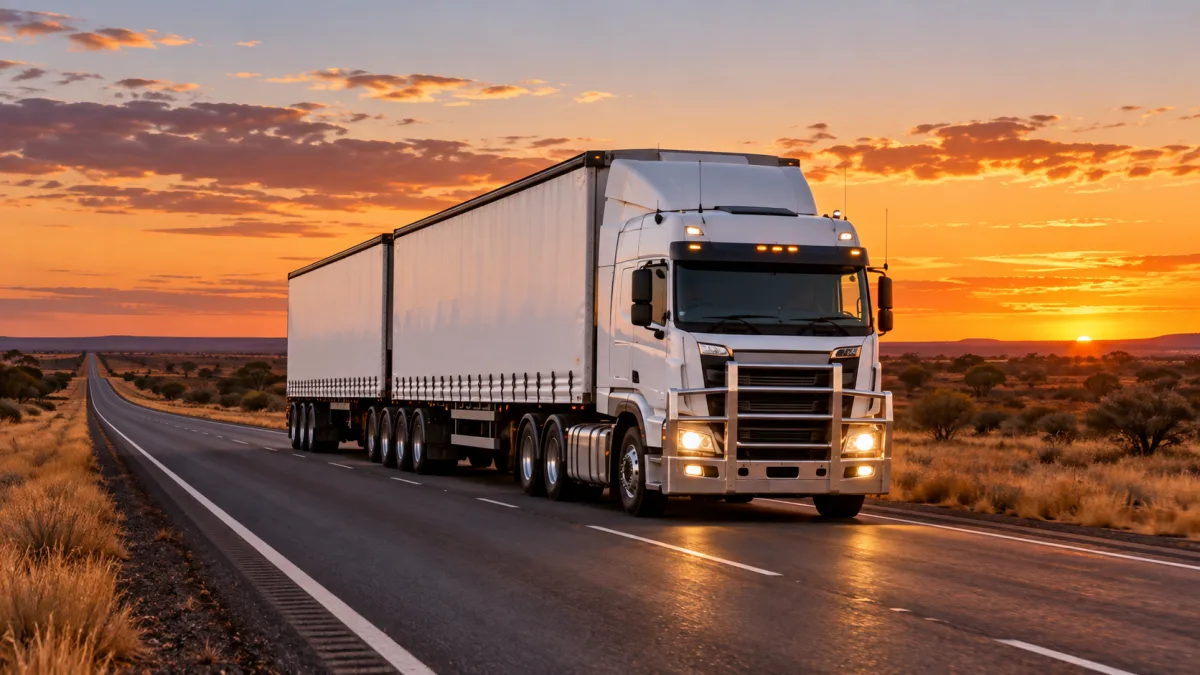
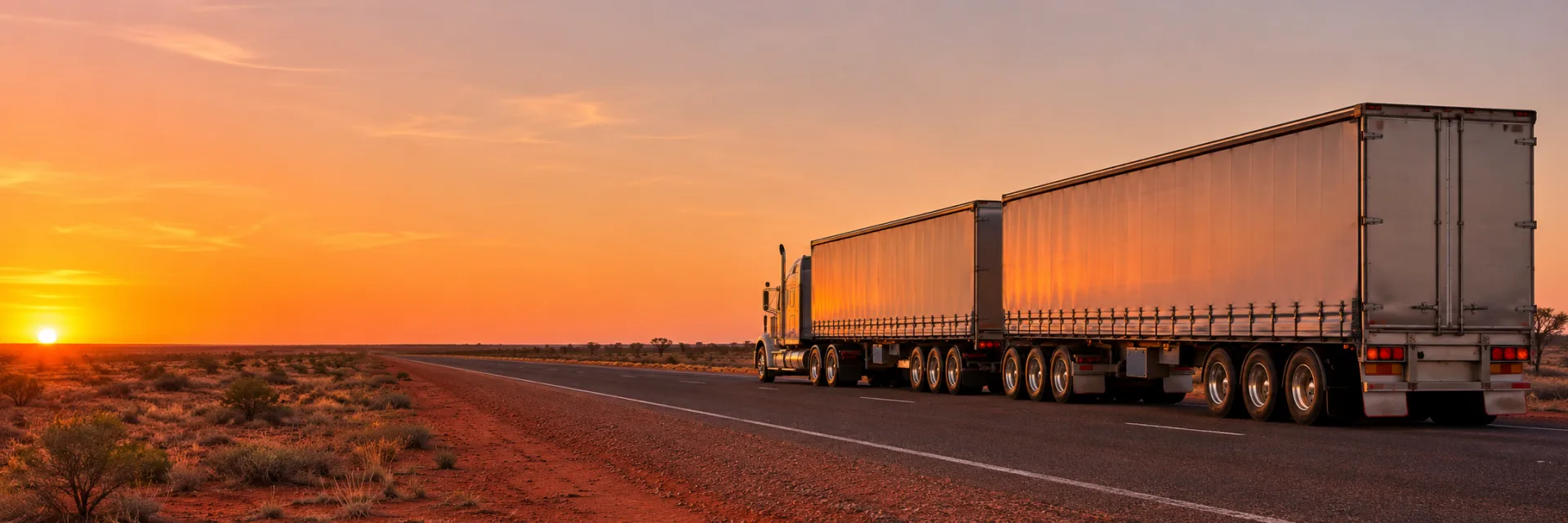
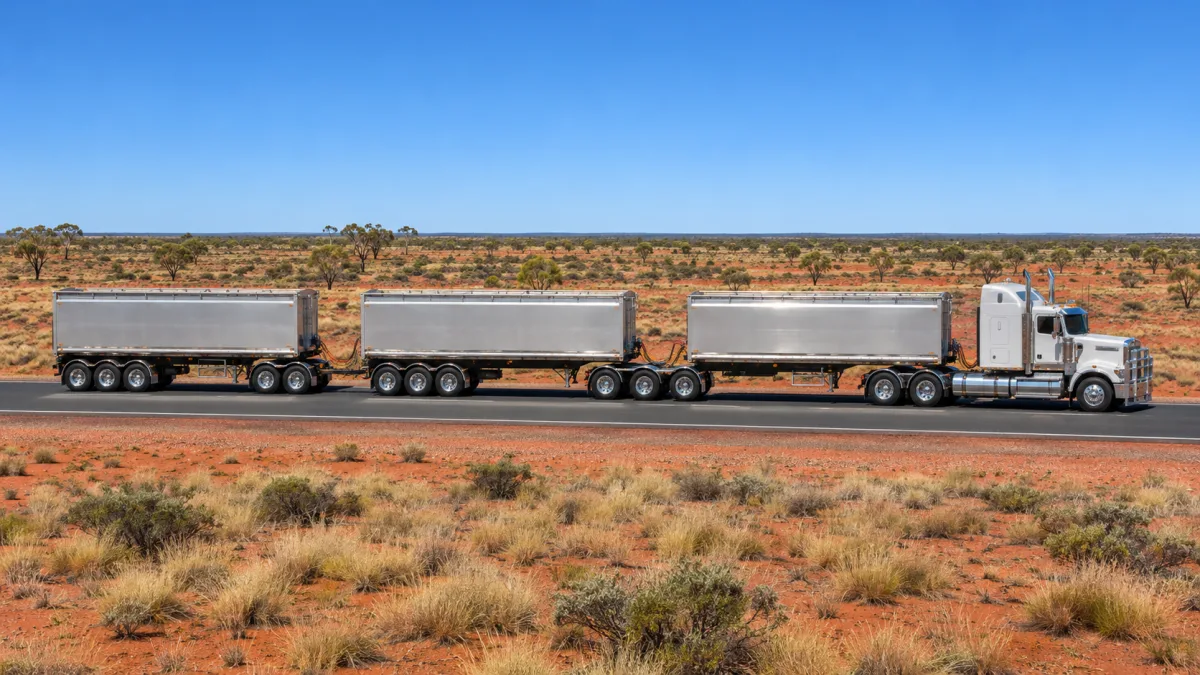
Drive the Stuart Highway, the Barkly or the Great Northern long enough and you'll be overtaken, or more likely passed in the opposite direction, by a prime mover pulling three trailers. Up close it's longer than an Olympic swimming pool. These are road trains, and outside Australia there's almost nothing like them on public roads.
For freight, road trains aren't a curiosity. They're how a large share of goods reach remote and regional Australia economically, and the way they operate affects transit times and costs on long inland lanes. Here's what a road train is, the main configurations, how long they can be, where they're allowed and what it all means for freight.
What Is a Road Train?
A road train is a heavy vehicle combination made up of a prime mover (or, in some cases, a rigid truck) towing two or more trailers, where the combination is longer than a B-double and is classed as a road train under heavy vehicle law. Because a single driver and prime mover move far more freight per trip than a standard semi-trailer, road trains bring the cost per tonne down on long routes with low traffic.
The trade-off is access. Road trains can only use approved roads, and they generally can't travel into the centre of major cities, so the network they use is mostly inland and regional.
The Main Road Train Configurations
The names describe how the trailers are joined.
- An "A" coupling connects two trailers using a converter dolly: a separate set of wheels with a turntable, towed behind the trailer in front.
- A "B" coupling connects them using a fifth wheel mounted on the rear of the trailer in front, with no dolly. A B-double is the familiar two-trailer version of this, and it isn't classed as a road train.
Road trains combine those couplings in different ways:
| Configuration | What it is | Road train type |
|---|---|---|
| A-double | Prime mover, semi-trailer, dolly, semi-trailer | Type 1 |
| B-triple | Prime mover and three trailers joined by B couplings | Type 1 |
| AB-triple (up to 36.5 m) | A B-double with a dolly and a third trailer behind | Type 1 |
| A-triple | Prime mover, three semi-trailers, two dollies | Type 2 |
| AB-triple (longer versions) | A B-double with a dolly and third trailer, at the longer length | Type 2 |
| ABB-quad / BAB-quad | Four-trailer combinations mixing A and B couplings | Type 2 |
Type 1 road trains are the "double" class and Type 2 are the "triple" class, and they're allowed on different networks. Type 2 combinations are generally limited to more remote routes.
How Long Is a Road Train?
Road train lengths depend on the configuration and the network. Under the NHVR's national road train notice, the main length limits are:
| Combination | Length limits under the national notice |
|---|---|
| A-double | 30.0 m or 36.5 m |
| AB-triple | 36.5 m, 42.0 m or 53.5 m |
| A-triple | 53.5 m |
For comparison, a standard B-double is generally limited to about 26 metres. A road train at 53.5 metres is roughly twice the length of a B-double and about three times the length of a standard semi-trailer combination. The weight they can carry also increases significantly, but mass limits depend on the axle configuration, the network and the jurisdiction, so there's no single figure that applies to all road trains.
Where Road Trains Can Run
Road trains only travel on approved road train networks, which are mapped by road authorities and the NHVR.
- Type 1 (double) road trains reach further than many people expect, including parts of regional New South Wales, Queensland, South Australia and Victoria, and specified approaches to some port and industrial areas.
- Type 2 (triple) road trains run mainly in western New South Wales, western Queensland, South Australia, Western Australia and the Northern Territory.
The NHVR's national road train notice covers New South Wales, Queensland, South Australia and Victoria. Western Australia and the Northern Territory set their own road train networks and conditions. In every state, the approved network for a road train depends on its type and length. Searches for routes such as "NSW road train routes" or "QLD road train routes" lead to those official network maps, which are the source of truth for any specific road.
Assembly and breakdown areas
Because road trains generally can't continue into major cities, freight often changes vehicle on the city fringe. Road trains are assembled or broken down at designated assembly areas: Western Australia, for example, has assembly areas at Forrestfield and Northam. There, trailers are coupled up for the long run, or split into separate trailers or smaller combinations for the trip into town. A single road train arriving from the north might become two or three separate deliveries from that point.
What Road Trains Mean for Your Freight
You won't usually choose a road train when you book freight. It's a decision about how the freight moves through the network. It still shapes your costs and timeframes in a few ways.
Long inland lanes can be more cost-effective than distance suggests. On corridors where road trains run, moving more freight per driver and prime mover helps keep linehaul costs down. This matters for freight going to places like the Top End, the Pilbara, western Queensland and outback South Australia.
There's often a change of vehicle at each end. Assembly and breakdown take time, and freight may move to a smaller truck for the final leg into a city or town. Our guide to linehaul explains how the long-distance leg fits with pickup and delivery.
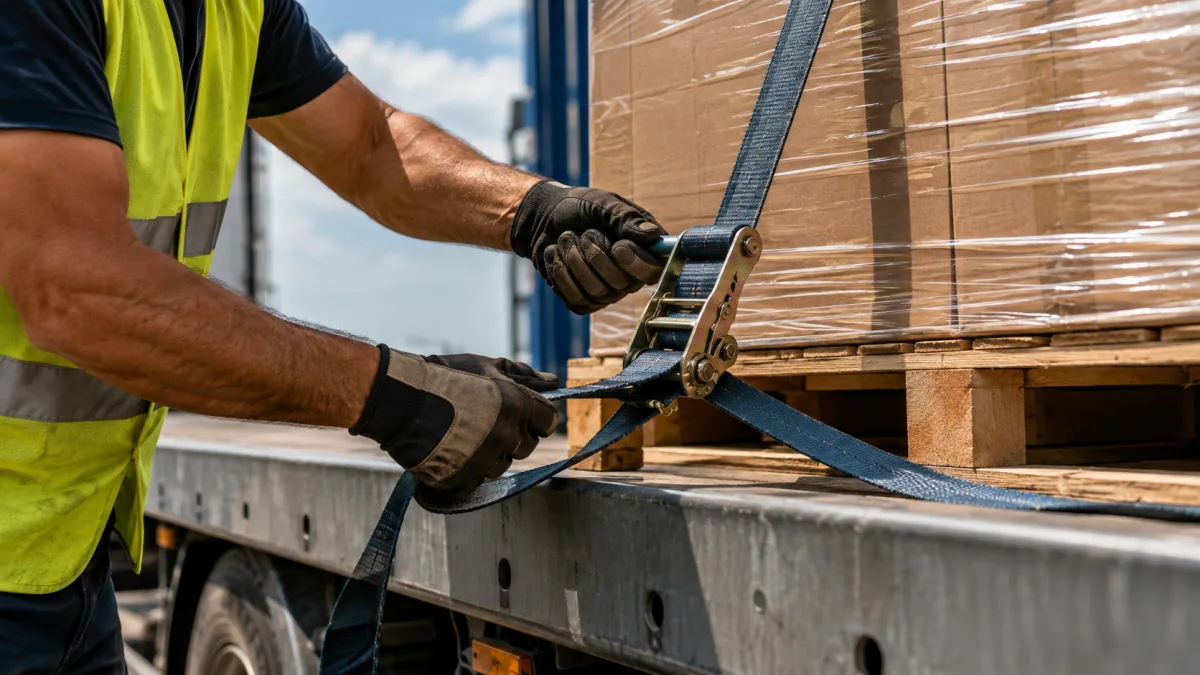
Remote freight still needs to be packed for distance. Long, rough roads and multiple trailers put more stress on freight. Proper palletising and restraint matter even more on these lanes. Our load restraint guide covers the basics.
Seasons matter in the north. Wet season rain and flooding can close roads in northern Australia, and road trains can't simply detour onto roads that aren't on their approved network. Build some flexibility into delivery dates for remote northern freight in the wet.
Road Trains, B-Doubles and Everything In Between
It helps to see road trains in context with the rest of the heavy vehicle fleet:
| Vehicle | Typical use |
|---|---|
| Rigid truck | Metro and regional delivery, smaller loads, sites with tight access |
| Semi-trailer | General freight on most roads, single trailer |
| B-double | Interstate and intrastate linehaul on approved roads, including most major cities |
| Road train (Type 1) | Long regional and inland routes, some port and industrial approaches |
| Road train (Type 2) | Remote inland routes, bulk and long-haul freight |
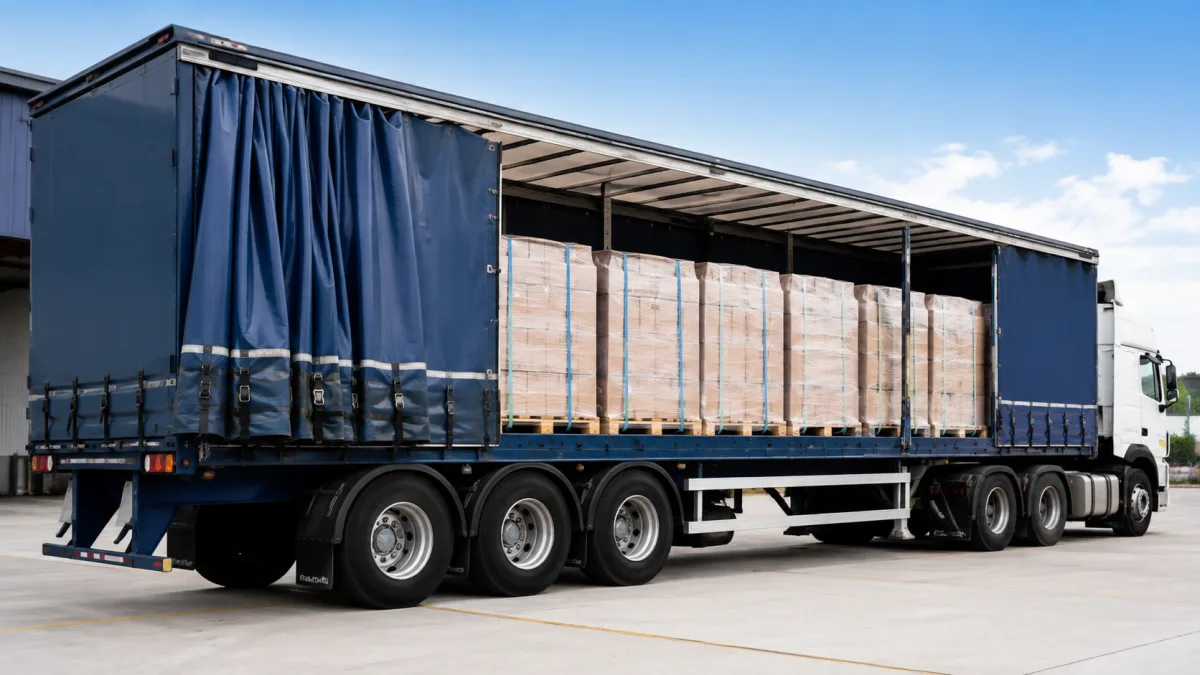
Our overview of freight vehicle types covers trailer types (curtainsiders, flat tops, refrigerated units and low loaders) that can sit within any of these combinations.
Freight on Remote Lanes With Ozcoast
Our fleet runs from rigid trucks through to B-doubles, and we match the vehicle to the weight, volume and timeframe of each job. Across our interstate freight network we cover long inland lanes such as Darwin to Alice Springs and Brisbane to Mount Isa.
If you're sending freight to a remote destination, tell us the delivery town, the site access and any timing that's fixed at the other end. We'll confirm how the freight will move, how long to allow and what packaging the trip calls for.