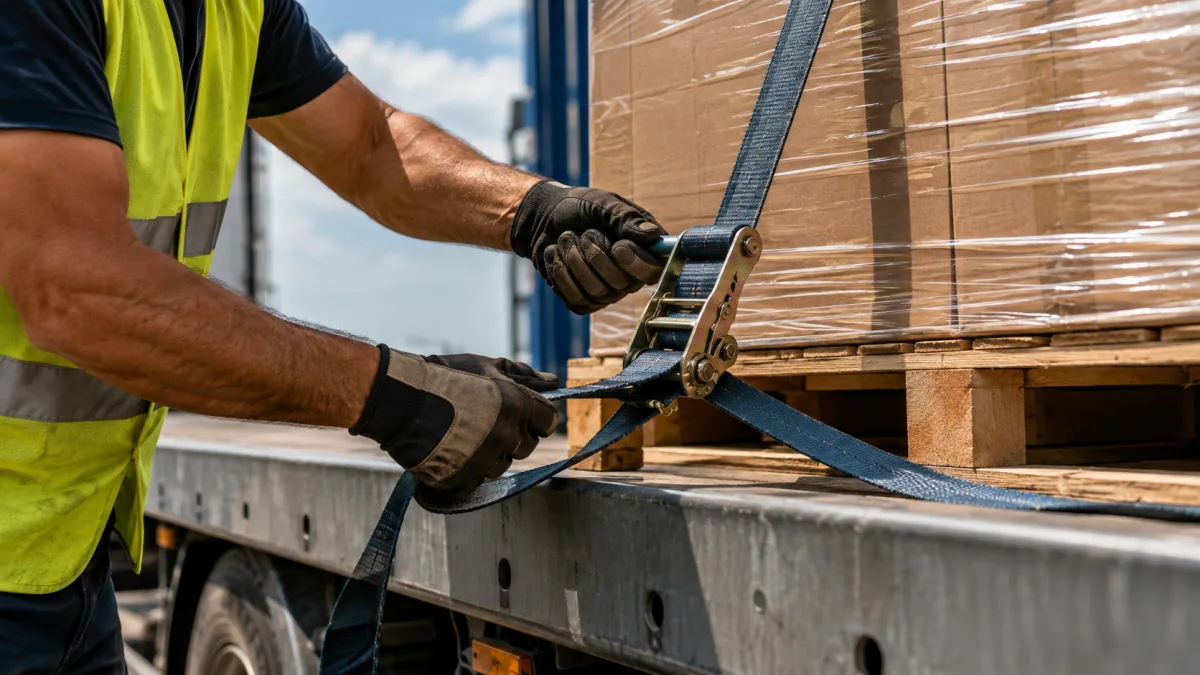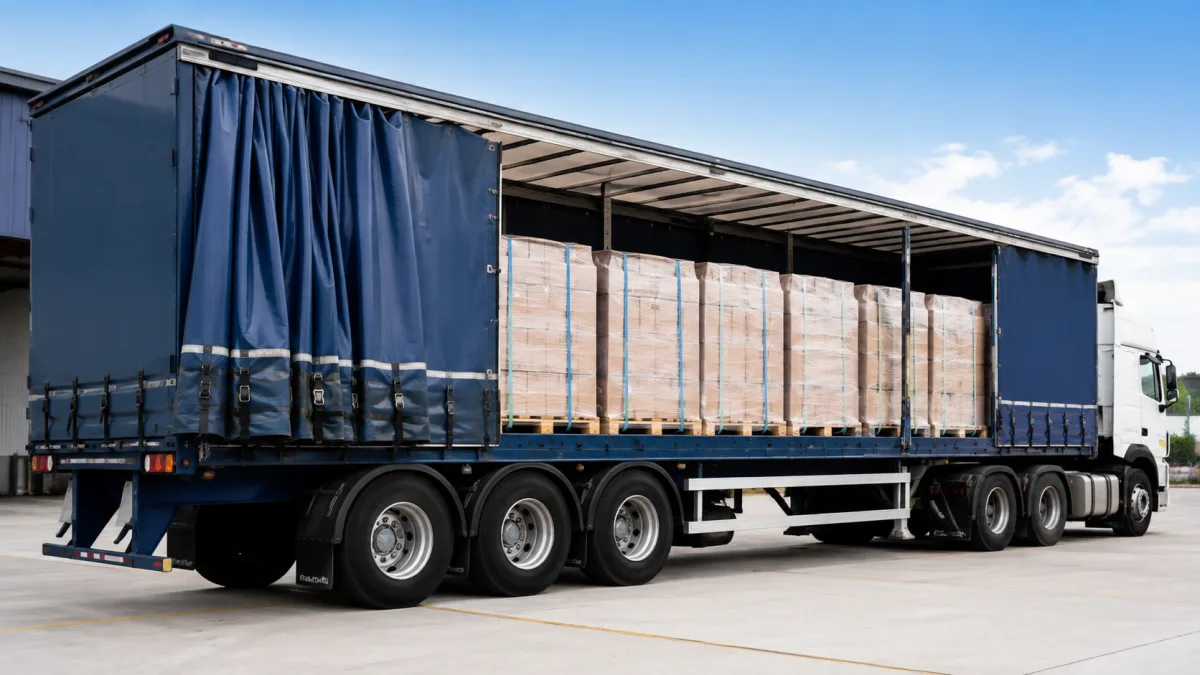

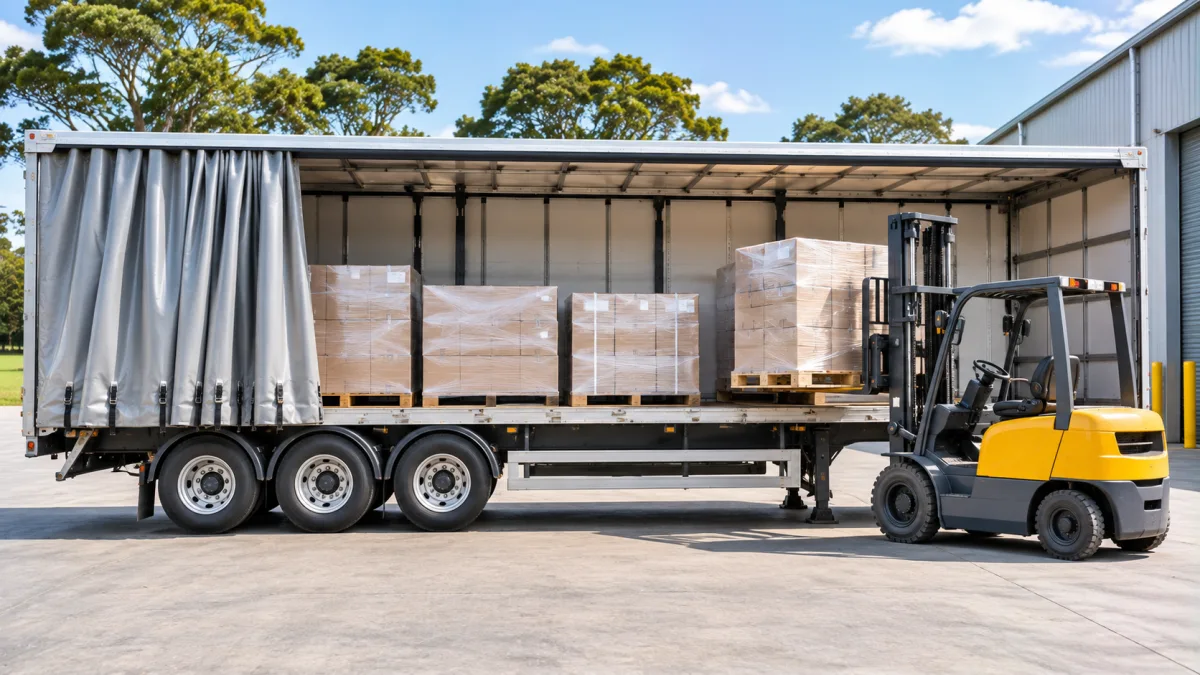
Stand at the gate of any freight depot in Australia and most of the trucks going past have the same shape: a box with a solid roof and front, rear doors, and sides made of heavy fabric pulled tight between the corners. Slide that fabric back and the entire side of the truck is open for a forklift. That's a tautliner, and it carries more of the country's general freight than any other body type.
Here's what a tautliner is, why it's so widely used, what it carries well and badly, and the detail about curtains that a lot of people get wrong.
What Is a Tautliner?
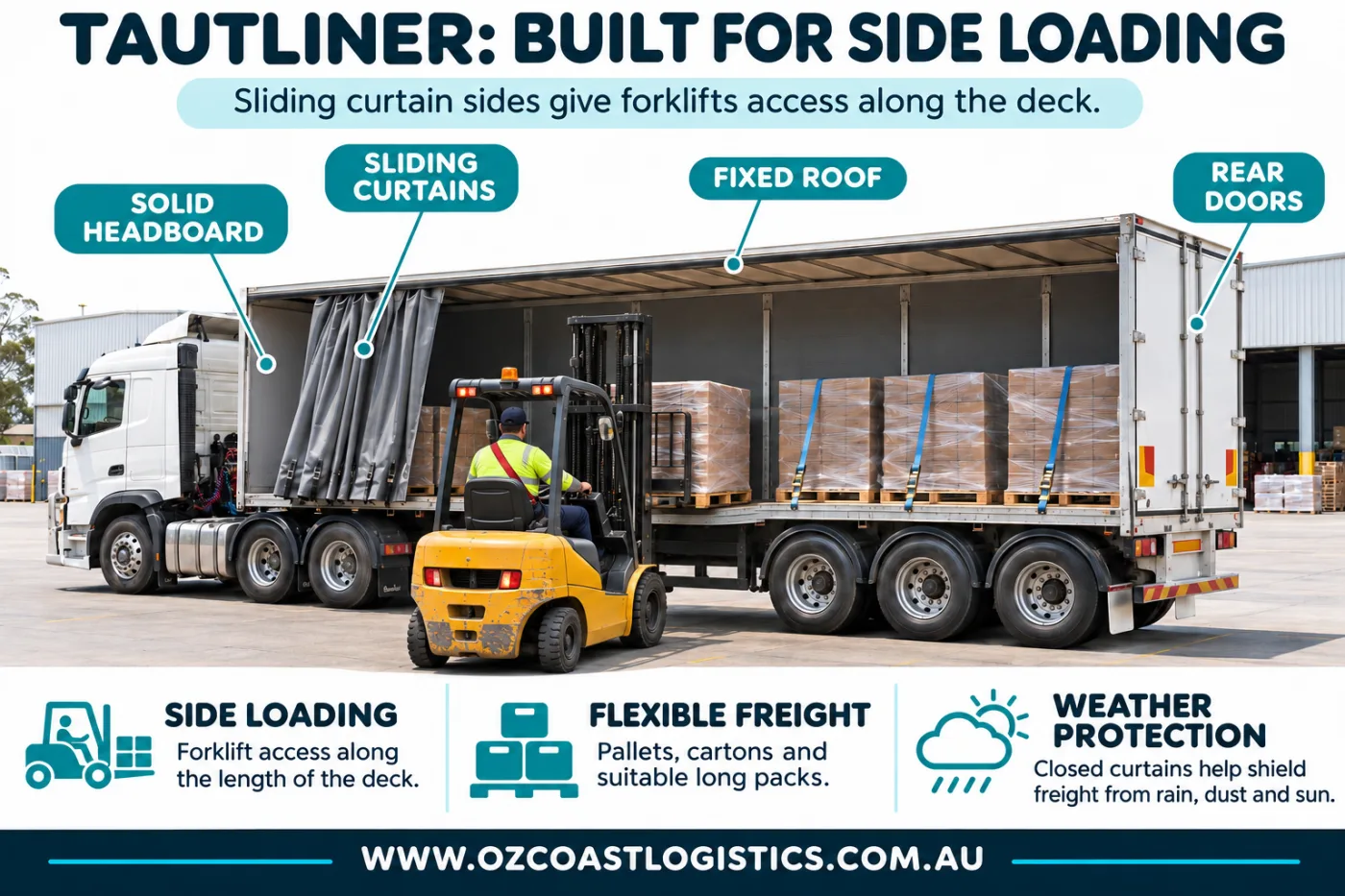
A tautliner is a truck or trailer with curtain sides: heavy-duty PVC fabric curtains that run along rails at the top and can be slid back along the length of the vehicle. When closed, the curtains are tensioned tight ("taut") with buckles and a tensioning system at the rear. The vehicle has a fixed roof, a solid front headboard and usually rear doors.
"Tautliner" started out as a trade name, but in Australia it's used for any curtain-sided vehicle. You'll hear tautliner, curtainsider, curtain-side and taut used interchangeably. They all mean the same thing.
Tautliners come as rigid trucks of various sizes and as semi-trailers and B-double trailers for linehaul. Our guide to truck sizes in Australia covers typical pallet capacities for each.
Why Tautliners Carry So Much General Freight
Side loading
With the curtain back, a forklift can load or unload pallets from the side, along the full length of the deck, without anyone climbing into the truck. At a busy dock that's much faster than loading from the rear only, pallet by pallet.
Flexibility
The same truck can take a full load of pallets one day, mixed palletised and carton freight the next, and long packs of building materials after that, as long as they can be loaded from the side.
Weather protection
Unlike a flat top, a tautliner keeps rain, dust and sun off the freight. For most packaged general freight, that's all the protection it needs.
Mezzanine decks
Some tautliners have a mezzanine deck, a second floor partway up the body. That lets two layers of pallets that can't be stacked on each other travel in the same truck, nearly doubling capacity for lighter freight.
Curtains and Load Restraint: The Part People Get Wrong
It's easy to assume the tight curtain is what holds the load in. Often it isn't. The NHVR's Load Restraint Guide 2025 separates curtains into two kinds:
- Unrated side curtains are for weatherproofing and protecting the load from dust. They are not load restraint, so the load has to be restrained some other way, with straps, blocking or other vehicle structures.
- Rated side curtains have been tested and certified to provide a specific level of sideways restraint, shown on a certification label or document. Even then, they can't be the whole restraint system. The load still needs forward and rearward restraint.
The guide also makes some practical points worth knowing if you load or ship on tautliners:
- Rated curtains can only be used for the loads their certification covers, including load type, weight and whether side gates are needed.
- Gaps in the load should be blocked, for example with empty pallets, so the load presses evenly along the curtain instead of shifting into the gap.
- Stacked and mezzanine loads need curtains certified for them, and the weight of both layers counts against the rating.
- Curtains shouldn't be used to restrain heavy items with sharp edges, or long items that could spear through, such as steel bars or pipes.
- A bulging curtain can push the vehicle over the legal width limit.
- Damage to any part of the curtain system can invalidate its certification.
Our load restraint guide explains who is responsible for restraint and how it fits into the chain of responsibility for everyone involved in a load.

What Tautliners Carry Well
| Good fit | Why |
|---|---|
| Palletised general freight | Fast side loading by forklift, weather protection |
| Mixed pallets and cartons | Flexible floor space, easy to block and restrain |
| Packaged building materials | Long packs can be side-loaded, kept dry |
| Retail and distribution centre deliveries | Fits standard dock and forklift operations |
| Lighter freight in two layers | Mezzanine decks double the usable floor |
When a Tautliner Isn't the Right Truck
- Very high-value or theft-prone goods. A curtain is easier to cut than a solid wall. A pantech, with fixed rigid sides, gives more security.
- Temperature-sensitive freight. That needs a refrigerated body, not a curtainsider.
- Items loaded by crane from above, unless the trailer has a sliding roof. Otherwise a flat top or drop deck is usually better.
- Long sharp or spearing loads, such as steel bar, pipe or some machinery parts, which can damage curtains and need direct restraint.
- Oversize or very heavy machinery, which belongs on a flat top, drop deck or low loader. Our guide to freight vehicle types compares them.
Tautliner vs Pantech vs Flat Top
| Tautliner | Pantech | Flat top | |
|---|---|---|---|
| Sides | Sliding curtains | Fixed rigid walls | None |
| Loading | Side and rear | Rear (and sometimes a side door) | Any side, including from above |
| Weather protection | Yes | Yes | No, unless tarped |
| Security | Moderate | High | Low |
| Typical freight | Palletised general freight | Furniture, high-value goods, parcels | Machinery, steel, long or oddly shaped items |
What It Means When You Ship on a Tautliner
You'll rarely ask for a tautliner by name. It's simply the default for most palletised freight. A few things still help:
- Give the loading crew room to work beside the truck. Side loading needs clear space alongside the vehicle for a forklift.
- Build pallets square, wrapped and within the footprint. It makes restraint and blocking straightforward. Our pallet packaging guide covers how.
- Say whether pallets can be stacked. If they can't, a mezzanine deck may keep everything on one truck.
- Mention anything long, sharp or very heavy, so the right vehicle and restraint are planned.
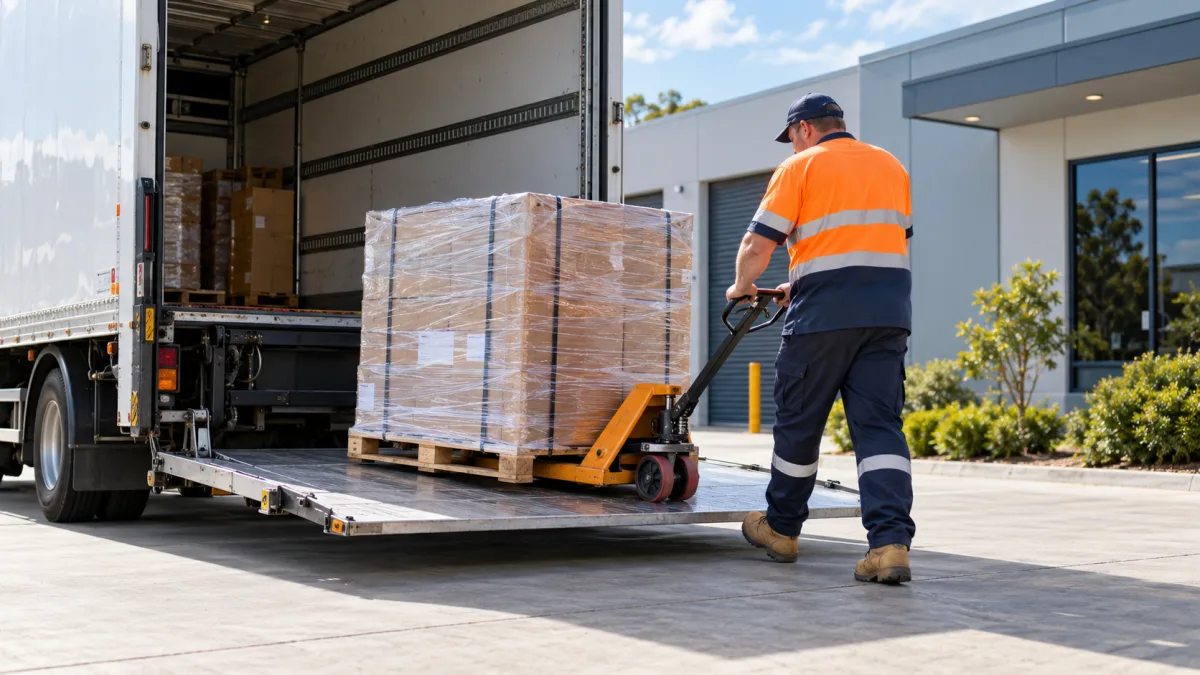
- No forklift at the delivery end? A rigid tautliner with a tail-lift can lower pallets to the ground. Our tailgate delivery guide explains the limits.
Tautliners at Ozcoast
Curtain-siders are a core part of our fleet, alongside tail-lift trucks and flat-beds, and our vehicles range from rigid trucks through to B-doubles. For pallet delivery and general freight, we match the body type and size to what you're sending. Tell us the pallet count, dimensions and weight, whether anything is long, sharp or can't be stacked, and what equipment is available at each end.