A well-built pallet is the single biggest factor in whether your freight arrives in good condition. Loads are stacked, moved by forklift, transferred between vehicles and handled at depots along the way, so a pallet that is stacked squarely and wrapped firmly will outlast one that is rushed. The good news is that getting it right takes only a few minutes and some basic materials. Here is how to prepare goods for pallet delivery.
Start with the right pallet
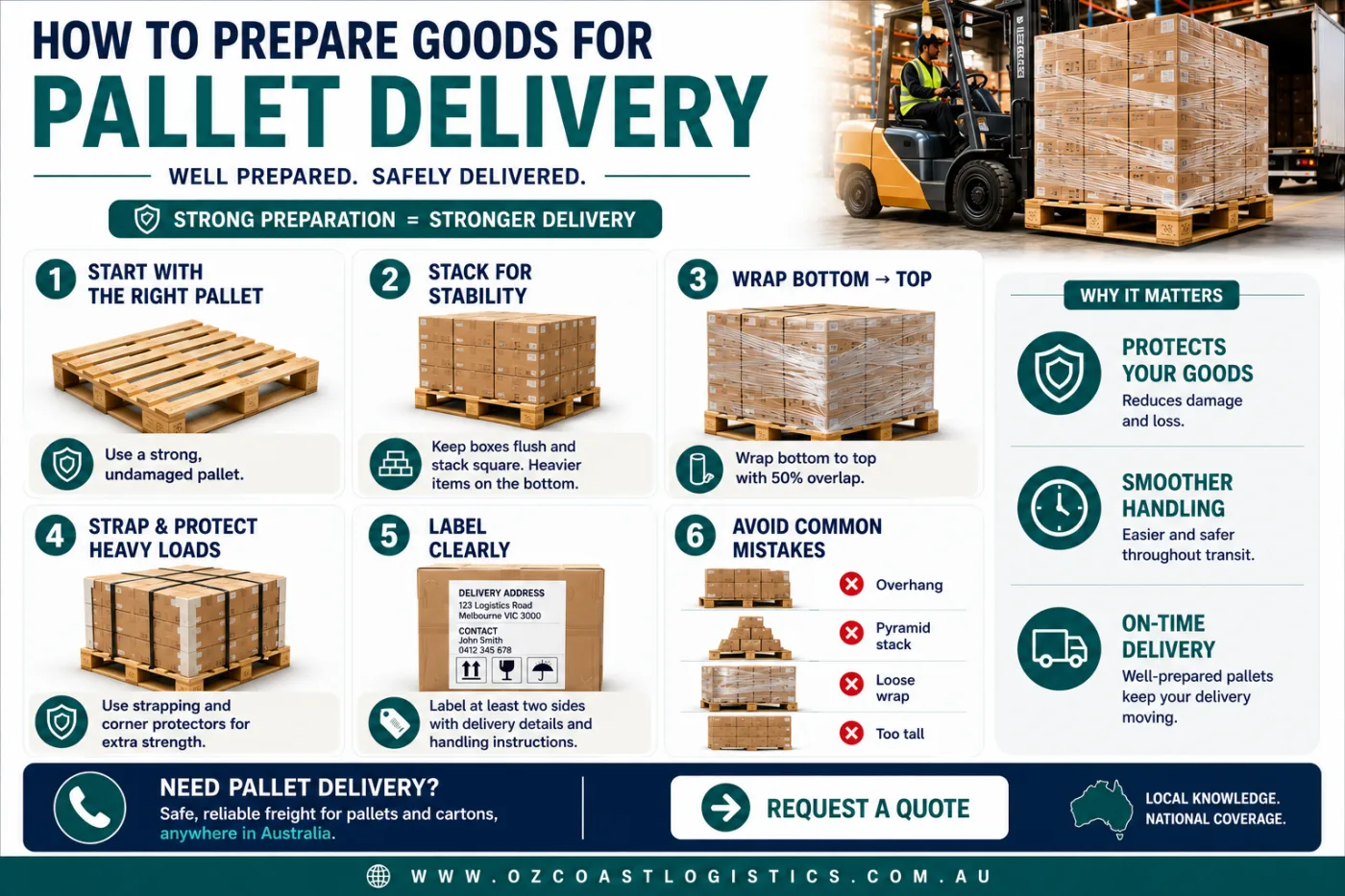
Use a sound pallet that suits the weight and footprint of your goods. The standard Australian pallet is 1165 by 1165 millimetres, while the export-friendly options measure 1200 by 1000 millimetres. Whichever you choose, check that the boards are intact and there are no protruding nails or splits. A damaged base will not survive the trip and can put your whole consignment at risk.
- Match the pallet size to your cartons so there is little overhang.
- Avoid mixing fragile and heavy items on the same base where possible.
- For anything heading overseas later, use heat-treated timber that meets ISPM 15 requirements.
Stack for stability
How you stack matters as much as what you stack on. The aim is a stable, column-like load that will not shift in transit.
Build a solid base
Put your heaviest, sturdiest cartons on the bottom and lighter items on top. Keep boxes flush with the edges of the pallet rather than letting them hang over, because overhanging cartons are the first to be crushed or snagged.
Interlock the layers
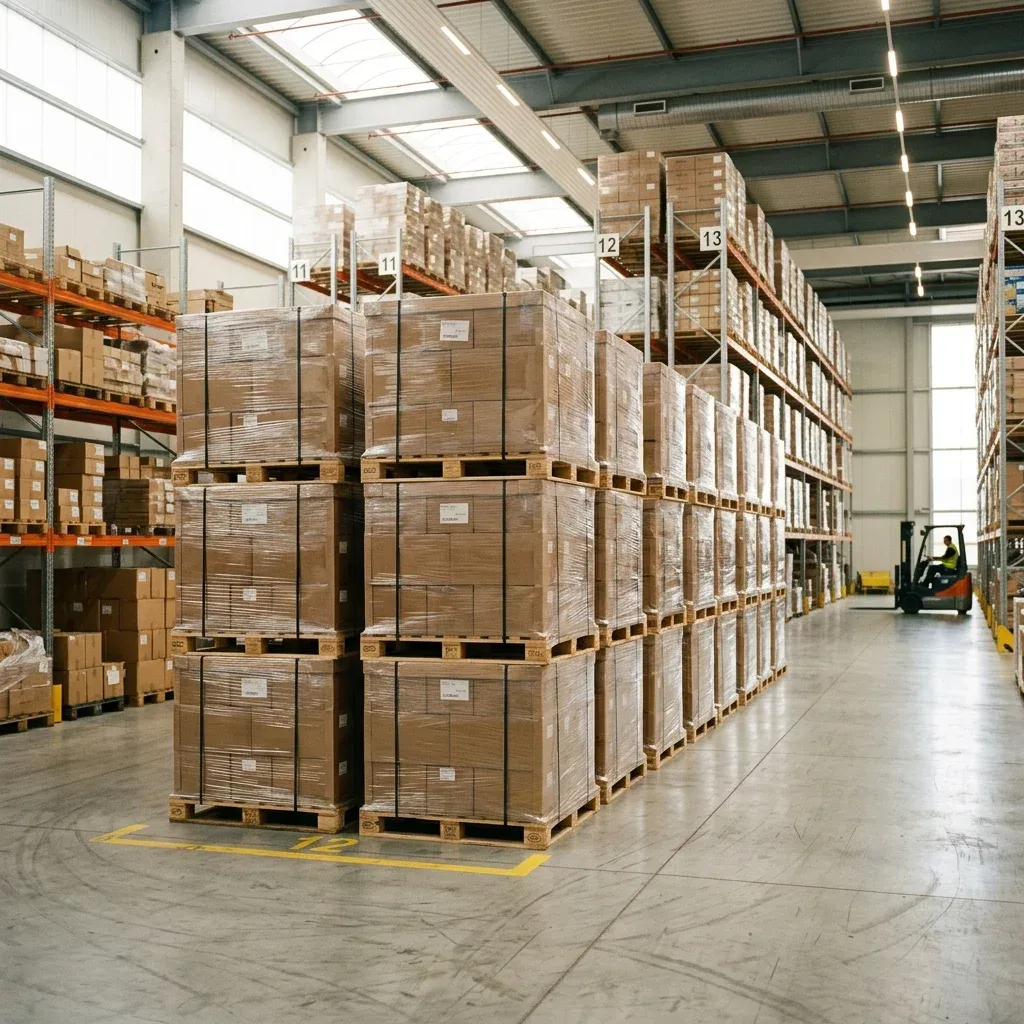
Where carton sizes allow, interlock the boxes like brickwork so each layer ties into the one below. This is far more stable than stacking identical columns straight up. Keep the overall height sensible: a load that is too tall becomes top-heavy and harder to handle safely.
Wrap it firmly
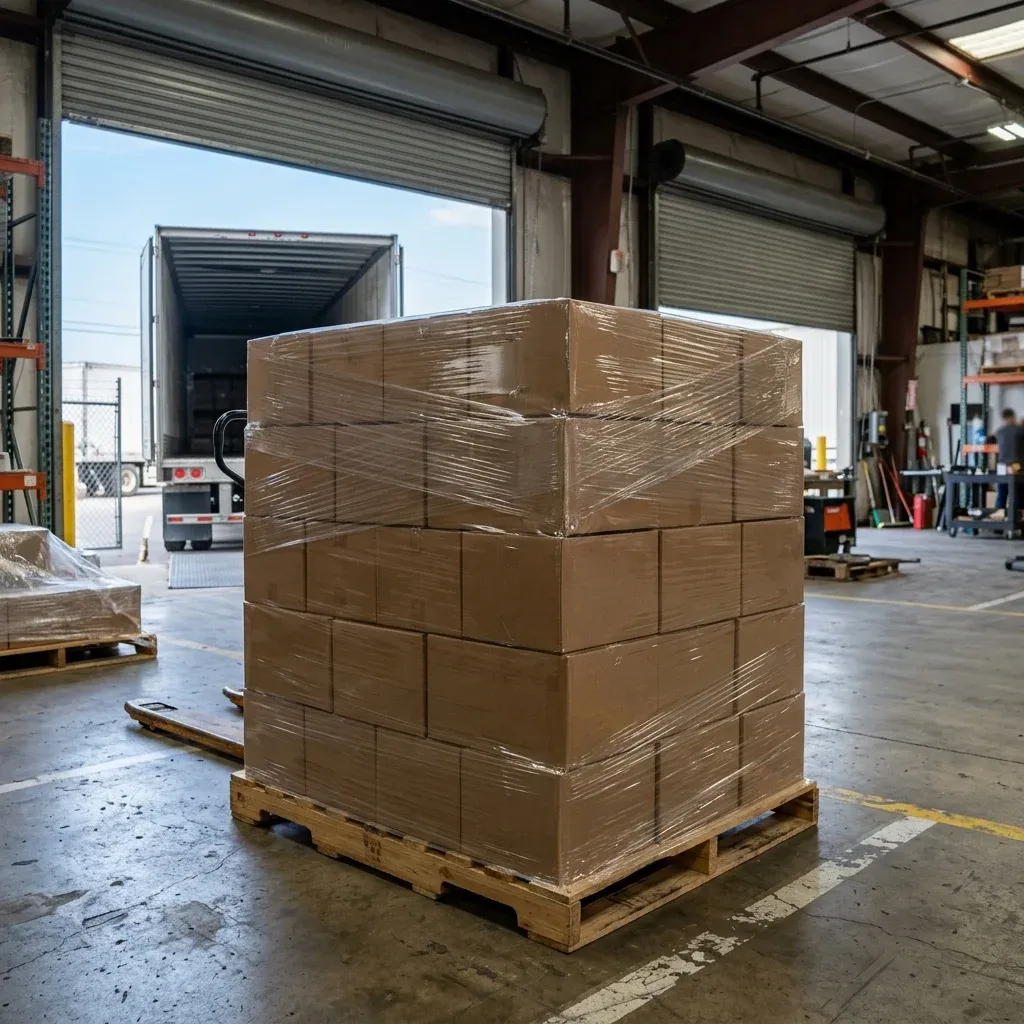
Stretch wrap holds the load together and keeps out dust and moisture. Start at the base and wrap the bottom layer onto the pallet itself a few times to anchor the load, then work upwards with each pass overlapping the last by about half. Finish back at the base. Several firm layers beat one loose pass every time, and a tight wrap stops boxes working loose over a long road journey.
Strap and corner-protect heavy loads
For heavier or denser pallets, add strapping over the top and around the load, and use cardboard or plastic corner protectors under the straps. The corners take the strain and stop the strapping cutting into your cartons. Edge boards along the top also spread the load if anything is stacked above during transit.
Label clearly
Clear labels keep your freight moving and reduce the chance of a misdelivery. Place labels on at least two sides of the pallet at a height that is easy to read, and make sure they show:
- The full delivery address and a contact name and phone number.
- The sender details and your reference or consignment number.
- Handling marks such as "this way up", "fragile" or "do not double stack" where they apply.
Common mistakes to avoid
A few recurring errors cause most pallet damage. Overhanging boxes get crushed. Pyramid stacking, where the load narrows as it rises, leaves the top cartons unsupported. Loose or minimal wrapping lets the load shift. And a load that is simply too tall or too heavy for its base becomes unstable. Avoid these and your freight will travel far more safely.
When to ask for help
If your goods are awkwardly shaped, very heavy, or need to be combined into larger consignments, talk to us before you build the pallet. We can advise on the best approach and, where needed, arrange palletising as part of our broader general freight service. Well-built pallets also travel better over long distances, so the same principles apply whether your goods stay local or move on interstate freight. Getting the preparation right protects your goods, keeps handling smooth and helps your delivery arrive on time. For more guidance, browse the rest of our freight and logistics blog.
Need pallets moved across Australia?
Tell us what you are sending and where, and we will arrange safe, reliable pallet delivery on your timeline.
Request a Quote