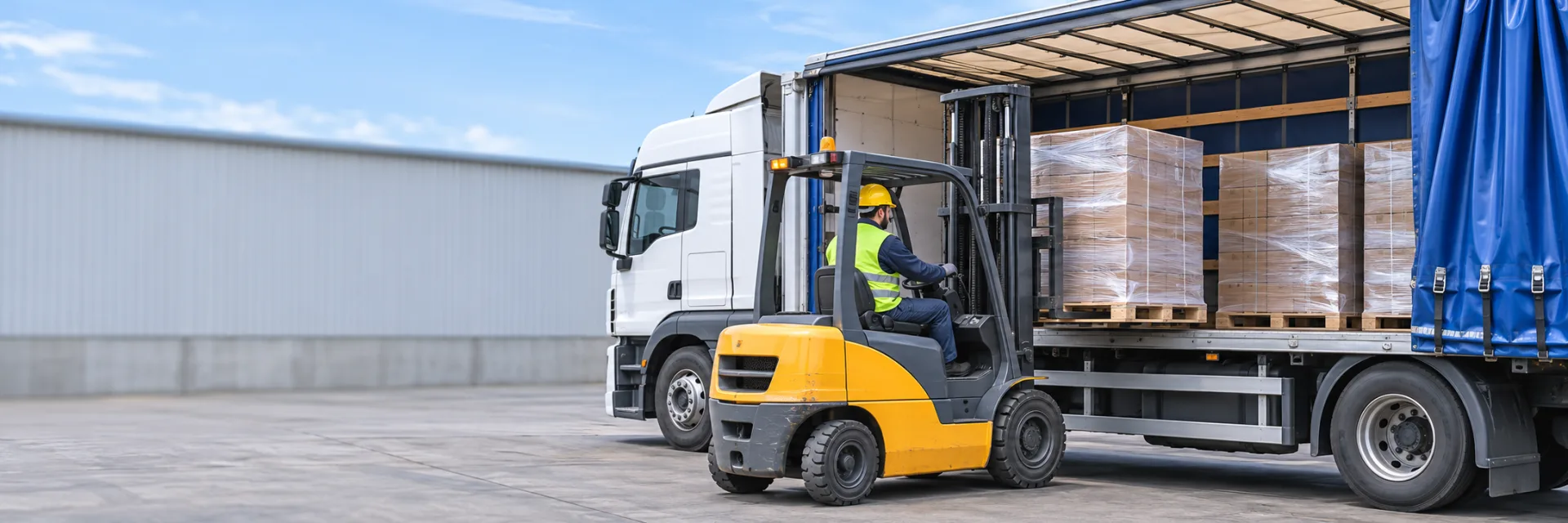
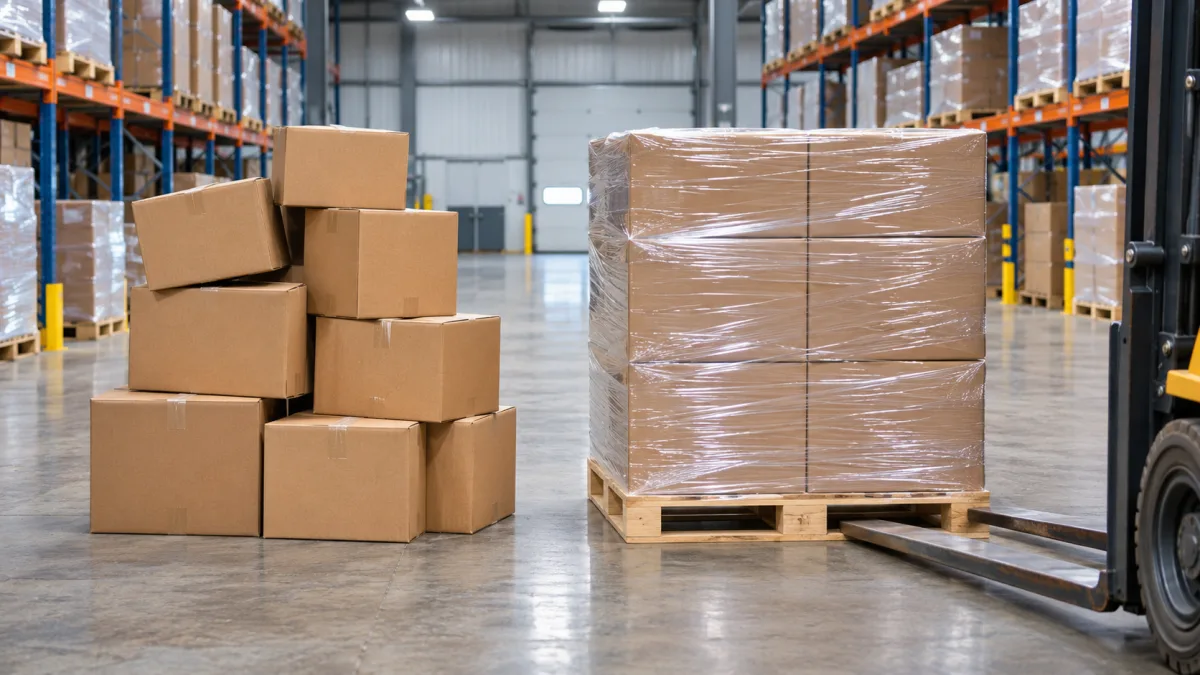
Forty cartons going from a warehouse in Brisbane to a store in Townsville can travel two ways. They can go as forty separate pieces, each one picked up, scanned, loaded, unloaded and handled again at every depot. Or they can go as two wrapped pallets that a forklift moves in a few seconds each. Same goods, same destination, very different freight job.
That's the practical meaning of palletised. Here's what the term means, how palletised freight differs from loose cartons, and how to decide which one your consignment should be, because palletising isn't always the cheaper option.
What Does Palletised Mean?
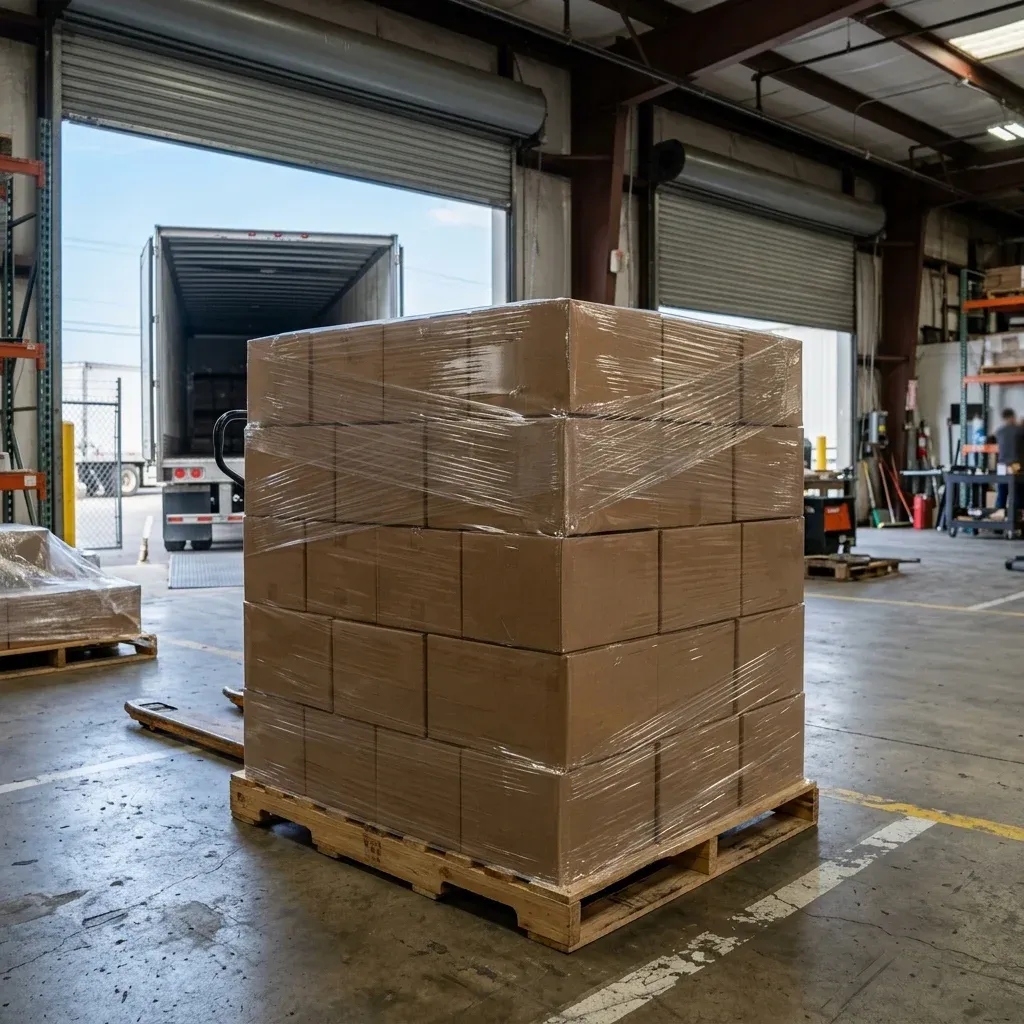
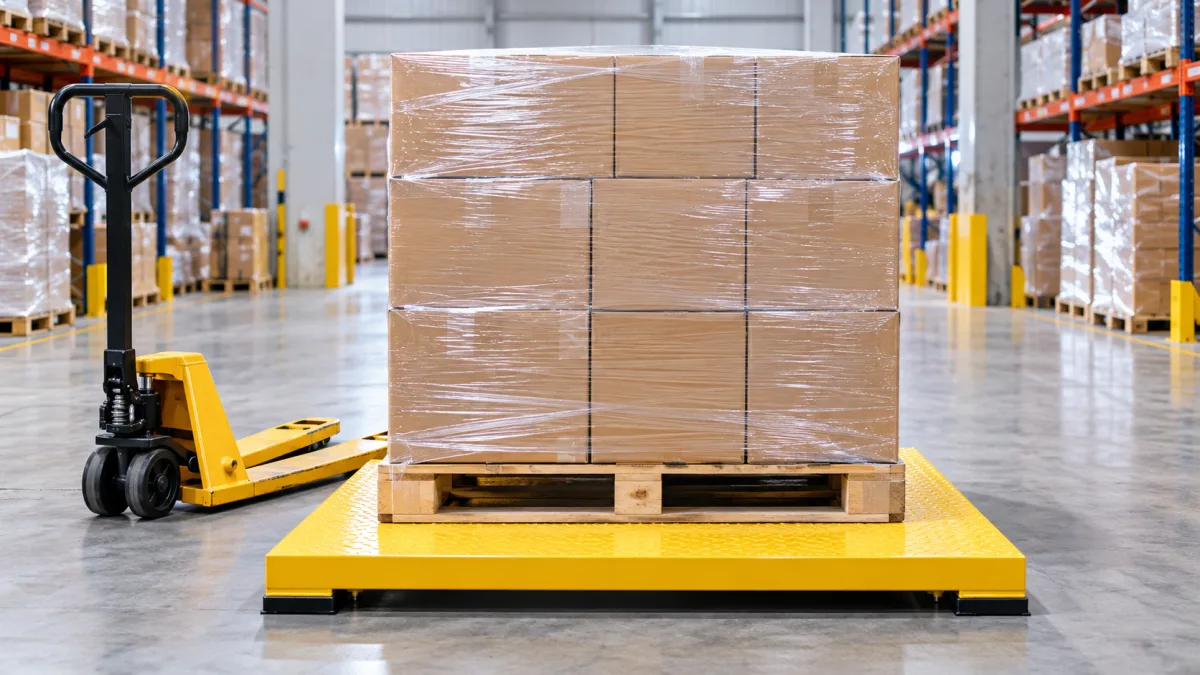
Palletised means goods have been stacked onto a pallet and secured, usually with stretch wrap and sometimes strapping, so the whole load can be lifted, moved and stored as one unit with a forklift or pallet jack. In Australia that pallet is usually the standard 1165 × 1165 mm CHEP or Loscam pallet.
The opposite is loose freight, sometimes called carton freight or loose cartons. That's individual boxes or items sent as separate pieces, each handled by hand.
You'll see the word in freight quotes, warehouse receiving instructions and supplier terms. A receiver asking for "palletised deliveries only" means they don't want to unload loose cartons by hand.
Palletised vs Loose Freight at a Glance
| Palletised freight | Loose cartons | |
|---|---|---|
| Handling | One unit, moved by forklift or pallet jack | Every carton handled separately |
| Handling points on an interstate trip | A few lifts per pallet | Each carton loaded, unloaded and sorted at every stage |
| Risk of items going missing | Low, because the load stays together | Higher, because single cartons can be separated |
| Damage risk | Lower if built and wrapped properly | Higher for fragile items handled many times |
| Receiver needs | Forklift, pallet jack or tail-lift delivery | Can usually be hand unloaded |
| Pricing | Often by pallet space, or chargeable weight including the pallet | Chargeable weight per item, summed |
| Best for | Larger consignments, B2B, warehouse and retail DC deliveries | Small consignments, a few cartons, sites without equipment |
Why Palletising Reduces Handling
On a typical depot-based interstate consignment, freight is handled at pickup, at the origin depot, on and off the linehaul truck, at the destination depot, and again at delivery. Our guide to linehaul walks through those stages.
For a pallet, each of those steps is a forklift lift. For forty loose cartons, each step is forty pick-ups, forty scans and forty chances for a carton to be dropped, crushed under something heavier or end up on the wrong truck. That's why palletised freight generally arrives with fewer missing items and less damage, and why many distribution centres won't accept anything else.
Does Palletising Save Money? Two Worked Examples
This is where it gets less obvious. A pallet adds its own weight and volume. If freight is charged on cubic weight, putting a small consignment on a pallet can actually increase the chargeable weight. These examples use a cubic conversion factor of 250 kg per cubic metre for illustration.
Example 1: Twelve small cartons
Twelve cartons, each 40 × 40 × 40 cm and weighing 10 kg.
Sent loose:
- Each carton: 0.064 m³ × 250 = 16 kg cubic weight (higher than its 10 kg dead weight)
- Twelve cartons: 192 kg chargeable
Palletised: stacked two by two, three layers high, on a standard pallet. The load is 1.35 m tall including the 150 mm base.
- Pallet volume: 1.165 × 1.165 × 1.35 = 1.83 m³
- Cubic weight: 1.83 × 250 = 458 kg chargeable
- Dead weight: 120 kg of cartons plus about 38 kg of pallet = 158 kg
On a cubic weight basis, palletising this consignment more than doubles the chargeable weight. The cartons only cover part of the pallet's footprint, so the freight pays for empty space. Twelve small cartons are usually better sent loose, unless the receiver insists on pallets.
Example 2: Forty cartons that fit the pallet
Forty cartons, each 58 × 58 × 30 cm, a size that sits four to a layer on a 1165 mm pallet with almost no gap.
Sent loose:
- Each carton: 0.1009 m³ × 250 = 25.2 kg cubic weight
- Forty cartons: 1,009 kg chargeable
Palletised: two pallets, five layers each, 1.65 m tall including the base.
- Each pallet: 1.165 × 1.165 × 1.65 = 2.24 m³, or 560 kg cubic weight
- Two pallets: 1,120 kg chargeable
Here the gap is only about 11 percent. In exchange, forty handling units become two. Damage and loss risk drop, loading is faster, and the freight can be delivered by forklift or tail-lift. Many pallet services are also priced by pallet space rather than purely by kilogram, which often makes two well-built pallets cheaper than forty loose cartons.
What the examples show
Palletising pays when the cartons fill the pallet well and the consignment is big enough to justify a pallet. It costs more when a few small cartons sit on a mostly empty pallet. Carton sizes that match the pallet footprint make the biggest difference of all. If you ship the same products regularly, it's worth checking how well your cartons fit a 1165 mm pallet. Our guide to standard pallet dimensions covers the footprints.
When Palletised Is the Right Choice
- Consignments of more than a handful of cartons, especially if they fill most of a pallet layer.
- Deliveries to distribution centres and retailers, many of which require palletised freight and booked delivery slots.
- Heavy or dense goods, which are safer moved by forklift than by hand.
- Fragile goods, where fewer handling points mean fewer chances for damage, provided the pallet is built properly.
- Interstate and regional freight with several depot stages, where every saved handling point counts.
When Loose Cartons Make More Sense
- A few small cartons, where a pallet would add more cubic weight than it saves.
- Receivers with no forklift, pallet jack or space to break down a pallet, such as some residential or small retail addresses.
- Mixed destinations. Cartons going to different addresses can't share a pallet.
- Irregular items that won't sit squarely on a pallet without overhanging it.
A mixed approach is common too. The bulk of a consignment goes palletised, and the odd extra carton goes loose, rather than starting a second, mostly empty pallet.
Making Palletised Freight Work
If you palletise, a few things decide whether it actually delivers the benefits:
- Build it properly. Stack square, keep it within the footprint, put heavy items at the bottom and wrap it tight. Our pallet packaging guide covers this step by step.
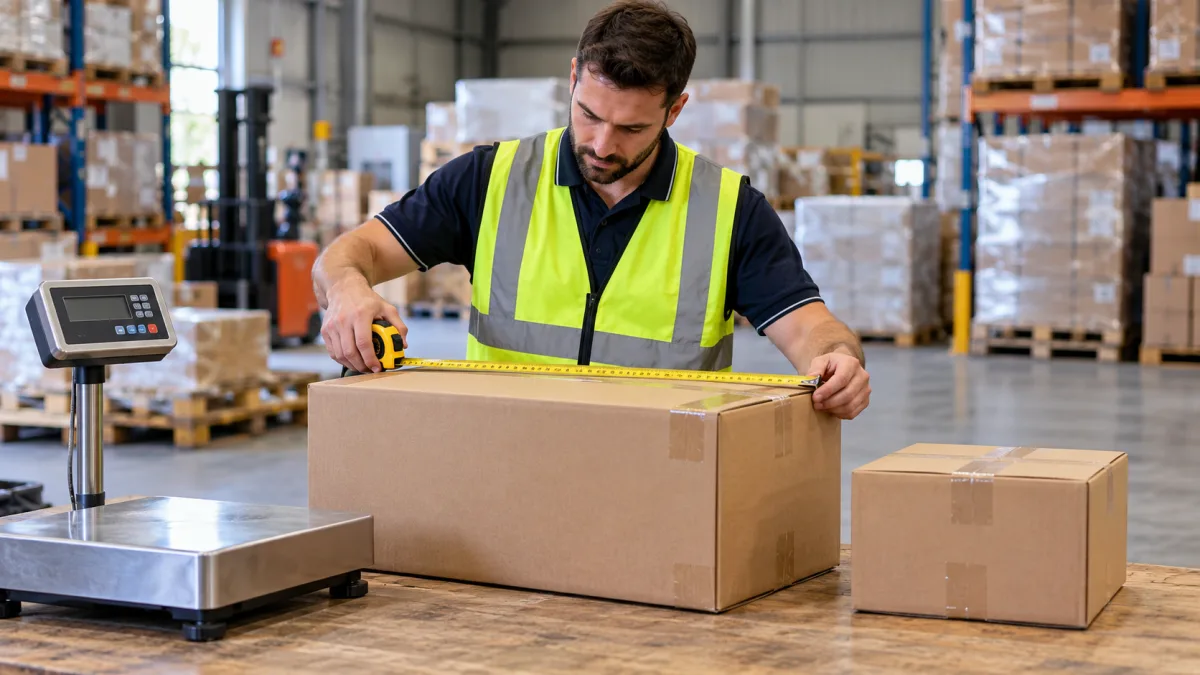
- Weigh and measure the finished pallet, base included. The pallet weight guide explains what Australian pallets weigh empty.
- Know your pallet type. If you use pool pallets from CHEP or Loscam, record them correctly so your pallet account stays accurate.
- Check the receiving end. Confirm there's a forklift, or book a tail-lift delivery if there isn't.
Sending Palletised Freight With Ozcoast
Our pallet delivery service moves single pallets through to full loads across our national network, with tail-lift trucks where the receiver has no forklift. If you can't decide between loose cartons and pallets for a consignment, send us the carton count, carton size and weight, and the destination, and we'll tell you which way is likely to work out better.