
Most people assume a pallet is just a pallet, one standard size everyone uses. In practice, Australia has a few different standards in circulation, and the difference matters more than it seems when you're working out how much freight fits on a truck or comparing a quote against what you expected.
Here's what the main pallet types actually measure, what's genuinely different between them, and why it affects your freight.
The Standard Pallet Sizes Used in Australia
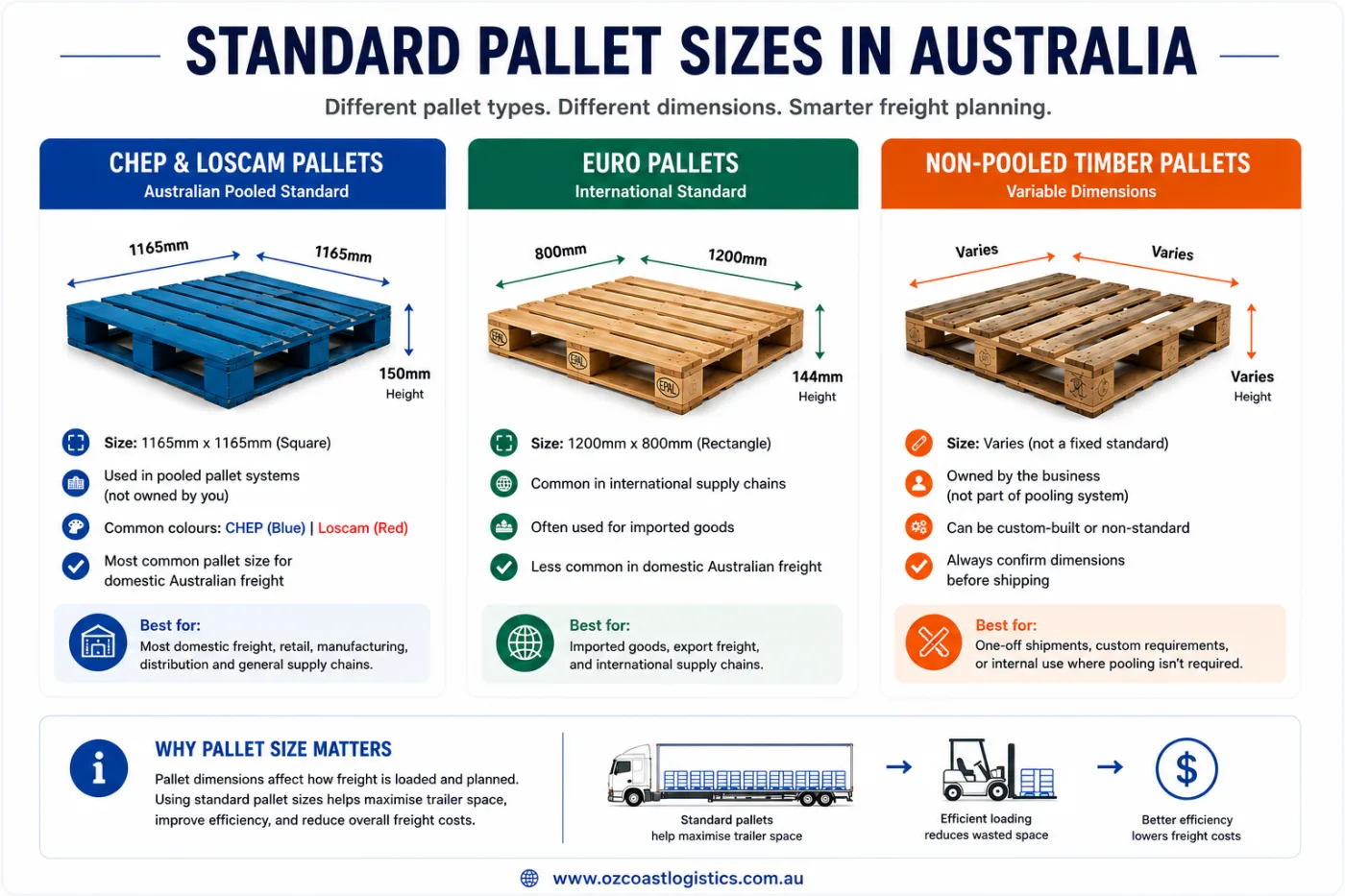
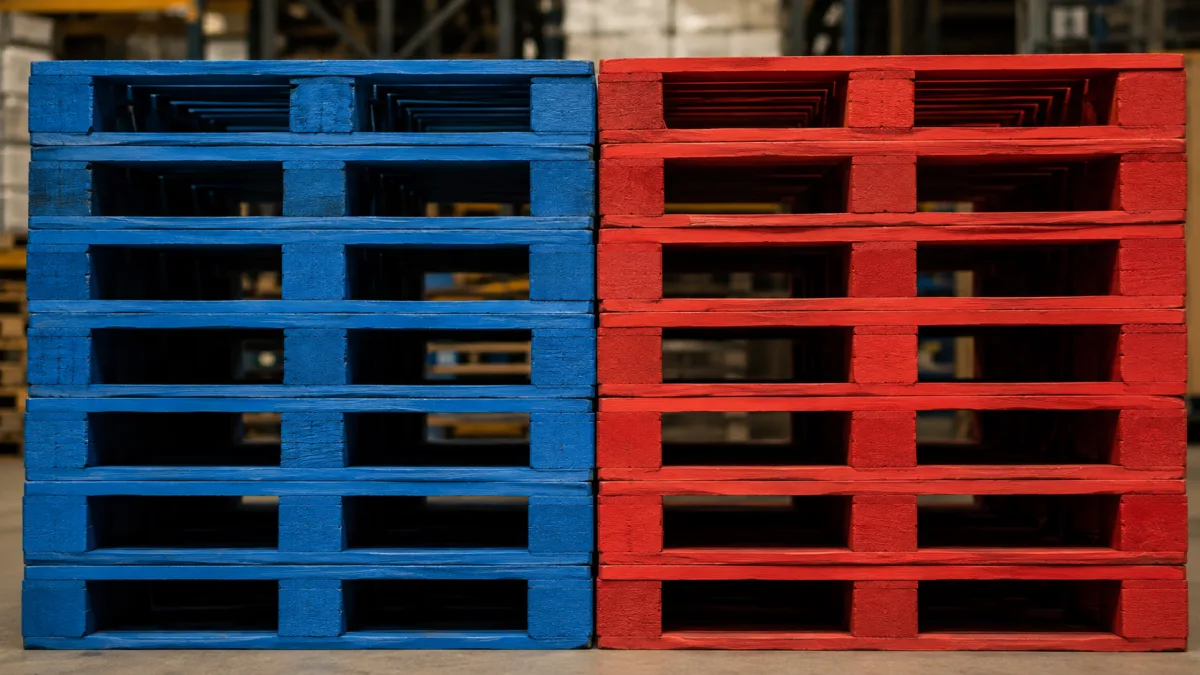
CHEP and Loscam pallets are both 1165mm x 1165mm, a square footprint that's become the dominant standard for pooled pallets in Australian freight. If you've received goods on a blue pallet, that's almost certainly CHEP, and Loscam's are typically red.
Euro pallets are commonly cited internationally at 1200mm x 800mm, a rectangular footprint that's more common on imported goods or freight moving through international supply chains than on domestic Australian pallets.
Non-pooled timber pallets, ones a business owns outright rather than rents through a pooling system, can vary from these standards, which is worth checking if you're building your own rather than sourcing a pooled pallet.
CHEP vs Loscam: What's Actually Different
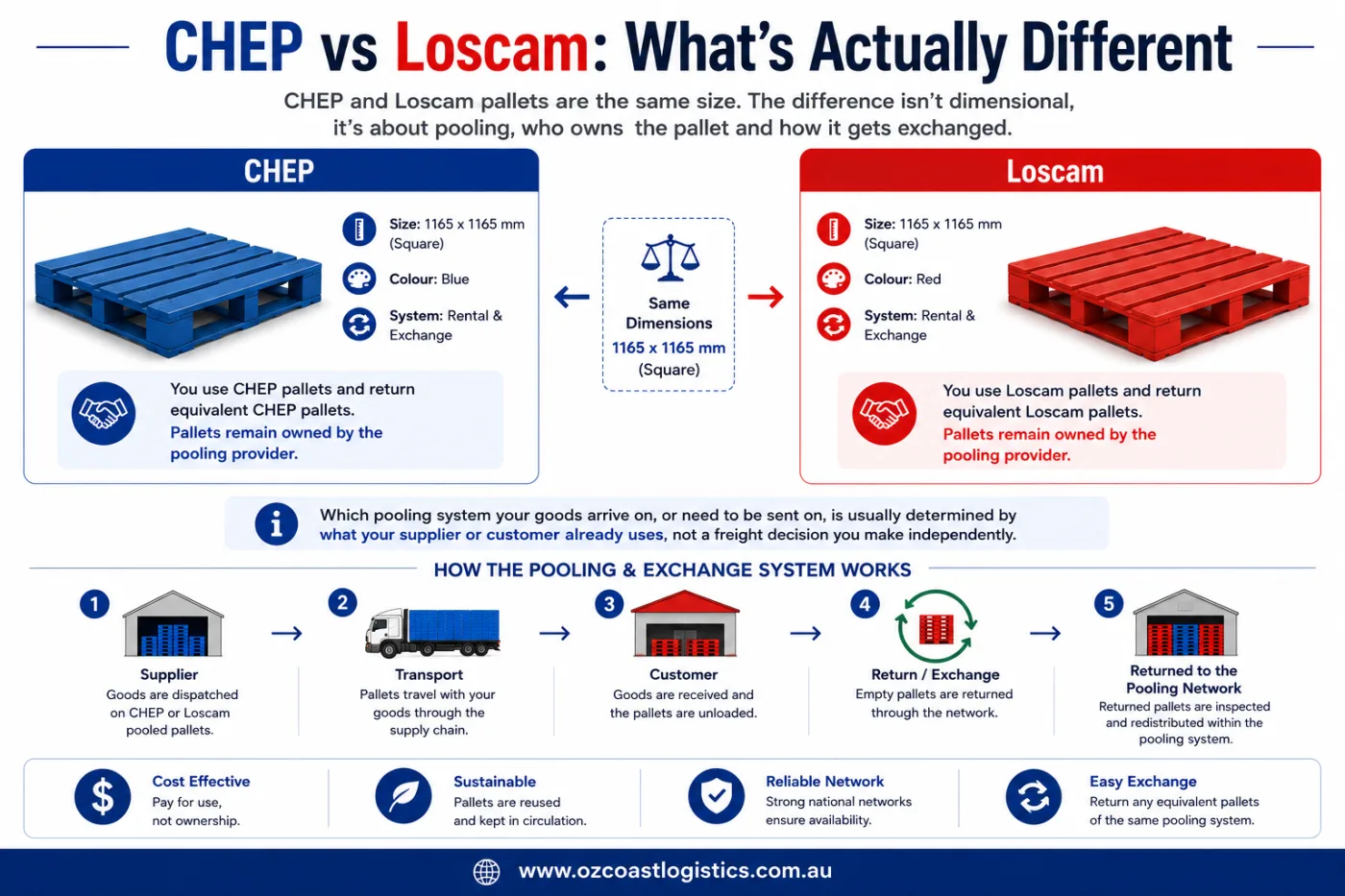
Here's the part that surprises people: CHEP and Loscam pallets are the same size. The difference isn't dimensional, it's about pooling, who owns the pallet and how it gets exchanged. Both companies operate a pallet rental and exchange system, where you use their pallets and return equivalent pallets rather than owning the physical pallet outright. Which pooling system your goods arrive on, or need to be sent on, is usually determined by what your supplier or customer already uses, not a freight decision you make independently.
Why Pallet Size Actually Matters for Your Freight
The physical footprint of a pallet determines how many fit across a trailer and how efficiently a load can be planned. A standard trailer is designed around standard pallet footprints, which is part of why non-standard or oddly-sized pallets can end up using more deck space than their actual size would suggest, a gap next to an irregular pallet often can't be filled by anything else.
This is also why mismatched pallet sizes on the same load can complicate planning more than the total weight or volume alone would suggest. A truck that's full by pallet count isn't necessarily full by weight, and vice versa.
What Happens When Pallet Types Are Mixed on One Load
Mixed pallet sizes aren't a problem in themselves, freight moves on mixed loads constantly, but they do affect how a load is planned and packed. A load with a consistent pallet footprint packs more predictably than one with several different sizes, which is one of the reasons it's worth mentioning pallet type when you book if you know it in advance, rather than leaving it to be discovered at pickup.
Do You Need a Pooled Pallet, or Can You Use Your Own?
It depends on what the receiving end expects. Many retailers and larger businesses run on CHEP or Loscam specifically and expect goods to arrive on a compatible pallet, since it fits their existing pooling arrangement. If you're shipping to a smaller business or a one-off customer, your own pallet is often fine, but it's worth confirming rather than assuming either way, particularly for a new customer relationship.
Getting the Right Pallet for Your Freight
Pallet type isn't usually something pallet delivery bookings need to overthink, but it's genuinely useful information to have on hand when you book, particularly for a new or larger account. If you're not sure whether your freight needs to move on a specific pooled pallet, ask before it's packed rather than after, it's a much easier fix at that stage than once the load's already built.