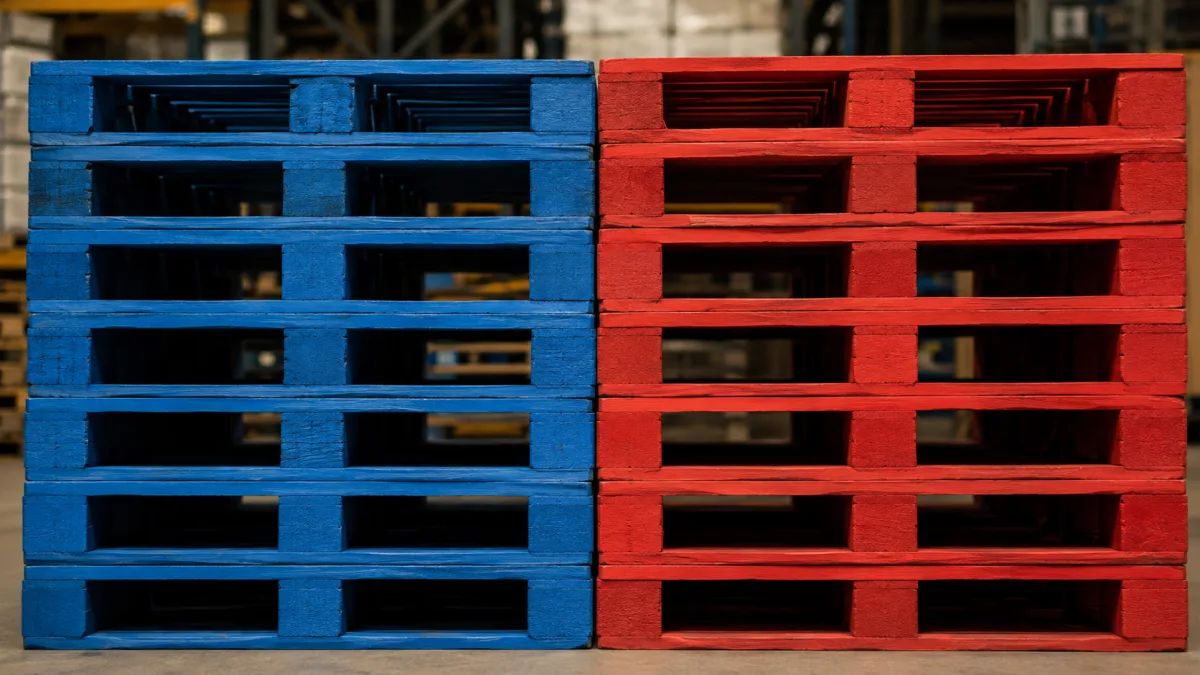
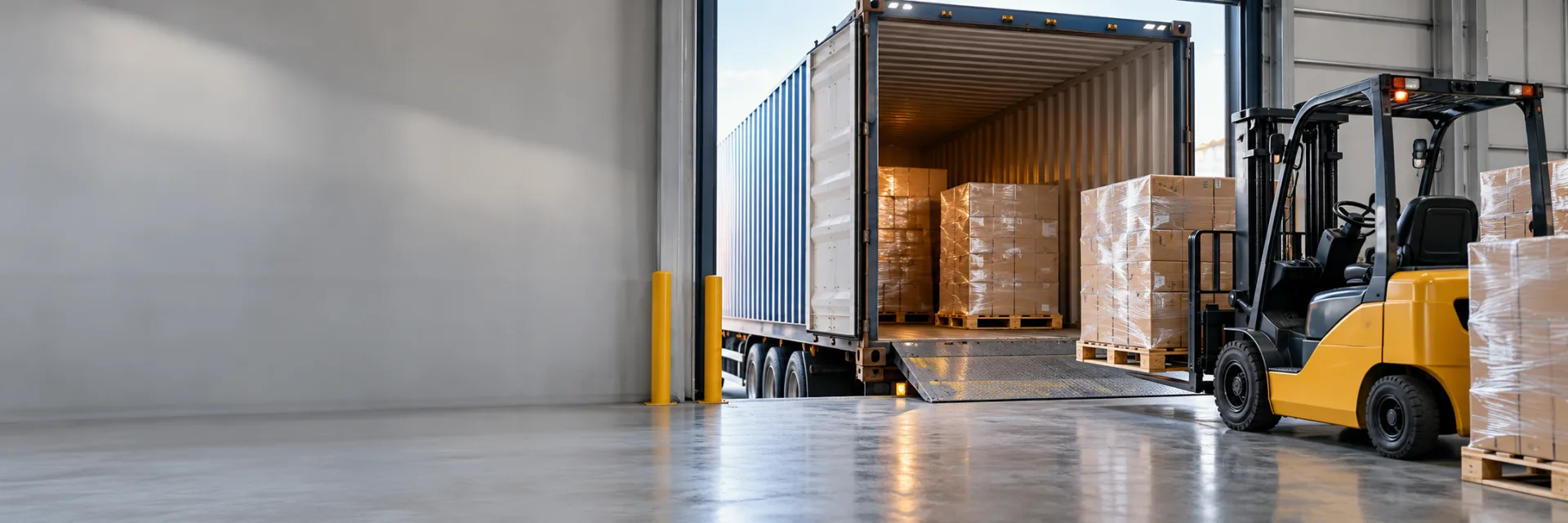
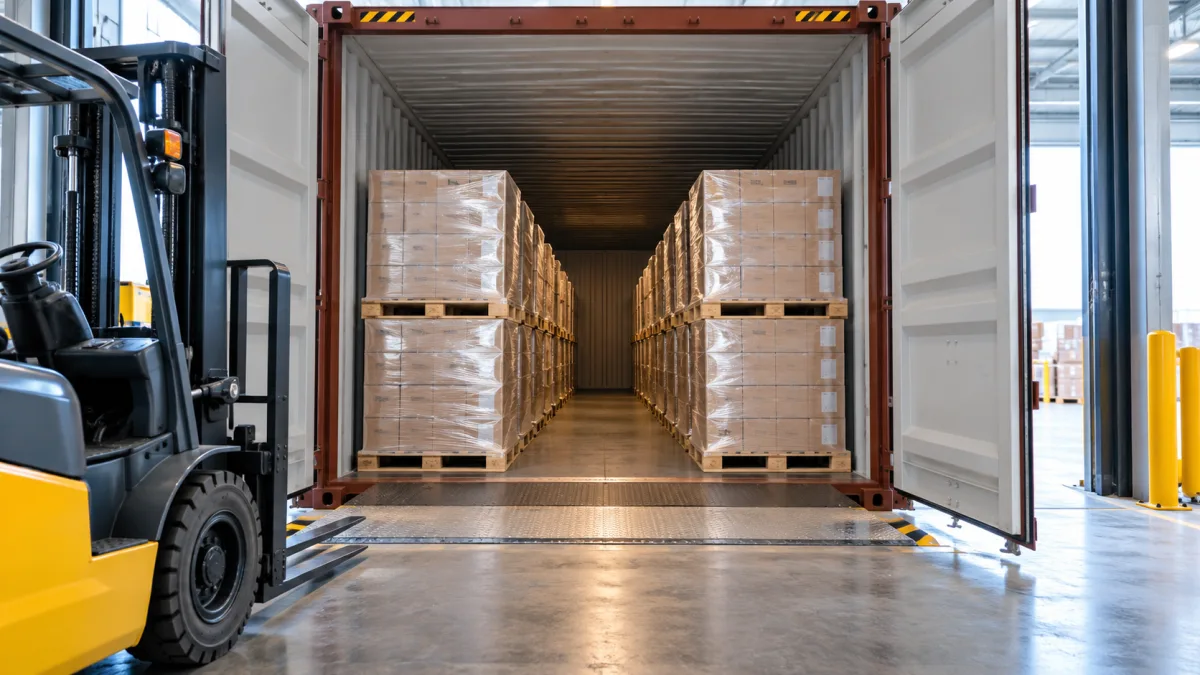
Two Australian standard pallets side by side measure 2,330 mm across. The inside of a standard shipping container is roughly 2,350 mm wide. That leaves about 20 mm to play with, less than the width of your finger, and it explains most of what you need to know about loading Australian pallets into containers. They fit, but only just.
Here's how many pallets fit in a 20ft and a 40ft container for each common pallet type, why the real-world number is sometimes lower, and what those pallets turn into once the container is unpacked and the freight moves on by truck.
The Short Answer
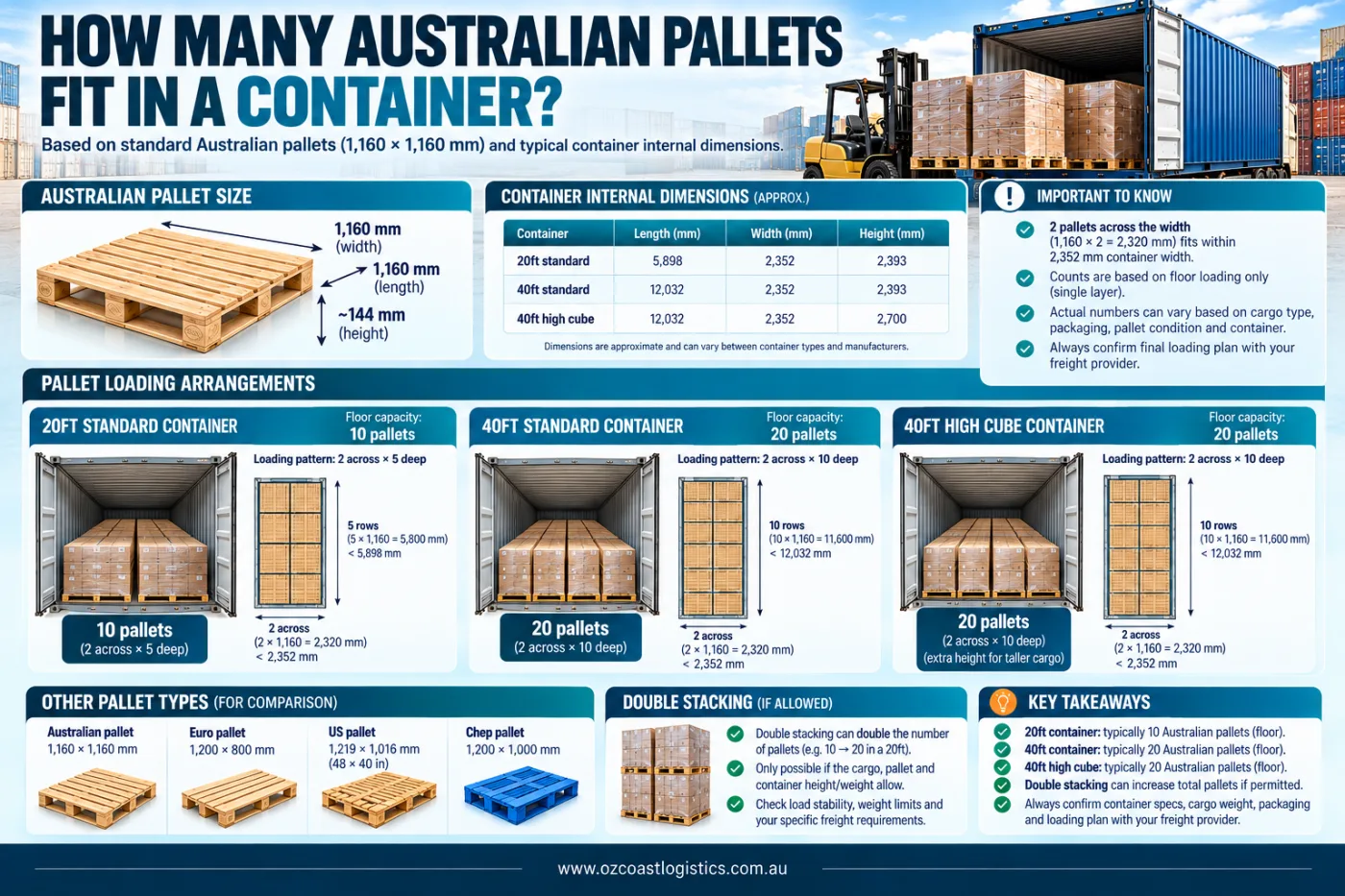
So how many pallets fit in a 20ft container? Commonly ten Australian pallets, and twenty in a 40ft. These are the commonly cited single-layer counts for standard (general purpose) containers:
| Pallet type | Footprint | 20ft container | 40ft container |
|---|---|---|---|
| Australian standard (CHEP, Loscam) | 1165 × 1165 mm | 10 | 20 |
| Standard 1200 × 1000 | 1200 × 1000 mm | 9 to 10 | 20 to 21 |
| Euro pallet | 1200 × 800 mm | 11 | 23 to 25 |
A 40ft high cube has the same floor as a standard 40ft, so the floor count doesn't change. Only the available height does, which matters if pallets can be double stacked (more on that below).
If you're not sure which pallet your freight is on, our guide to standard pallet dimensions in Australia covers the common types and how to tell them apart.
Why the Australian Pallet Is Such a Tight Fit
The Australian standard pallet predates the shipping container and wasn't designed around it. The numbers work, but with very little margin:
- Width: two pallets across take 2,330 mm against roughly 2,350 mm of internal width, leaving about 20 mm.
- Length, 20ft: five rows take 5,825 mm against roughly 5,900 mm of internal length, leaving around 75 mm.
- Length, 40ft: ten rows take 11,650 mm against roughly 12,030 mm, leaving around 380 mm.
Internal dimensions vary slightly between containers and manufacturers. Our shipping container dimensions guide covers the commonly quoted figures. On some containers the width margin all but disappears.
That's why "10 and 20" comes with conditions. The pallets only go in at those numbers if:
- Nothing overhangs the pallet base. A carton sticking out 15 mm on one side uses most of the spare width on its own.
- The wrap is tight. Loose stretch wrap or bulging cartons add width that the container doesn't have.
- The pallets are in good condition. Damaged or out-of-square pallets won't sit flush against each other.
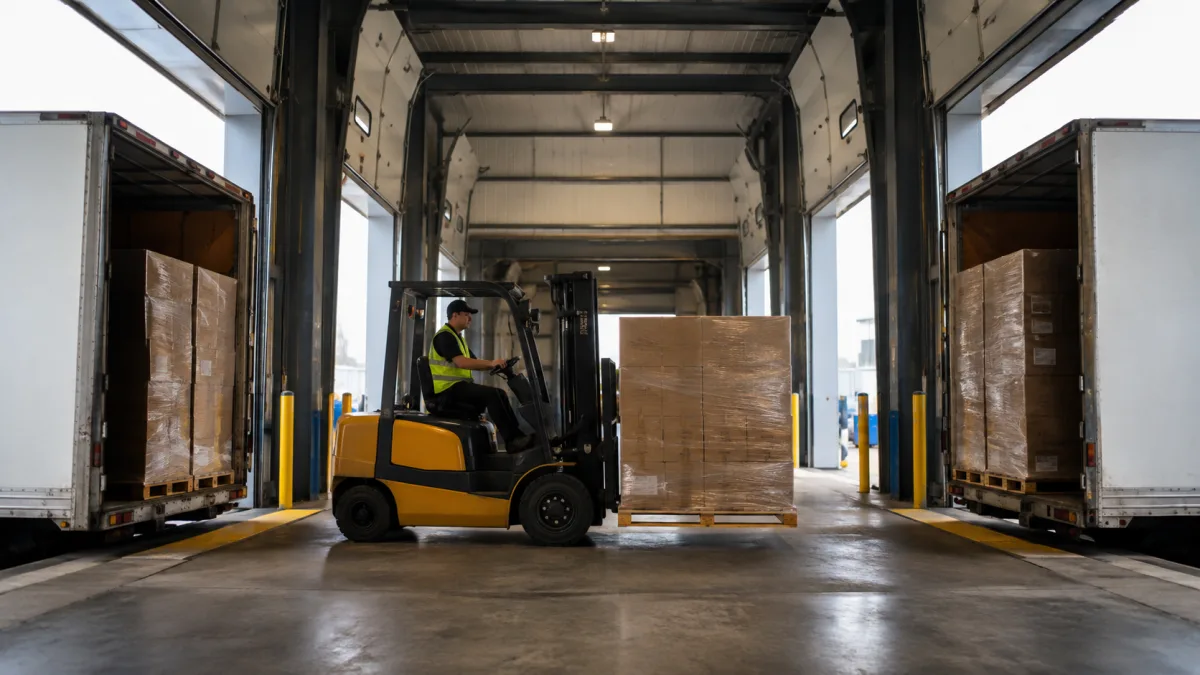
- The loading method allows it. Getting two pallets side by side through a door opening that's barely wider than they are, and pushing them to the far end, takes the right equipment and some care.
When any of those go wrong, a pallet or two gets left out, or the load is rearranged with some pallets turned or removed, and the count drops.
Why 1200-wide pallets lose out
A pallet that's 1,200 mm on one side can't go two across that way, because 2,400 mm is wider than the container. It has to be turned so the 1,000 mm or 800 mm side runs across, which leaves wasted width. That's why the counts for 1200 × 1000 pallets are given as a range: the exact number depends on how the rows are arranged. Euro pallets, being narrower, recover some of that space by mixing orientations.
Double Stacking: When the Count Can Go Up
The table above is for one layer. A standard container has roughly 2.39 m of internal height and a high cube roughly 2.69 m, so two layers of shorter pallets can sometimes fit. Whether that's possible depends on three things:
- The goods. The bottom pallet has to carry the top one without crushing. Many products can't.
- Combined height. Two pallets, including both bases, have to clear the internal height with enough room to load them safely.
- Weight. Doubling the pallet count doubles the weight, which brings in the next limit.
Weight Can Run Out Before Space Does
Every container has a maximum payload, and dense freight reaches it well before the floor is full. A 20ft container of tiles, steel, stone or liquids can hit its weight limit with only part of the floor used. That's one reason heavy goods often travel in 20ft containers and bulkier, lighter goods in 40ft.
Road limits matter too. A container that's within the shipping line's maximum gross weight still has to travel legally by truck on the domestic leg, and very heavy containers may need a specific vehicle setup. It's worth giving the actual gross weight when you book the road transport rather than finding out at the wharf.
Palletised vs Floor-Loaded Containers
Not every container arrives on pallets. Many imported containers are floor-loaded: cartons stacked directly on the container floor from front to back and almost to the roof. Floor loading fits more product in, because there are no pallet bases and no gaps between pallets, but it changes what happens when the container is unpacked:
- Unpacking takes much longer, because every carton is handled by hand.
- The cartons usually need to be palletised before they can be stored or sent on.
- Because floor loading uses nearly the full height of the container, the stock often ends up on more pallets than the container would have held if it had been palletised to begin with.
If you're receiving a floor-loaded container, plan for the labour, the pallets and the wrap, and allow for a pallet count that doesn't match the "10 or 20" rule. Our warehousing and distribution team receives inbound freight both on pallets and floor-loaded, and can store or dispatch it from there.
From Container to Truck: What Those Pallets Become
Once a container is unpacked, the pallets usually continue by road. This is where pallet counts become useful for planning the next leg:
| Load | Typical pallet spaces (Australian pallets, single layer) |
|---|---|
| Unpacked 20ft container | About 10 |
| Unpacked 40ft container | About 20 |
| Standard semi-trailer | Commonly 22 (some trailers take 24) |
| B-double | Commonly around 34, depending on configuration |
So a palletised 40ft container's contents usually fit on a single semi-trailer with a little room to spare, and two 20ft containers make about the same load. That makes it easier to judge whether onward freight needs a full truck, part of a truck, or several smaller consignments to different receivers. If the goods are going straight out again rather than into storage, moving them from container to outbound trucks without storing them in between is cross-docking.
For pallets heading to several destinations, pallet delivery is priced by pallet count, dimensions and weight, so knowing what comes out of the container lets you get those quotes lined up before it arrives.
Planning Checklist
Before a container arrives, or before one is packed:
- Confirm the pallet type and footprint, not just "pallets".
- Check for overhang and loose wrap, especially on Australian pallets where there's almost no spare width.
- Find out whether the container is palletised or floor-loaded, and plan labour accordingly.
- Know the gross weight, so both the shipping and road legs can be planned properly.
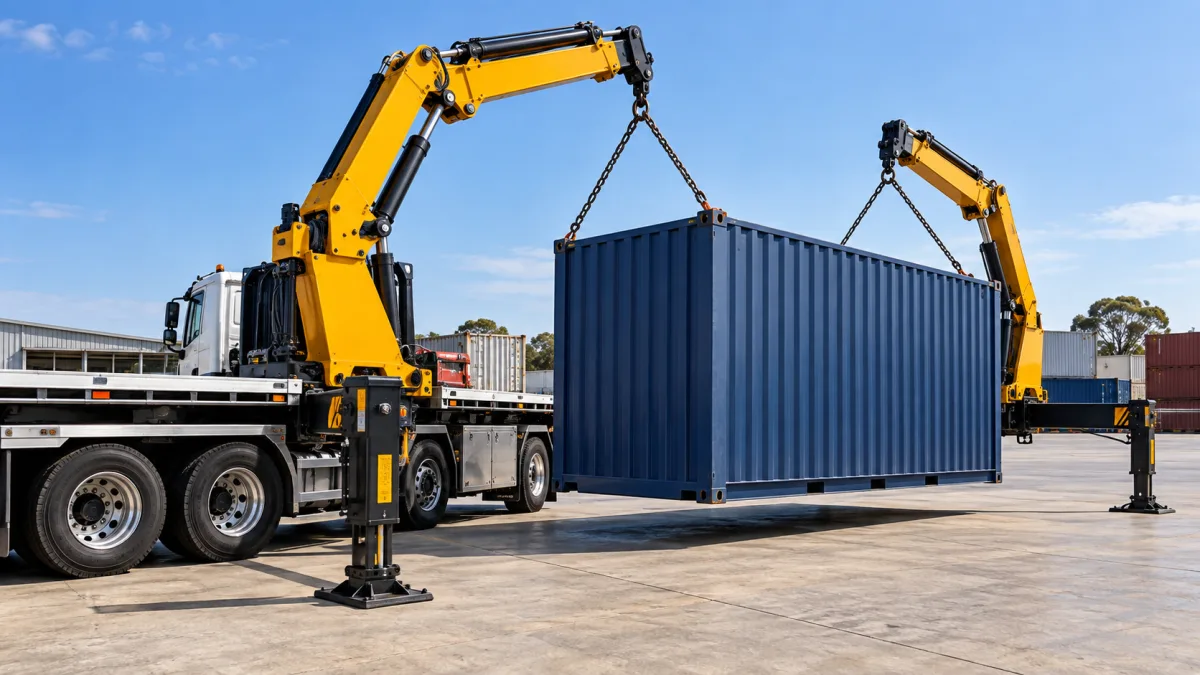
- Decide how it will be unloaded: at a dock, with a forklift on the ground, or by placing the container on the ground first. Our guide to container side loaders covers the on-ground option.
- Line up the onward freight based on the pallet count you expect, so pallets don't sit waiting after unpacking.
Moving Containers and Pallets With Ozcoast
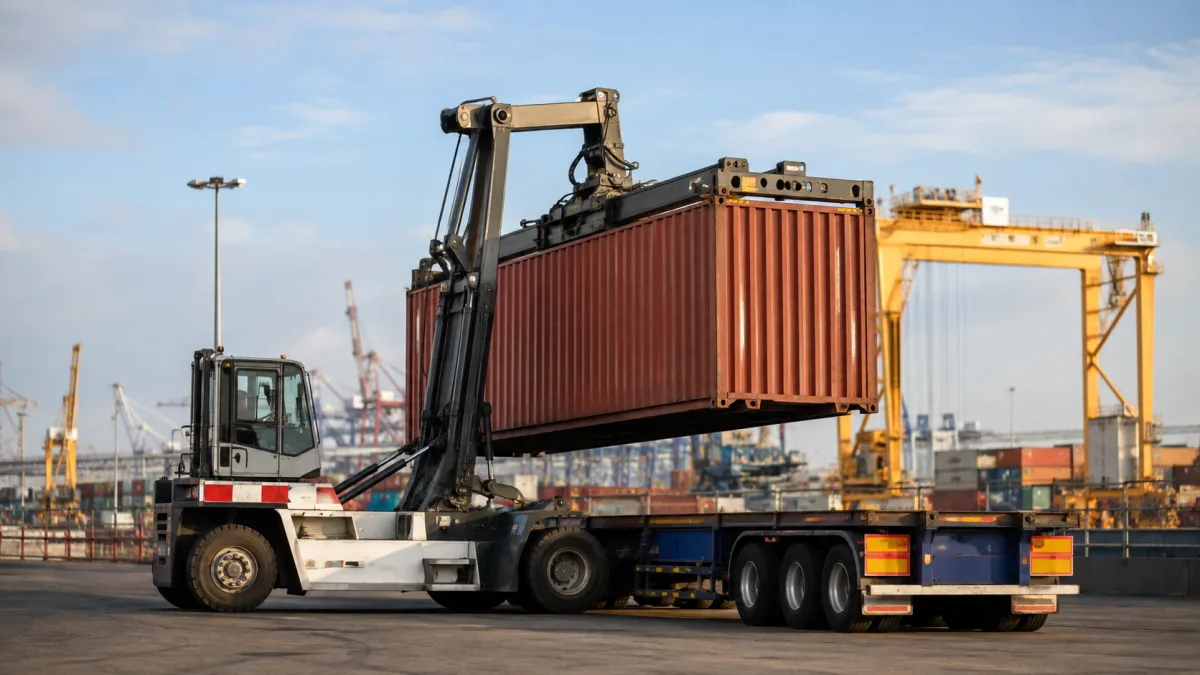
Ozcoast handles the domestic road side of container freight: collecting containers from the wharf or depot, delivering them to your site with side-loaders, tilt trays or flat-beds, and returning empties once they're unpacked. See our container transport service for details. Once the pallets are out, we can store them, cross-dock them or send them on to wherever they need to go next.
When you request a quote, let us know the container size, the gross weight, whether it's palletised or floor-loaded, and roughly how many pallets you expect. That's enough for us to plan the container move and the onward freight together.