Ask for "the dimensions of a shipping container" and the honest answer is: which one? Standard, high-cube, 20ft, 40ft, 10ft, and each has an external size, an internal capacity that's noticeably smaller, and separate weight limits that matter just as much as the physical dimensions. Here's a complete reference, and what each number actually means for planning freight.
Why External and Internal Dimensions Aren't the Same
The external dimensions are what matter for transport, stacking and vehicle planning, the footprint the container actually occupies. The internal dimensions are what matter for loading, the usable space once you account for wall thickness and structural corrugation. The gap between the two is real: a 20ft container's external length is commonly cited around 6.06m, but the internal usable length is closer to 5.9m. That difference is genuinely relevant when you're working out whether specific cargo will actually fit, not just whether the container itself will fit on a truck.
20ft Standard Container Dimensions
| Measurement | External | Internal |
|---|---|---|
| Length | ~6.06 m (20 ft) | ~5.90 m |
| Width | ~2.44 m (8 ft) | ~2.35 m |
| Height | ~2.59 m (8 ft 6 in) | ~2.39 m |
| Door opening (W x H) | — | ~2.34 m x 2.28 m |
| Tare weight (empty) | ~2,200 kg | — |
| Max payload | ~28,000 kg | — |
| Max gross weight | ~30,480 kg | — |
40ft Standard Container Dimensions
| Measurement | External | Internal |
|---|---|---|
| Length | ~12.19 m (40 ft) | ~12.03 m |
| Width | ~2.44 m (8 ft) | ~2.35 m |
| Height | ~2.59 m (8 ft 6 in) | ~2.39 m |
| Door opening (W x H) | — | ~2.34 m x 2.28 m |
| Tare weight (empty) | ~3,800 kg | — |
| Max payload | ~28,700 kg | — |
| Max gross weight | ~32,500 kg | — |
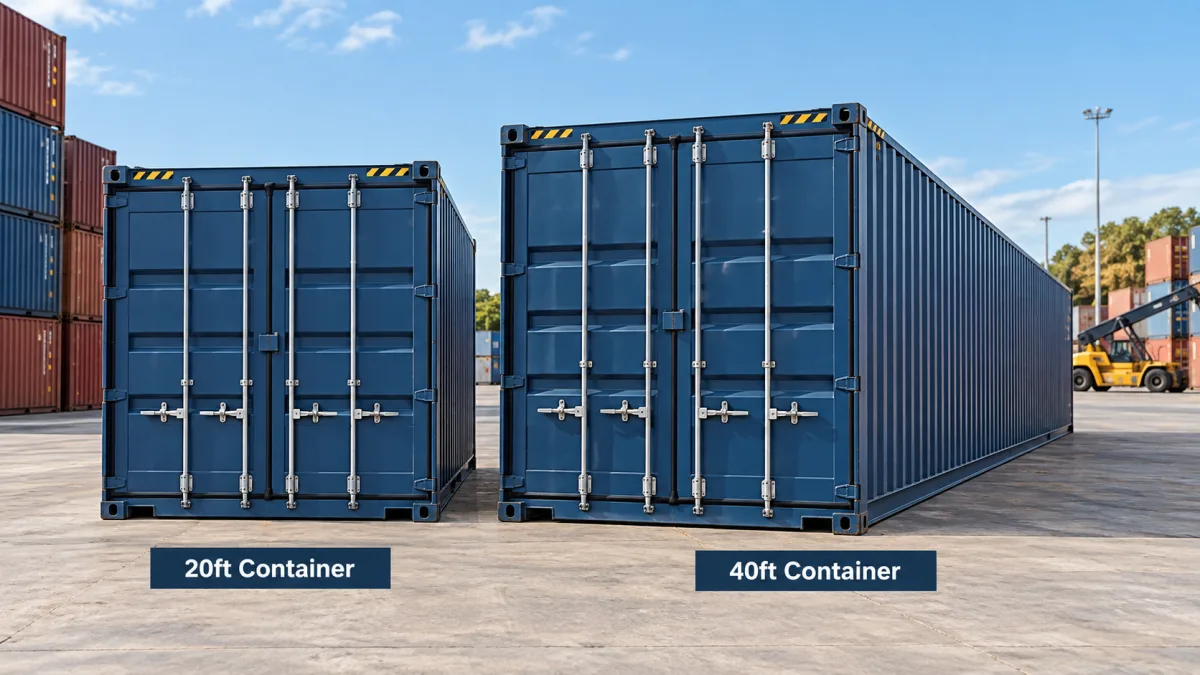
Note that a 40ft container isn't simply double a 20ft one on payload, the tare weight is higher too, but the structural design means it doesn't scale exactly linearly. This is genuinely worth checking rather than assuming.
40ft High Cube Container Dimensions
A high-cube container is the same footprint as a standard 40ft, with extra height, commonly an additional 300mm (roughly 1 foot), external height around 2.90m rather than 2.59m. This matters for cargo that's tall but not necessarily heavy, and for route planning, since the extra height can affect clearance under low bridges or overpasses on certain routes.
| Measurement | External | Internal |
|---|---|---|
| Length | ~12.19 m (40 ft) | ~12.03 m |
| Width | ~2.44 m (8 ft) | ~2.35 m |
| Height | ~2.90 m (9 ft 6 in) | ~2.70 m |
| Tare weight (empty) | ~3,900 kg | — |
| Max payload | ~28,600 kg | — |
10ft Container Dimensions
Less common than 20ft and 40ft but genuinely used, particularly for smaller loads or as on-site storage. External length commonly cited around 3.05m (10ft), with width and height matching the standard 2.44m x 2.59m footprint. Internal capacity is naturally reduced proportionally, and the smaller footprint makes it a common choice where full container volume isn't needed but a shipping container's structural durability is.
Metric vs Imperial: Why You'll See Both
Container sizing originated as an international standard measured in feet, 20ft and 40ft, which is why those figures still dominate industry terminology worldwide, including in Australia. But Australian freight documentation, road transport regulations and load planning all work in metric. Both figures appear side by side in practice for exactly this reason, not because one is more correct than the other.
Weight Limits: Tare, Payload and Max Gross Weight
Three terms that get used loosely but mean specific things:
- Tare weight is the weight of the empty container itself, before anything is loaded.
- Payload is the maximum weight of cargo the container can legally and safely carry.
- Max gross weight is tare plus payload combined, the total weight limit for the loaded container.
Knowing the difference matters practically: a container that's full by volume might still be well under its weight limit, or a dense load might hit the weight limit long before the container looks full. Planning around only one of these numbers is how loads end up either under-utilised or, more seriously, over the legal weight limit for road transport.
Why These Numbers Matter for Your Freight
Internal dimensions determine what cargo actually fits, and by how much room to spare. Weight limits determine what's legally able to be loaded, regardless of available space. Getting either wrong before booking means either a container that's the wrong size for the job, or a load that needs to be split across more than one container once the actual weight is confirmed. Checking both figures against your actual cargo before booking avoids both problems.
Which Container Size Do You Actually Need?
- 10ft suits smaller loads, on-site storage, or situations where full 20ft volume isn't needed but a container's durability and security still matter.
- 20ft standard is the most common choice for denser cargo, since it hits its weight limit before its volume limit for many types of goods, machinery parts, packaged goods, anything with real mass relative to its size.
- 40ft standard suits higher-volume, lower-density cargo, where the extra length matters more than extra weight capacity.
- 40ft high-cube suits bulky or tall cargo that isn't necessarily heavy, furniture, for instance, where the extra height means less wasted space above the load.
If your cargo is dense and heavy, check the weight limit first, you may fill a 20ft container's payload well before its volume. If it's bulky and light, check internal dimensions first, since volume rather than weight is likely the limiting factor.
Getting the Right Container Transport
Once you know which container size and configuration your freight actually needs, container transport covers the road cartage from port or depot to your site, for 20ft, 40ft, high-cube and specialised container types. If you're not sure which size fits your cargo, tell us the dimensions and approximate weight of what you're shipping and we'll confirm the right container before anything's booked.