Search "shipping container transport" and you'll get two very different kinds of business in the results: international freight forwarders who book the ocean leg from overseas, and road transport companies who move the container once it's already on Australian soil. If you're a business that's just bought a container-load of stock, or you need an empty container repositioned between sites, it's the second one you actually need, and it's worth knowing the difference before you start calling around for quotes.
This covers what container transport actually is in an Australian context, who typically needs it, how FCL and LCL affect the road leg specifically, and what tends to drive the price up or down.
What "Shipping Container Transport" Actually Means Here
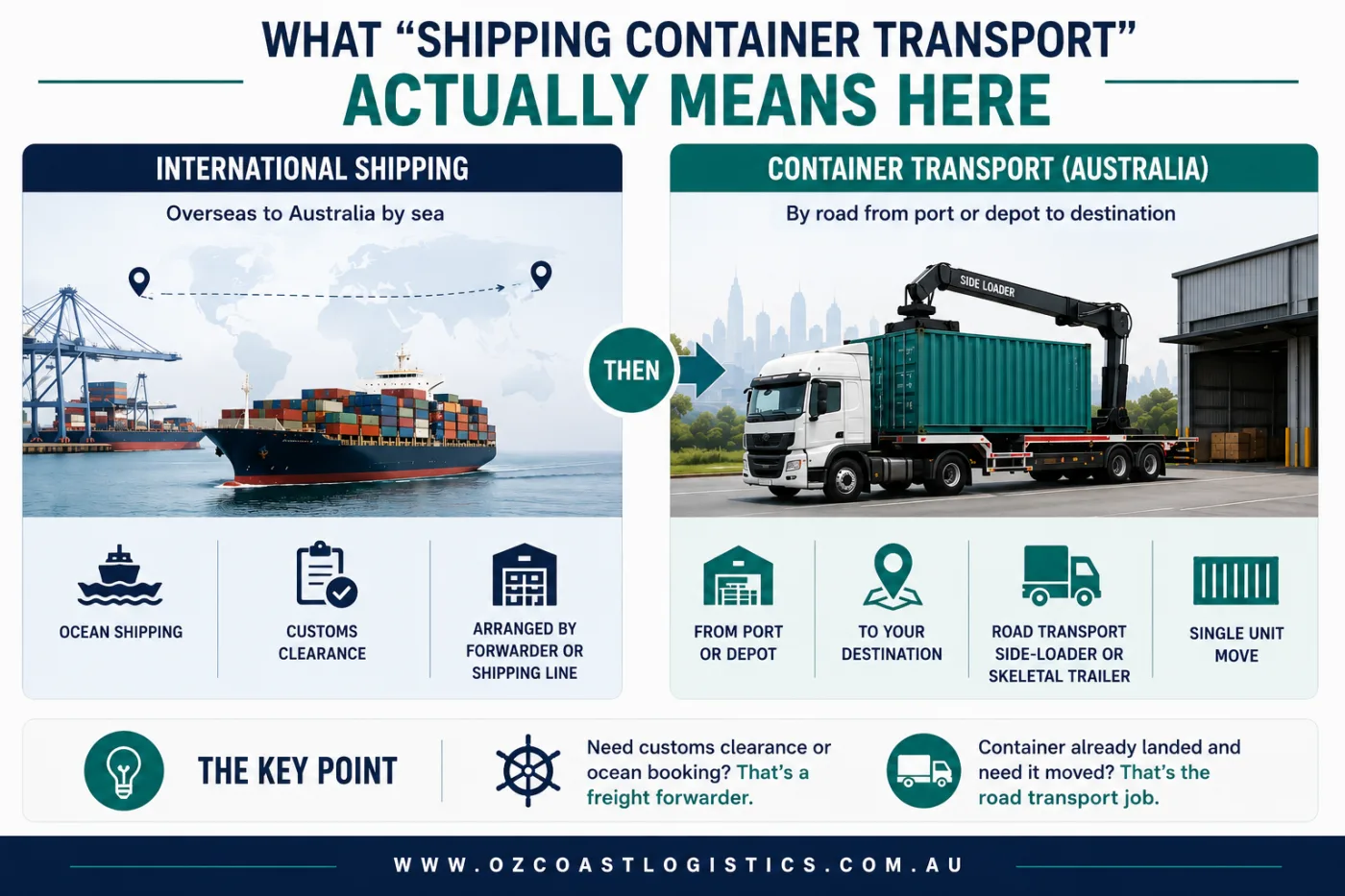
The international part, getting a container from an overseas port onto a ship and across the ocean to an Australian port, is handled by a freight forwarder or the shipping line itself, along with the customs clearance that comes with it. That's a different service, arranged by a different kind of company, and it's not something a domestic road transport operator does.
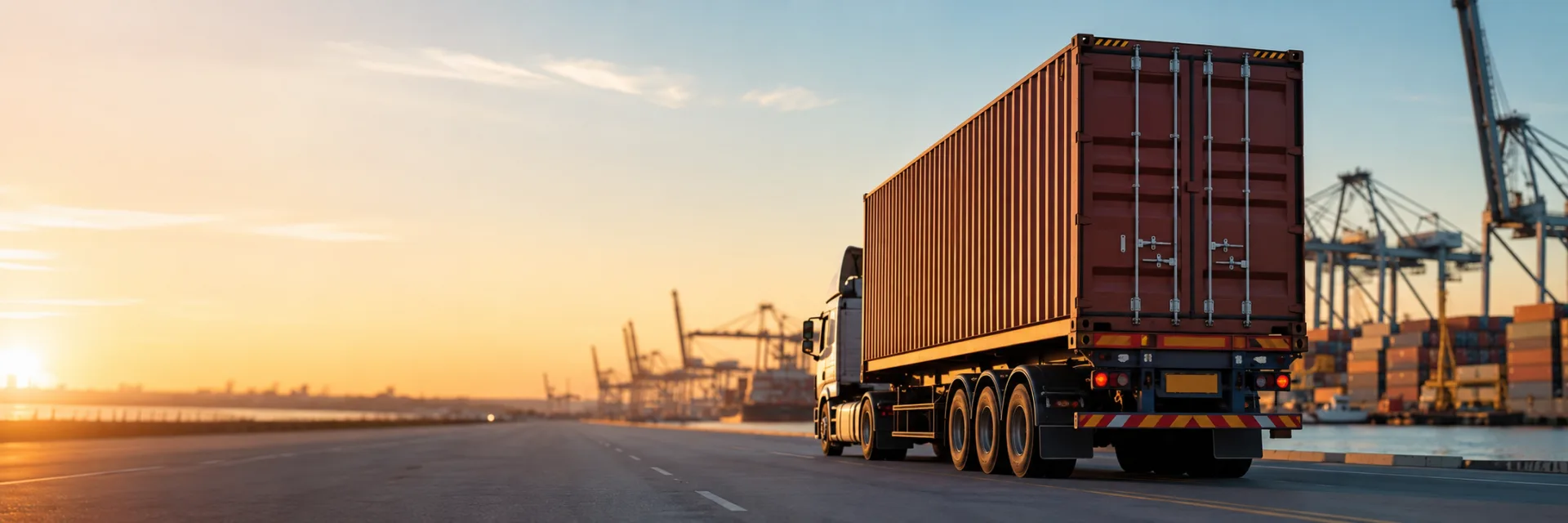
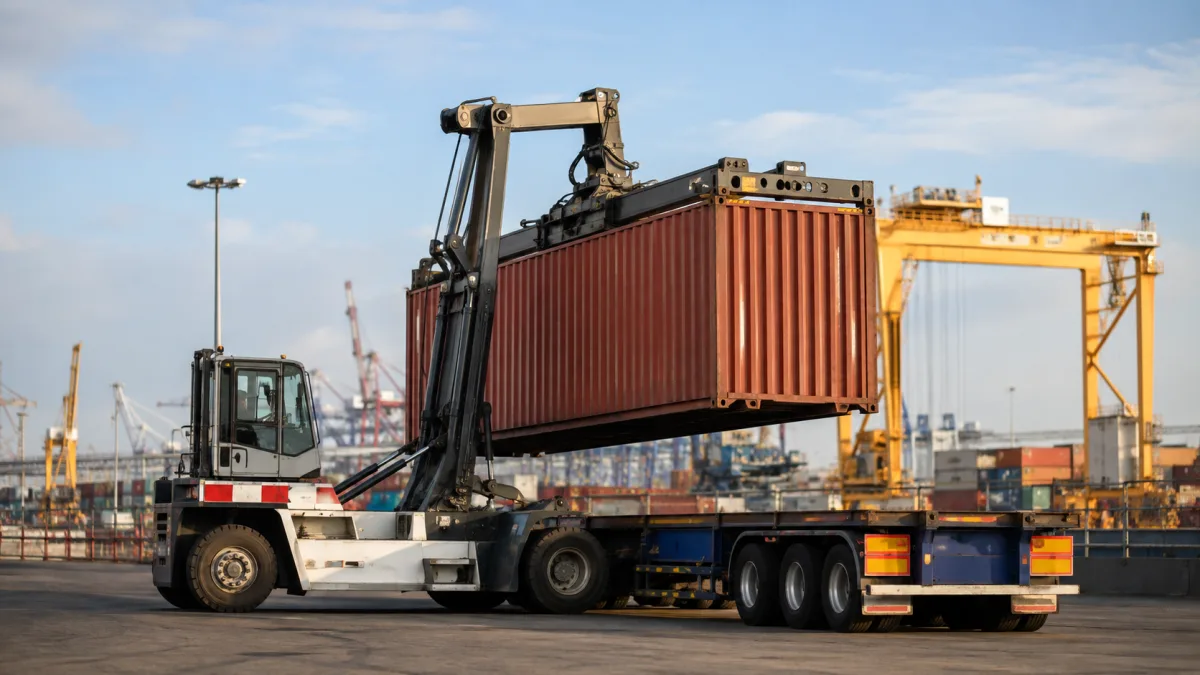
Container transport, in the sense most Australian businesses need it, is what happens next: moving the container by road from the port or a depot to wherever it actually needs to be. That might be your warehouse, a job site, a distribution centre, or back to the shipping line as an empty return. It's road freight with a shipping container as the cargo, using a truck fitted to carry one, typically a side-loader or a skeletal trailer.
Knowing which one you're asking for saves everyone time. If you need customs clearance or the ocean booking, that's a customs broker or freight forwarder. If the container has already landed and you need it moved, that's the road transport job.
Who Actually Needs This
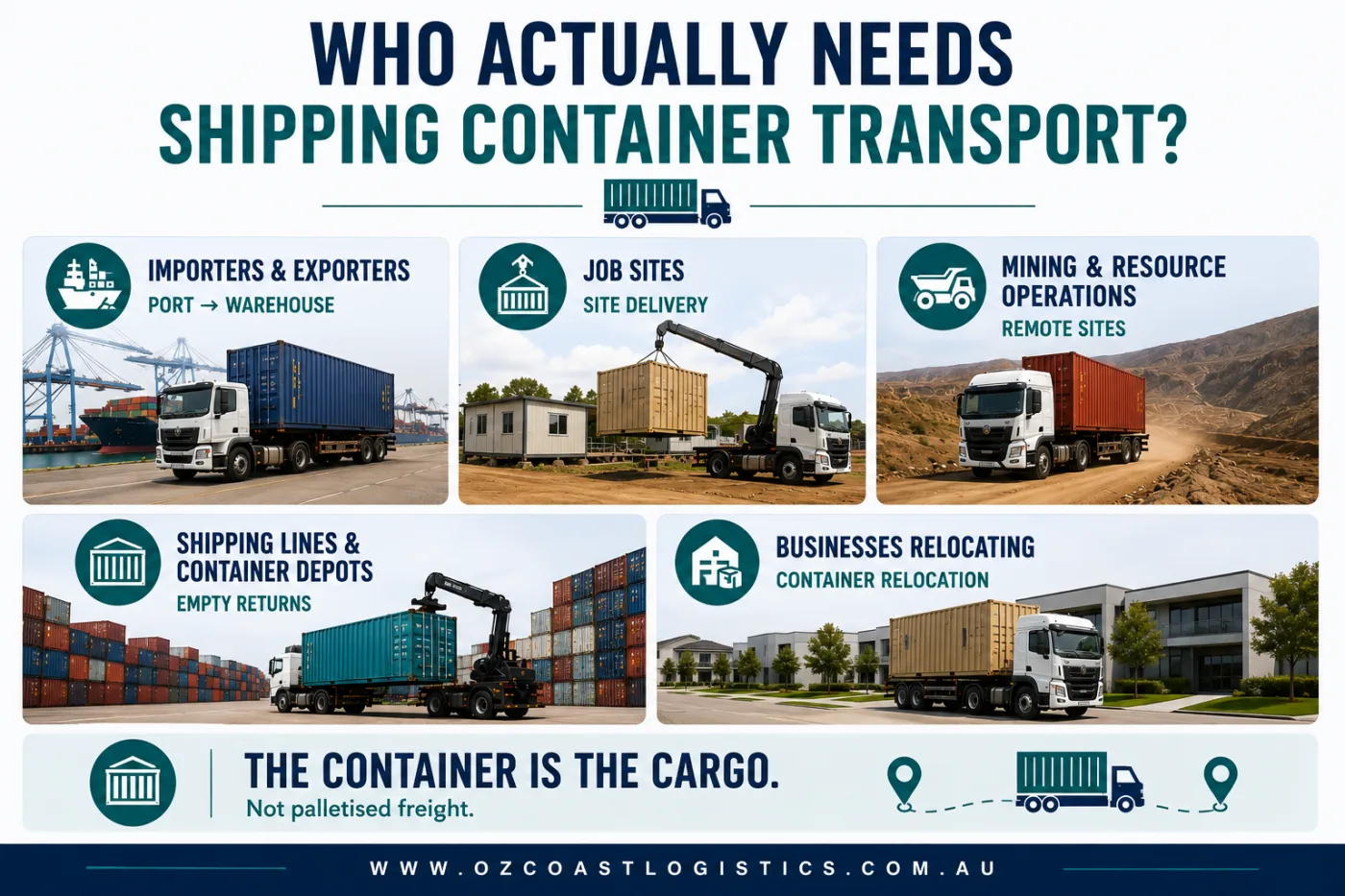
- Importers and exporters moving a container from the port to their warehouse after it's cleared customs, or from their site back to the port for export
- Job sites using a shipping container as on-site storage, a site office, or a modular structure, needing it delivered and later collected
- Mining and resource operations moving containers to remote sites, often with limited road access
- Shipping lines and container depots repositioning empty containers between locations
- Businesses relocating who've packed their own container and need it moved to a new site rather than unpacked and repacked at the other end
The common thread is that the container itself is the unit being moved, not palletised freight that happens to have arrived in one.
FCL and LCL: Why It Matters for the Road Leg
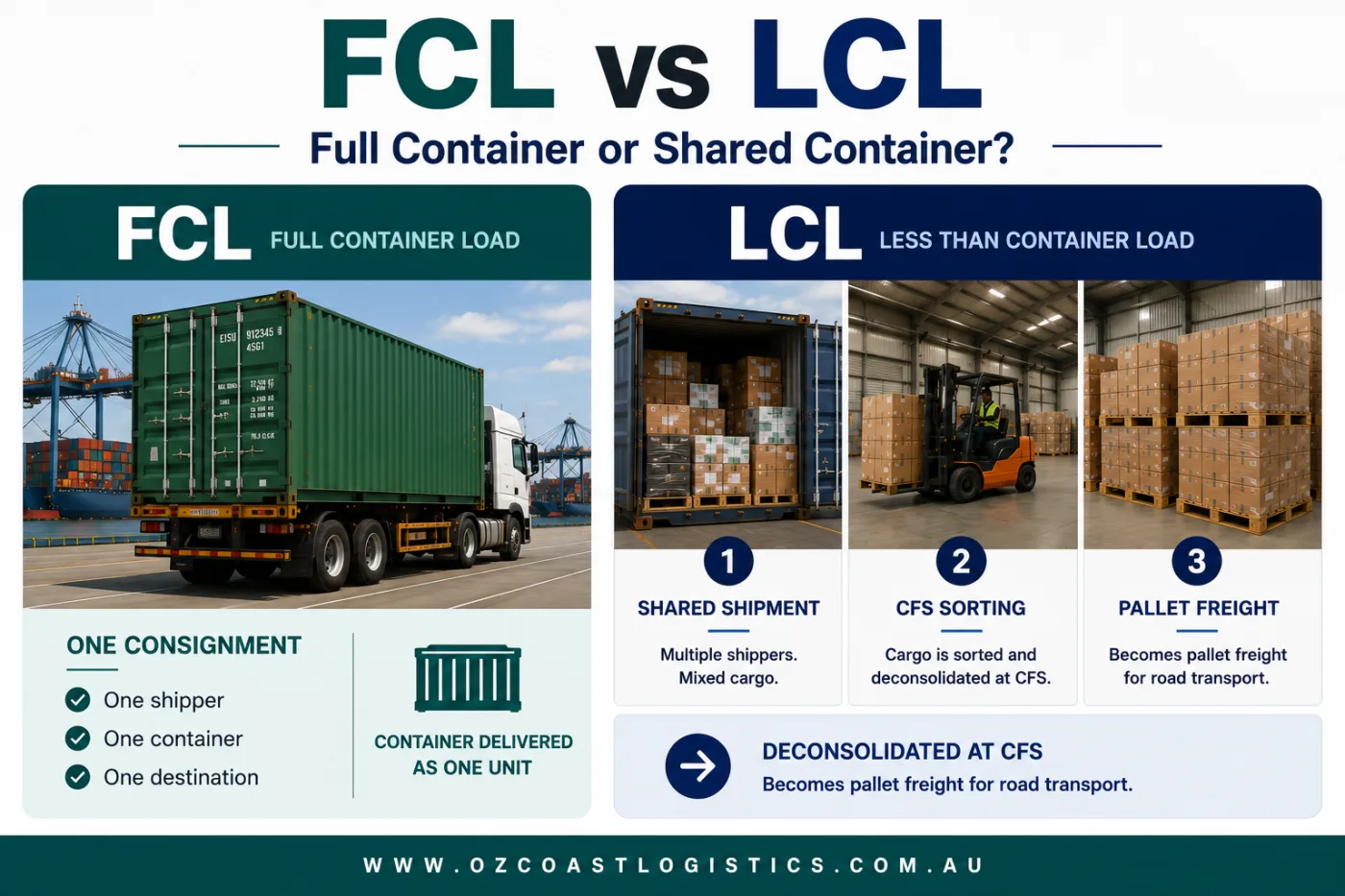
These two terms come from the shipping side, but they change what the road transport job actually looks like.
FCL (Full Container Load) means one container is loaded with one consignment. The whole container travels as a single unit from port to destination, gets unpacked there, and either gets sent back empty or repositioned. This is a straightforward container transport job: one container, one road movement.
LCL (Less than Container Load) means your goods share a container with other consignments and get deconsolidated at a container freight station near the port. Once that's happened, what you receive isn't a container anymore, it's cartons or pallets, and it moves as general freight rather than as a container transport job. If you've booked LCL, the container transport question usually doesn't apply to you at all; you're looking at standard pallet or parcel delivery from the deconsolidation point instead.
Knowing which one you've booked before you request a quote means you're asking for the right service the first time.
Container Sizes and What They Need on the Road
Standard shipping containers come in a handful of sizes, and each one changes what kind of truck and trailer combination is needed.
| Container | Typical use | Road transport note |
|---|---|---|
| 20ft standard | General cargo, denser or heavier loads | Fits on most standard skeletal trailers |
| 40ft standard | Higher-volume, lighter cargo | Needs a longer trailer, more common on interstate moves |
| 40ft high-cube | Bulky, low-density goods | Extra height can affect route selection under low bridges |
| Oversized / open-top / flat rack | Machinery, odd-shaped cargo that won't fit a standard box | Needs specialised equipment and sometimes a permit |
A loaded 20ft container can weigh close to as much as an empty 40ft, so weight matters as much as physical size when a transport company is working out what truck and trailer combination the job needs.
What Affects the Cost of Container Transport
Every job is quoted on its specifics rather than a flat rate, but the same handful of factors tend to move the number:
- Distance and route. A port-to-suburb move and an interstate reposition aren't priced the same way, and corridors with less freight travelling back in the opposite direction generally cost more per kilometre.
- Container size and whether it's loaded or empty. A loaded 40ft costs more to move than an empty 20ft, largely down to weight and the equipment needed.
- Site access. A side-loader needs firm, level ground and enough clearance to lift the container on or off. A site that can't take a side-loader may need a crane or different handling, which changes the price.
- Timing. A fixed delivery date costs more to guarantee than a flexible window, the same way it does for general freight.
- Port or depot fees. Detention and demurrage charges from the shipping line sit outside the road transport quote itself but are worth asking about, since they run on their own clock regardless of when your transport company can collect.
Getting a Container Site Ready for Pickup or Delivery
A few things are worth checking before the truck is booked, not after it's on its way:
- Is the ground firm and level enough for a side-loader to safely lift the container?
- Is there enough clearance for the truck to turn and position for the lift, both on arrival and once the container is down?
- If the container needs to sit somewhere specific on site, is that spot clear and accessible?
- For oversized or non-standard containers, has a permit been arranged if the route needs one?
- Is someone on site who can confirm the drop location when the truck arrives?
A site that isn't ready when the truck turns up is one of the most common causes of delay and extra cost on a container job.
Container Transport and International Freight: Who Does What
It's worth being clear about where the handoff sits, because it affects who you should be asking for what:
- Freight forwarder or shipping line: books the ocean leg, arranges the shipping documentation, and often coordinates customs clearance
- Customs broker: handles the clearance process itself if it's not bundled with the forwarder
- Road transport company: moves the container by road once it's landed and cleared, or arranges the export leg from your site back to the port
A road transport provider that also claims to handle your international booking and customs clearance is either subcontracting that part out or isn't being clear about the scope of what they actually do themselves. Ask directly if you're not sure.
How Ozcoast Handles Container Transport
We move containers site-to-site, port-to-site, and back again, for 20ft, 40ft, high-cube and specialised oversized, open-top and flat rack containers, across the road network that also carries our general freight, so the same route knowledge applies whether it's a container or a pallet. We manage empty returns to depots or shipping lines as part of the job, and we quote it item by item so you can see what each part of the cost actually covers.
What we don't do is the ocean leg or customs clearance. If you need those arranged too, tell us and we'll point you to a forwarder or broker who does, rather than let there be any confusion about who's responsible for what.
If you're not sure whether your job is a container transport job or a general freight job, the FCL/LCL section above is usually the quickest way to tell, or you can just describe what you've got and we'll confirm it before you book.