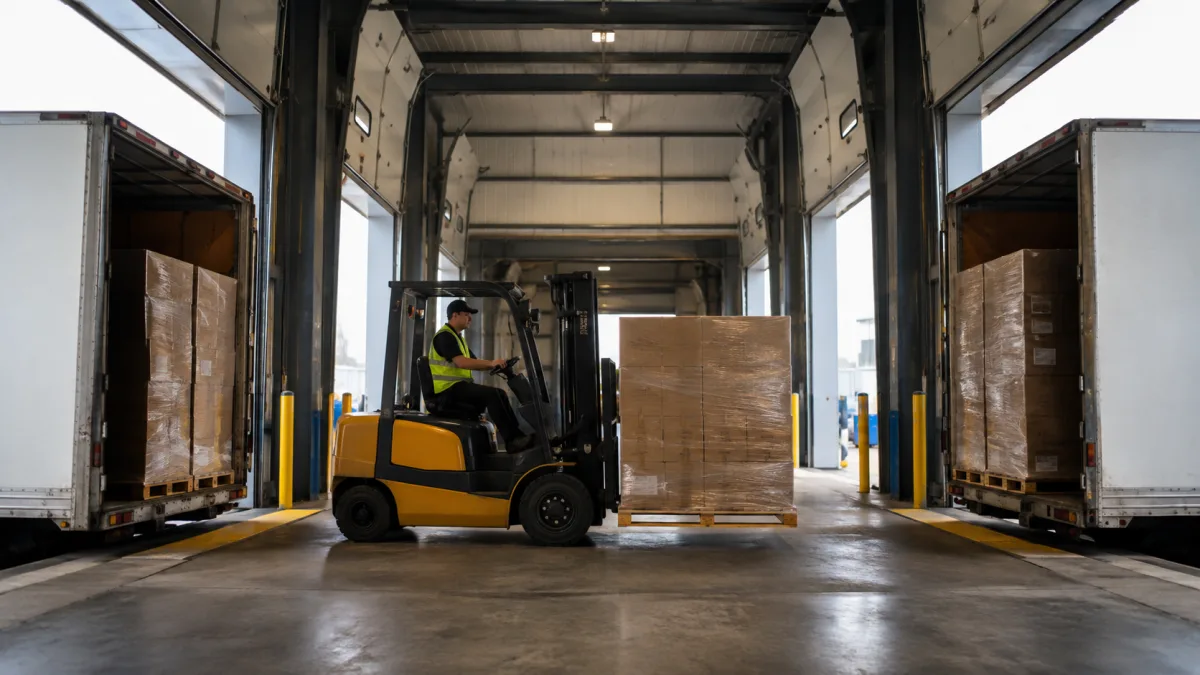
A pallet that arrives on a Tuesday morning and leaves again on a different truck by Tuesday afternoon, without ever going into storage, has just been cross-docked. That's the entire idea in one sentence, but the reason it matters is what it does to cost and speed once it's set up properly.
Here's how cross-docking actually works, how it's different from regular warehousing, and who it genuinely makes sense for.
What Is Cross-Docking?
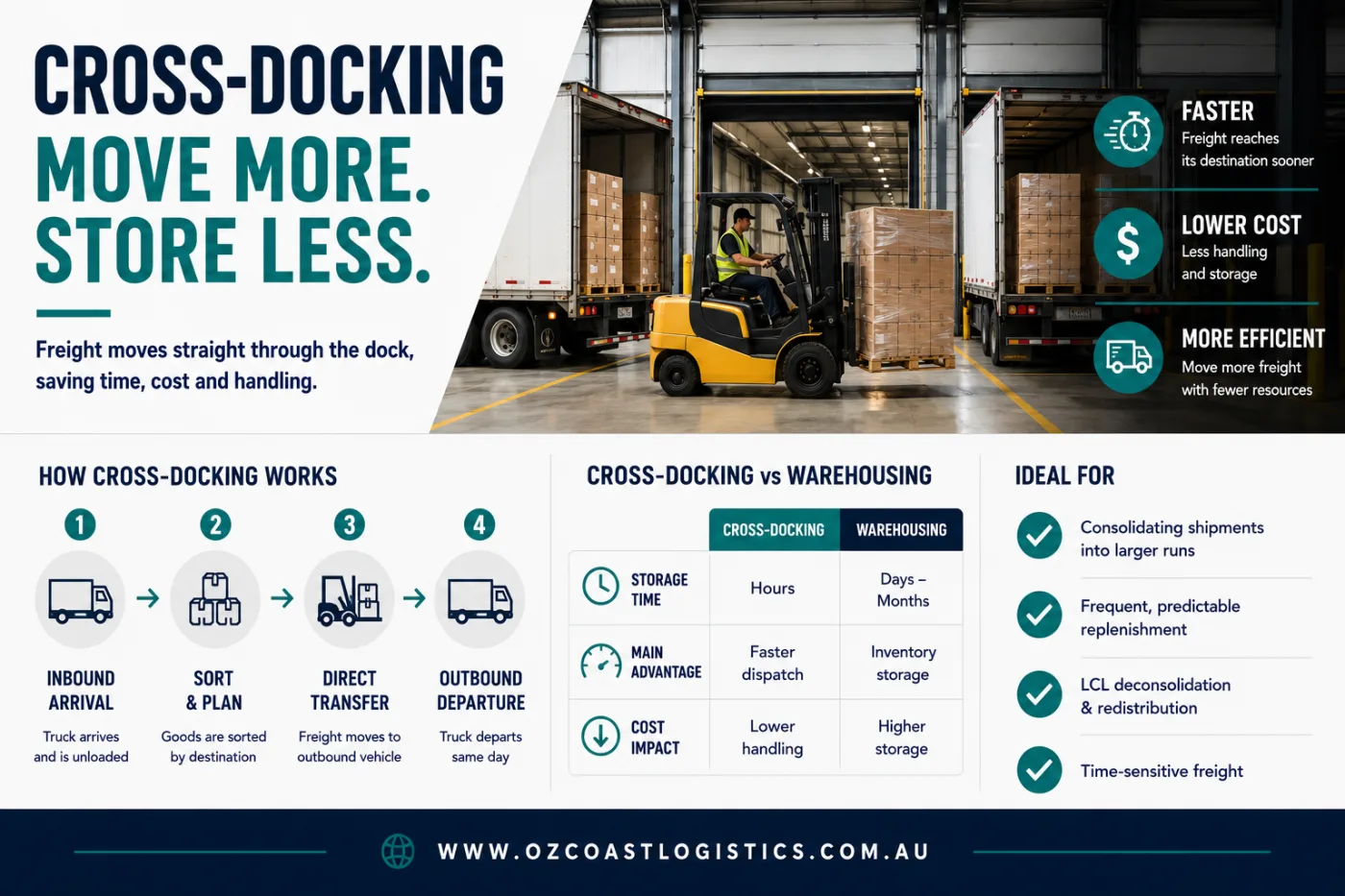
Cross-docking is a warehousing method where inbound freight is unloaded, sorted by destination, and loaded directly onto outbound vehicles, with little to no time spent in storage in between. Instead of goods going onto a shelf and waiting to be picked later, they move straight across the dock from one truck to another, sometimes within hours.
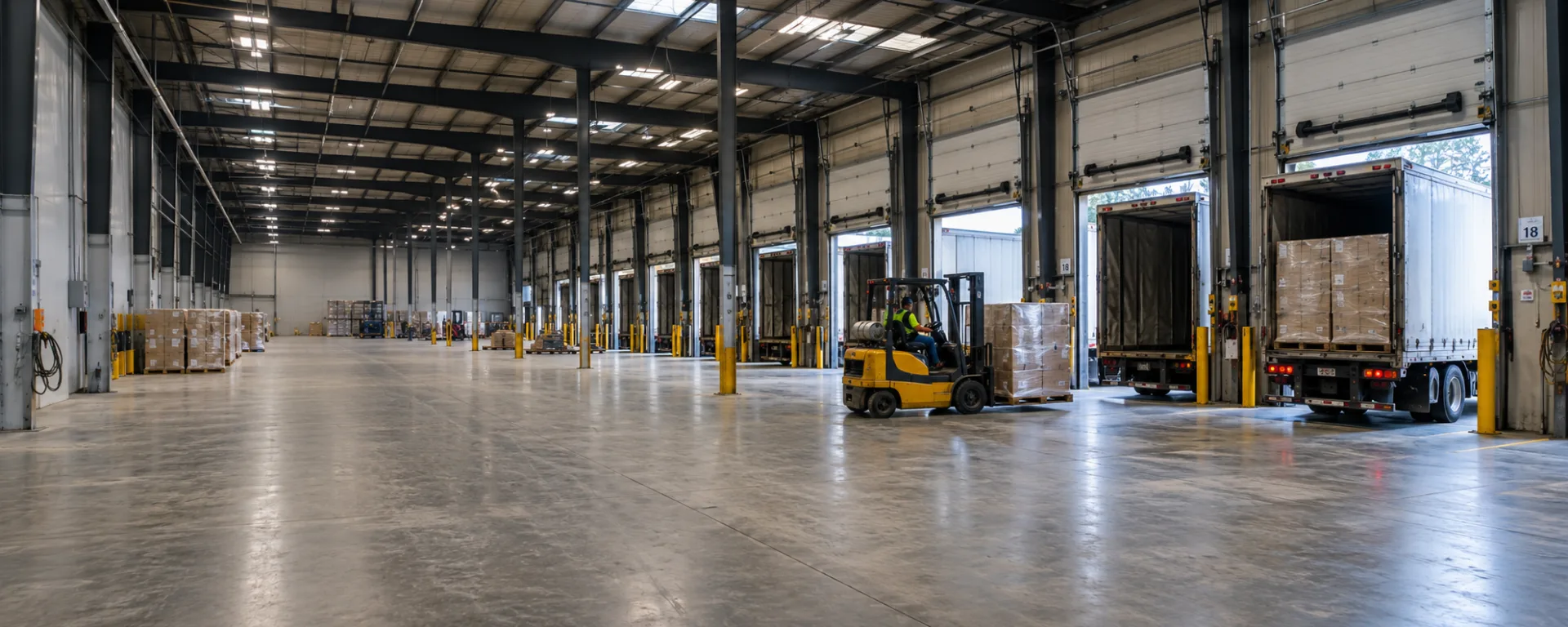
The name comes from the physical layout it was originally built around: a warehouse with docks on both sides, inbound on one, outbound on the other, and freight crossing the floor between them rather than going deep into storage.
How Cross-Docking Actually Works
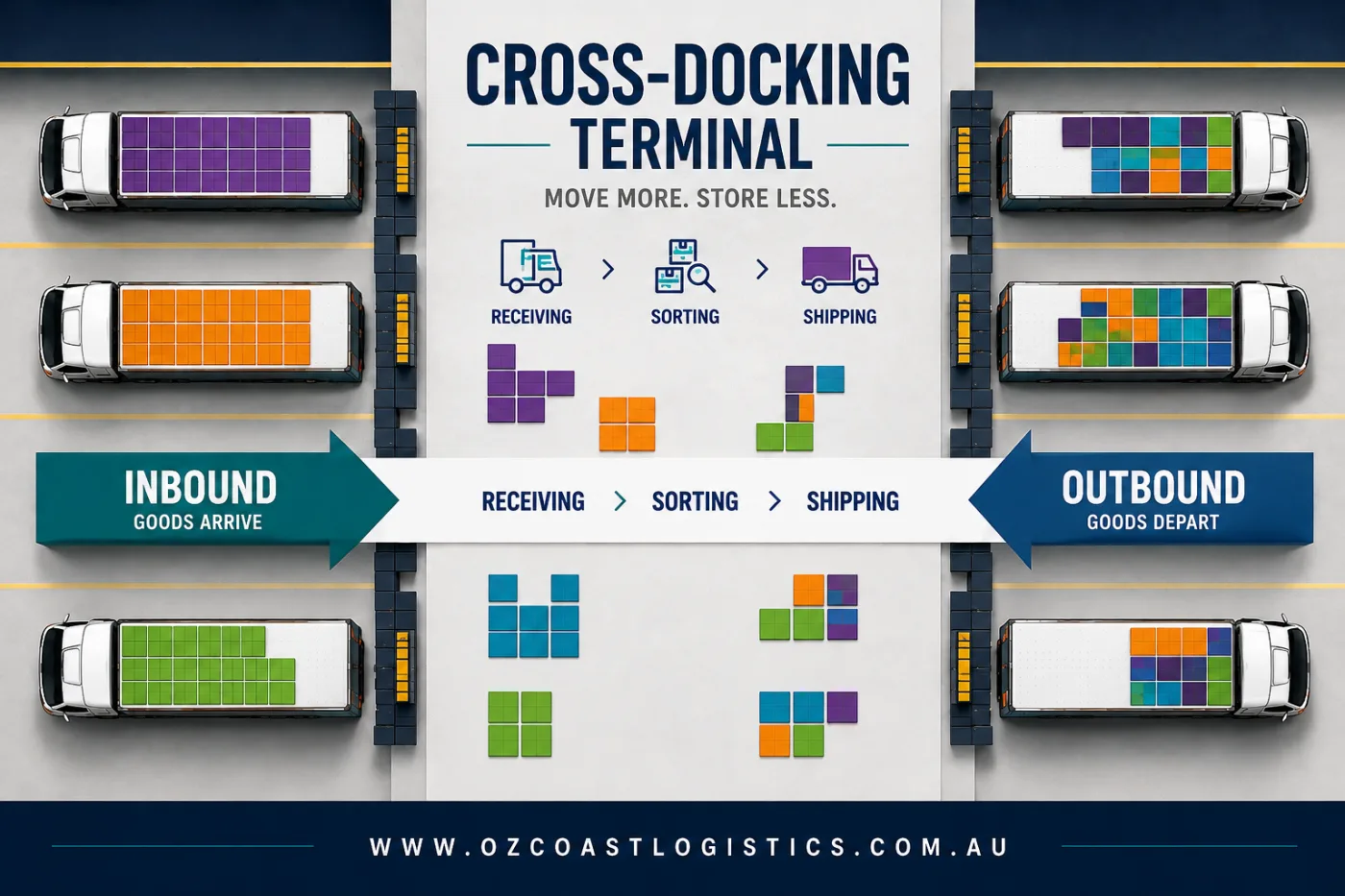
A typical cross-dock movement follows a consistent pattern:
- An inbound truck arrives and is unloaded at the dock.
- Goods are sorted, based on their final destination or which outbound run they're consolidating into.
- Sorted freight is moved directly to the relevant outbound vehicle, often within the same day.
- The outbound truck departs once it's loaded, without the freight ever being placed into long-term storage.
The efficiency comes from timing. It only works when inbound and outbound schedules are coordinated closely enough that goods don't end up waiting around anyway, which defeats the purpose.
Cross-Docking vs Traditional Warehousing
| Cross-docking | Traditional warehousing | |
|---|---|---|
| Storage time | Minimal to none, usually hours | Days to months |
| Best suited to | Predictable, high-frequency freight flows | Irregular demand, inventory buffering |
| Primary benefit | Speed, reduced handling, lower storage cost | Flexibility, inventory availability |
| Coordination required | High, inbound and outbound need to align | Lower, goods can wait for the next pick |
Neither one is universally better. They solve different problems, and a lot of businesses genuinely need both, cross-docking for high-frequency, predictable flows and traditional storage for everything else.
Who Actually Benefits From Cross-Docking
- Businesses consolidating multiple smaller shipments into one larger outbound run, rather than sending several partial loads
- Retailers and distributors with frequent, predictable replenishment cycles, where goods need to keep moving rather than sit
- Anyone deconsolidating an LCL container, where mixed cargo needs sorting and redirecting to different destinations once it's unpacked, a natural pairing with the process covered in our Shipping Container Transport guide
- Time-sensitive freight where the cost and delay of an extra storage step doesn't make sense
It's a poor fit for irregular, one-off shipments that genuinely need somewhere to sit until a specific pickup date, that's what traditional storage is for.
What Makes a Shipment a Good Fit for Cross-Docking
- Predictable volume and timing, so inbound and outbound schedules can actually be coordinated
- Goods that are already sorted or clearly labelled by destination, reducing handling time at the dock
- A genuine need to move quickly rather than store, not just a preference
- Enough regularity that the coordination overhead is worth it, a single irregular shipment usually isn't
Cross-Docking and Dangerous Goods
Not all freight can share a dock or a load without restriction. Where dangerous goods are part of a cross-docked shipment, segregation requirements still apply the same way they would in any other handling step, goods that can't travel or be stored together under the ADG Code can't be cross-docked together either. This is one of the reasons cross-dock facilities need proper DG-handling capability, not just speed, if dangerous goods are ever part of the mix.
How Ozcoast Handles Cross-Docking
Cross-docking sits within our warehousing and distribution service, alongside storage and pick and pack, with dangerous goods segregation handled where the relevant approvals are in place. If you're consolidating multiple smaller runs into one, or moving freight that shouldn't sit in storage waiting for its next leg, it's worth asking whether a cross-dock movement fits better than standard warehousing before you book.
If you're not sure which one your shipment actually needs, describe the flow, how often it happens and how predictable the timing is, and we'll tell you honestly whether cross-docking makes sense or whether standard storage is the better fit.