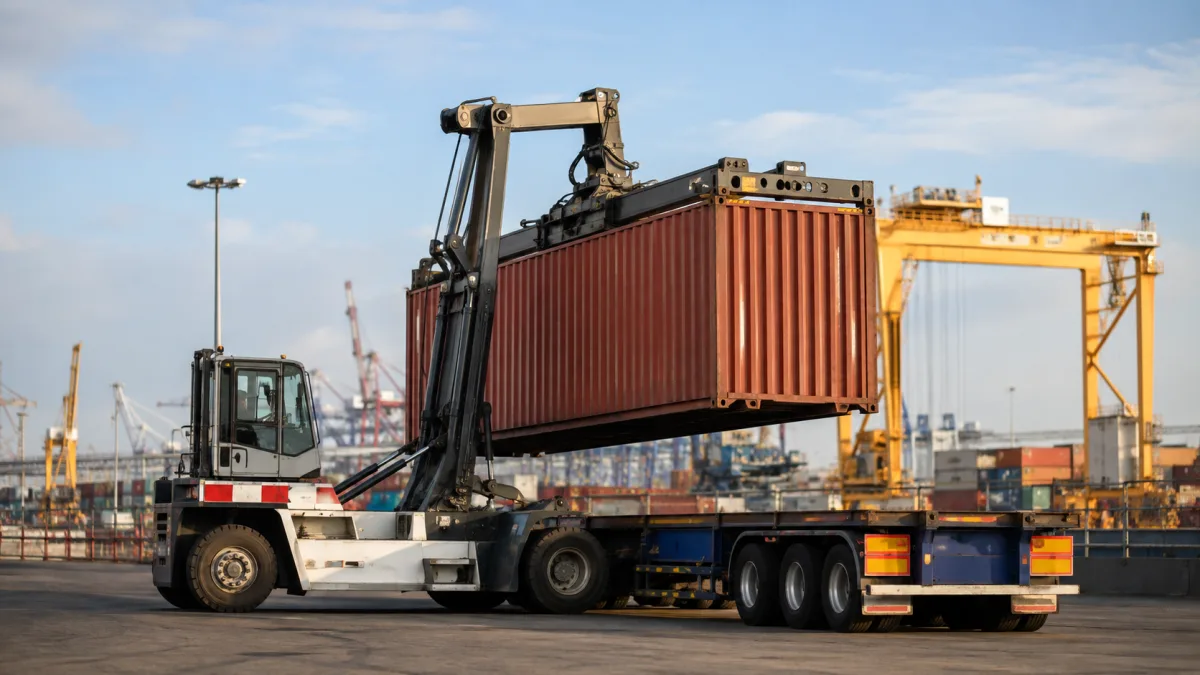
Most container deliveries that go wrong don't go wrong on the road. They go wrong in the last twenty metres: a gate a little too narrow, a tree branch over the drop spot, ground that looked firm until a loaded trailer stood on it. When the truck is a side loader, those last twenty metres decide whether the container ends up exactly where you want it or back at the depot.
Here's how a container side loader works, how it compares with the other ways to get a container onto your site, and what to check before the truck turns up.
What a Side Loader Is
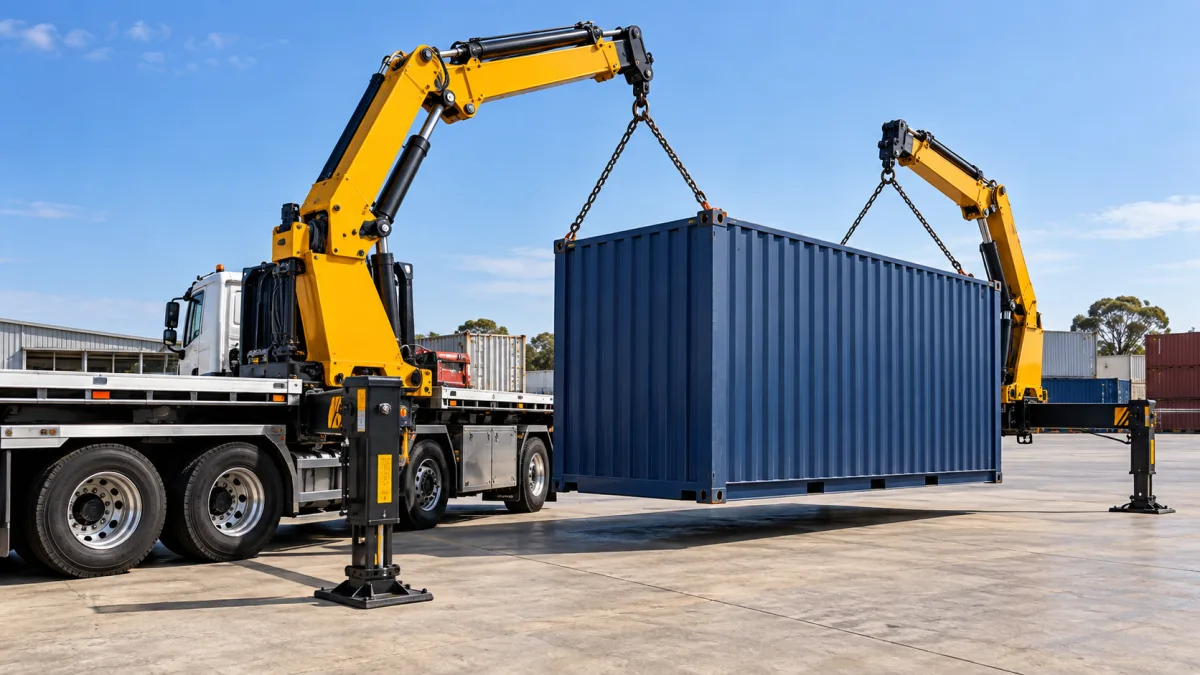
A side loader, also called a side lifter or sidelifter, is a truck and trailer combination with its own lifting gear. Two hydraulic crane arms sit on the trailer, one at each end. They hook onto the container, lift it, and swing it sideways off the trailer and down onto the ground beside the truck. Stabiliser legs extend from the side of the trailer to keep the whole rig steady during the lift.
The point is that the truck brings its own handling equipment. You don't need a forklift big enough for a laden container, a crane booking, or a loading dock. For a lot of Australian sites, including factories without container-rated forklifts, building sites, farms and storage yards, that's what makes a container delivery possible at all.
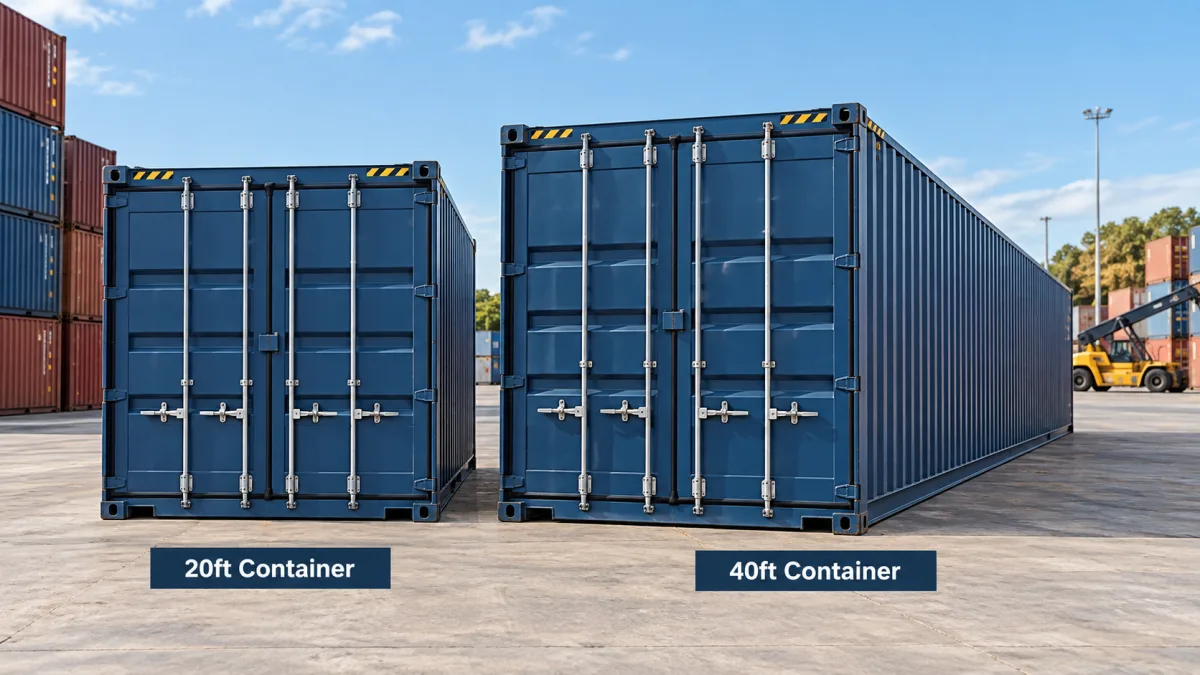
Most side loaders can handle both 20ft and 40ft containers. Lift capacity varies between units, so for a heavily loaded container it's worth confirming the weight at quote stage rather than assuming any side loader will take it. Our shipping container dimensions guide covers the tare and maximum gross weights for common sizes.
How a Side Loader Delivery Works
A typical side loader drop runs like this:
- The truck positions alongside the drop spot. The container ends up next to the trailer, not behind it, so the driver parks parallel to where it needs to go.
- Stabiliser legs go down on the side where the container will be placed, spreading the load onto the ground.
- The arms lift the container clear of the trailer deck, swing it out, and lower it to the ground.
- The arms release, the legs come up, and the truck drives away. The container is sitting on the ground at the spot you marked.
Pickup is the same process in reverse. That matters because most imported containers have to go back empty once they're unpacked, so whatever access worked for the delivery has to work again for the return. For how the full port-to-site job fits together, including the empty return, see our guide to shipping container transport.
Side Loader vs Tilt Tray vs Leaving It on the Trailer
A side loader is one of three common ways to handle a container at the delivery end. Each suits a different kind of site.
| Side loader | Tilt tray | Container stays on the trailer | |
|---|---|---|---|
| How it gets unloaded | Lifted sideways onto the ground by the truck's own arms | Deck tilts and the container slides off the back | Unpacked at the dock or with a forklift while still on the trailer |
| Where the container ends up | On the ground beside where the truck parked | On the ground behind where the truck stopped | Stays on the vehicle, leaves when empty |
| Space it needs | Width beside the truck, plus height for the arms | A long, straight run in front of the drop spot | Truck access to a dock or forklift area |
| Container sizes | Typically 20ft and 40ft | Typically 20ft; larger units vary | Any size the trailer carries |
| Door orientation | Doors can face either end, planned before lifting | Doors usually face the direction the truck drove away from | Set by how the trailer is parked |
| Best for | Containers staying on site for days or longer, sites without heavy lifting gear | Tight width but long straight access, lighter or empty containers | Quick unpacks at premises with a dock or container forklift |
None of these is always best. A warehouse with a dock and a forklift may not need the container on the ground at all. A building site that needs a storage container for months almost always does. If you're not sure, describe the site when you ask for a quote and let the equipment be matched to it. Our container transport service uses side-loaders, tilt trays and flat-beds, and chooses based on the size and weight of the container and the delivery site.
How Much Space a Side Loader Needs
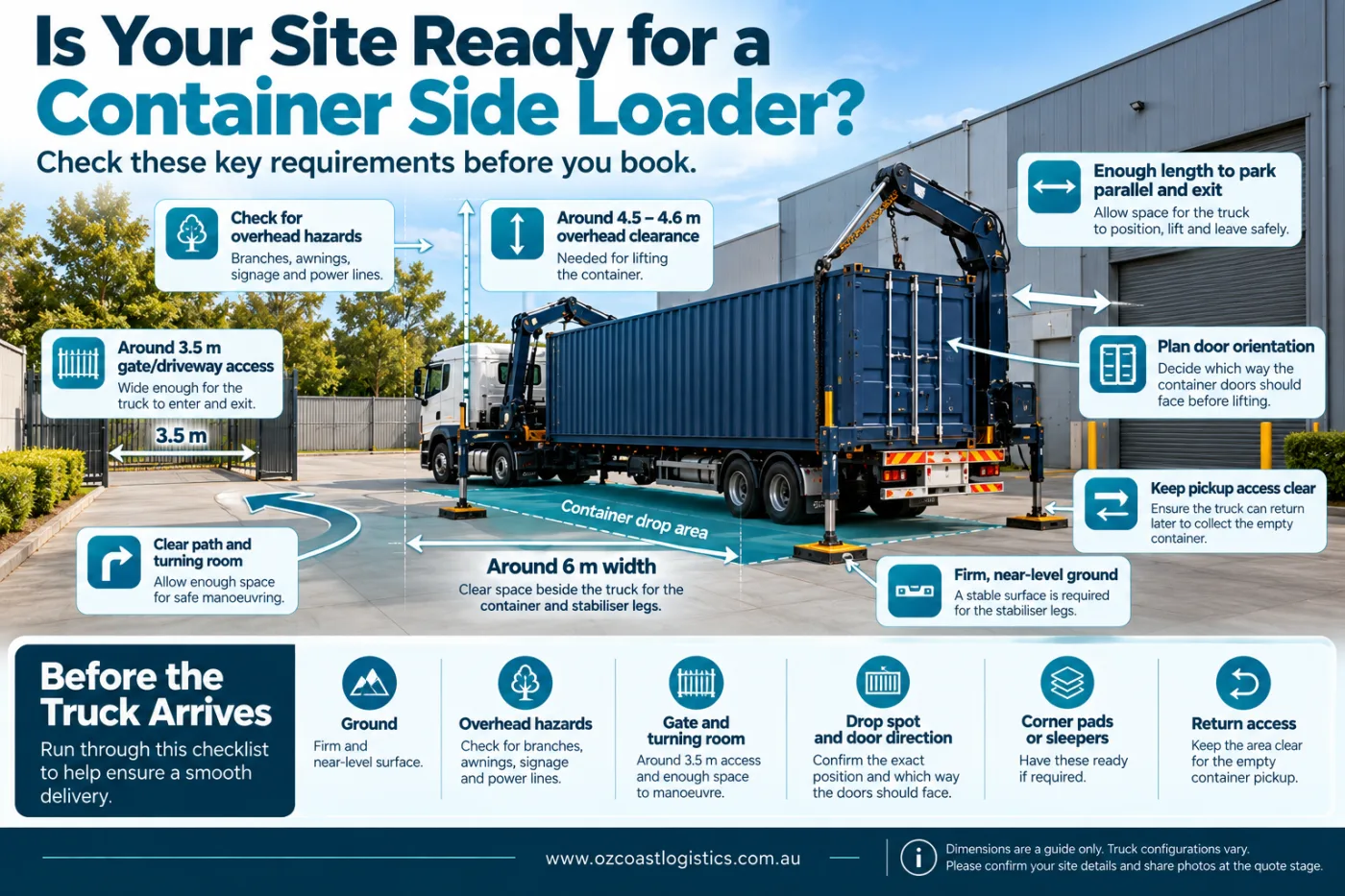
The figures commonly quoted by container operators for a side loader drop are roughly:
- Height: around 4.5 to 4.6 metres of clear space above the drop area and along the truck's path, so the arms can lift the container without hitting anything.
- Width: around 6 metres from the side of the truck to beyond the drop spot, to allow for the trailer, the stabiliser legs and the container itself.
- Access width: around 3.5 metres through gates and driveways for the truck to get in.
- Length: enough for the full truck and trailer to park parallel to the drop spot and then drive out. A 40ft container needs a much longer trailer, and so more room, than a 20ft one.
Treat these as a starting point. Truck and trailer combinations vary, and the driver has the final say on the day about whether a lift is safe. If your site is close to any of these limits, say so when you book and send photos. It's much cheaper to sort out beforehand than to pay for a truck that can't complete the drop.
Overhead hazards
Overhead clearance is the one that catches people out. Tree branches, carports, awnings, signage and, most importantly, power lines all sit in the lifting zone. Every state sets minimum approach distances from overhead power lines, and a driver won't lift near them. If there are lines anywhere near the drop area, mention them at booking.
Ground conditions
The stabiliser legs push a large part of the weight into a small patch of ground. Concrete and compacted hardstand are ideal. Grass, freshly laid gravel, soft fill and ground that's been rained on can give way under the legs or the container. Also watch for pits, sewer covers, drains and anything else buried just under the surface near the drop spot.
Before the Truck Arrives: A Site Checklist
- Mark the exact drop spot and tell the driver which way the doors should face. Once the container is down, turning it around means another lift.
- Check the ground is firm and close to level. A container sitting on uneven ground can twist slightly, and doors on a twisted container can bind or refuse to open.
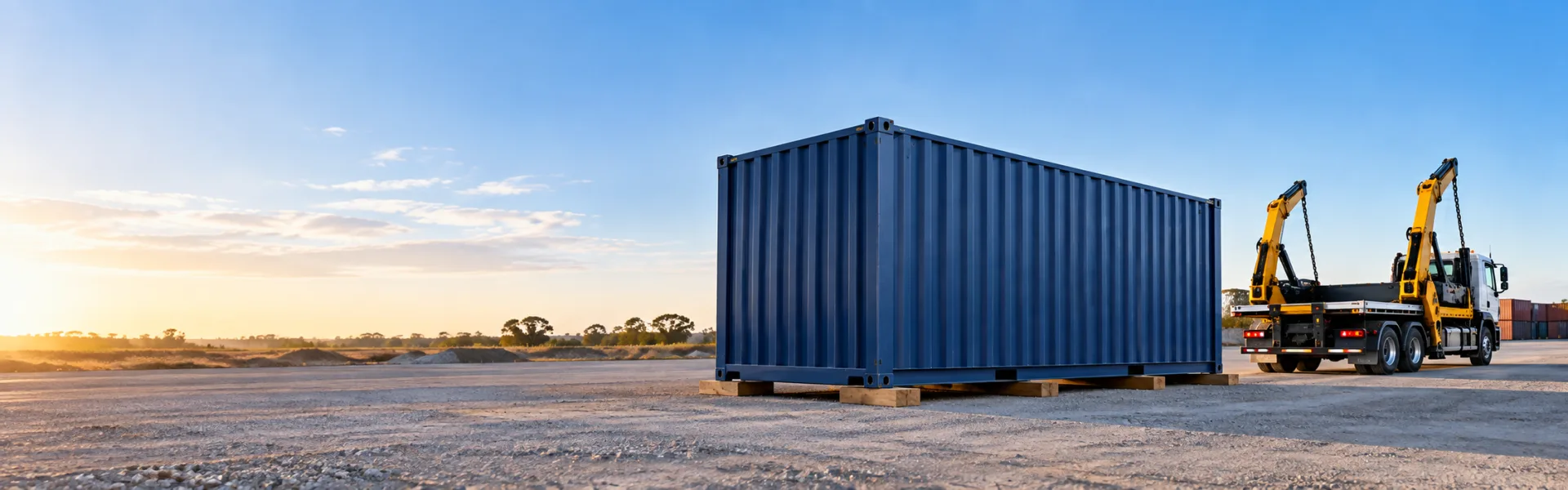
- Think about what goes under the corners. Many people place timber sleepers or pads under the corner castings to keep the container level and off wet ground. Have them ready if you want them.
- Clear the path. Move vehicles, bins, pallets and anything else between the gate and the drop spot.
- Look up. Check for branches, cables, roof overhangs and power lines over the truck's path and the drop area.
- Check the gate and turning room. A truck that fits through the gate still needs space to turn in and get back out.
- Plan the return. If the container will be picked up empty later, keep the same access clear for the pickup. Don't stack new materials against it.
- Have someone on site who can confirm the drop location and sign for the delivery.
Timing, Free Days and the Empty Return
For an imported container, the clock often starts before the side loader arrives. Shipping lines usually allow a set number of free days before detention charges apply, and those charges come from the shipping line, not the transport company. A side loader drop gives you the most freedom to unpack at your own pace, but plan the unpack and book the empty return with those free days in mind.
If you're unpacking by hand and the container is being left on the ground, it's worth planning how the goods will come out as well. A container floor sits a little above ground level, so heavy items need a ramp, a pallet jack that suits the surface, or a forklift that can reach inside. For palletised freight that then needs to move on, our pallet delivery service picks up from your site once it's unpacked.
Booking a Side Loader With Ozcoast
When you request a quote for a side loader delivery, the details that matter most are:
- Container size and type, and the approximate gross weight
- Where it's being collected from (wharf, depot or another site)
- The delivery address, plus photos of the gate, driveway and drop area
- Any overhead hazards, soft ground or tight turns you know about
- Which way the doors should face
- Whether the container stays on site or goes back empty, and roughly when
With that information we can confirm whether a side loader, tilt tray or another setup suits your site, and give you a quote that holds up on the day.