
Darwin to Perth Road Freight
Darwin to Perth crosses the most remote country of any lane in the country. Around 4,030 km down the Great Northern Highway through the Kimberley and the Pilbara, with genuinely long distances between anything and a wet season that can close the route rather than merely delay it. Ozcoast Logistics manages the whole run end to end, and on a corridor this exposed we plan conservatively and tell you honestly what the timing looks like before you commit.
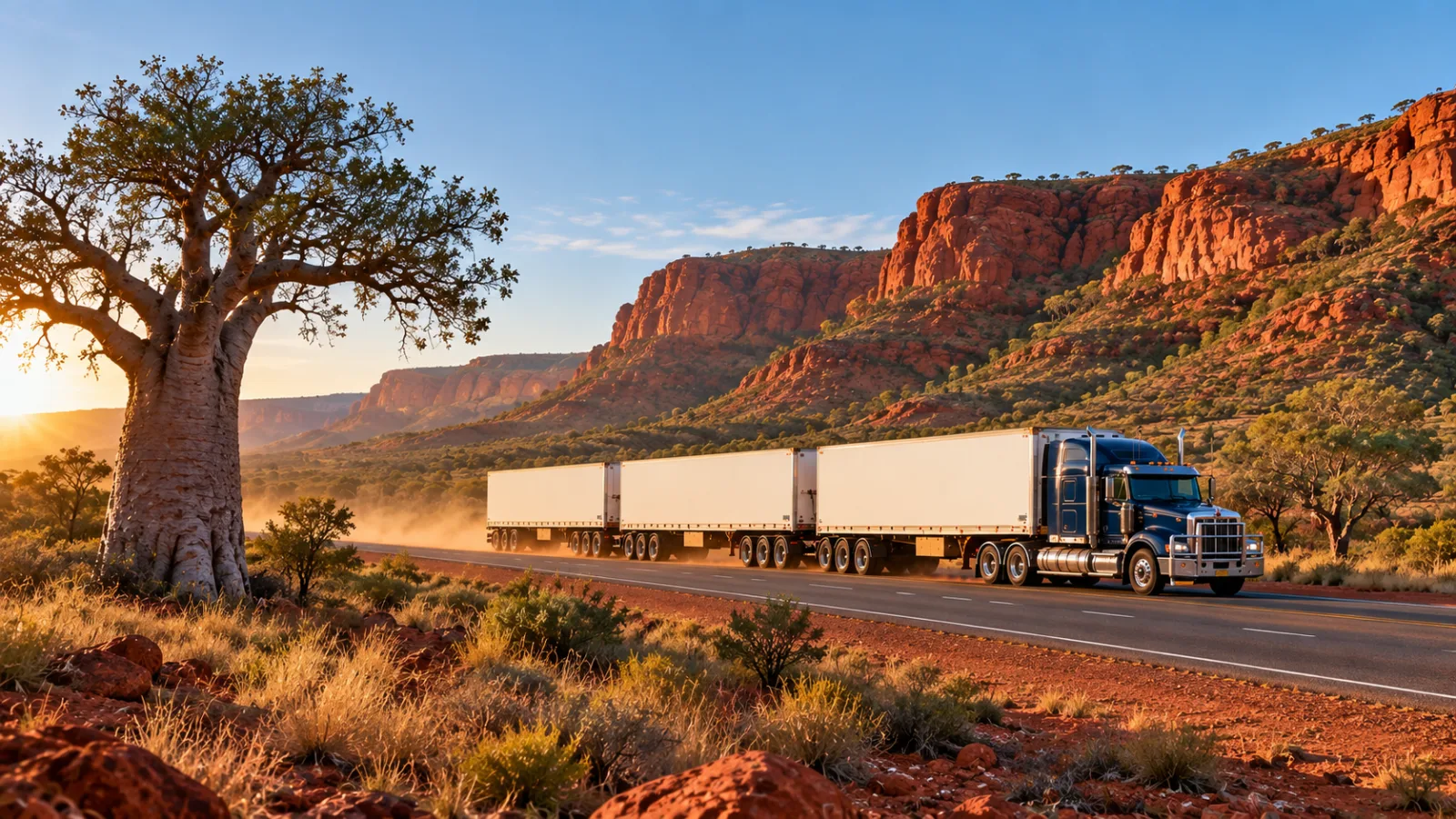
The Darwin to Perth corridor
Freight leaves Darwin south on the Stuart Highway to Katherine, then turns west on the Victoria Highway through Timber Creek and across the border to Kununurra. From there the Great Northern Highway runs south-west through Halls Creek, Fitzroy Crossing and Broome, then down the coast through Port Hedland and inland through Newman to Perth. Around 4,030 km, and there is no shorter sealed alternative.
This is the most remote corridor we operate. Long sections carry very little traffic, the distances between fuel and rest are substantial, and once freight is on the Great Northern there is limited capacity to recover from a problem quickly. It is road train country for most of the way, which is what keeps the cost per tonne sensible over a distance like this.
The wet season deserves stating plainly rather than as a footnote. From roughly November to April, the Kimberley receives monsoon rain on a scale that closes roads rather than slowing them. Sections of the Great Northern and the Victoria Highway have been cut for extended periods in major seasons, and because there is no parallel route, a closure means waiting. The alternative southern route via the Stuart and the Nullarbor adds around 2,000 km, so diverting is a serious decision rather than a minor adjustment. Through those months we quote wider windows, watch conditions closely, and will tell you before you book if the timing looks unrealistic.
The freight reflects the country. Mining and resources supply moves through this corridor for the Kimberley and Pilbara operations, along with station and pastoral requirements, camp supply, and the general goods that remote towns need. Vehicles and machinery travel well on this lane because they need space rather than speed.
Direction matters too. Both Darwin and Perth are net consumers on this corridor rather than producers for each other, so neither leg fills naturally, and consolidation depends on what is moving through the north-west generally. That makes flexibility on timing worth real money here.
At the Perth end, delivery is into Kewdale, Welshpool, Canning Vale and the freight precinct. Time zones are simpler than most interstate lanes: Western Australia and the Northern Territory sit an hour and a half apart, and neither observes daylight saving, so the gap stays constant year-round.
Smaller consignments travel as part loads so you pay for the deck space you use. Full loads and time-critical freight take a dedicated vehicle. One coordinator owns your job from pickup through to proof of delivery, with a direct line.
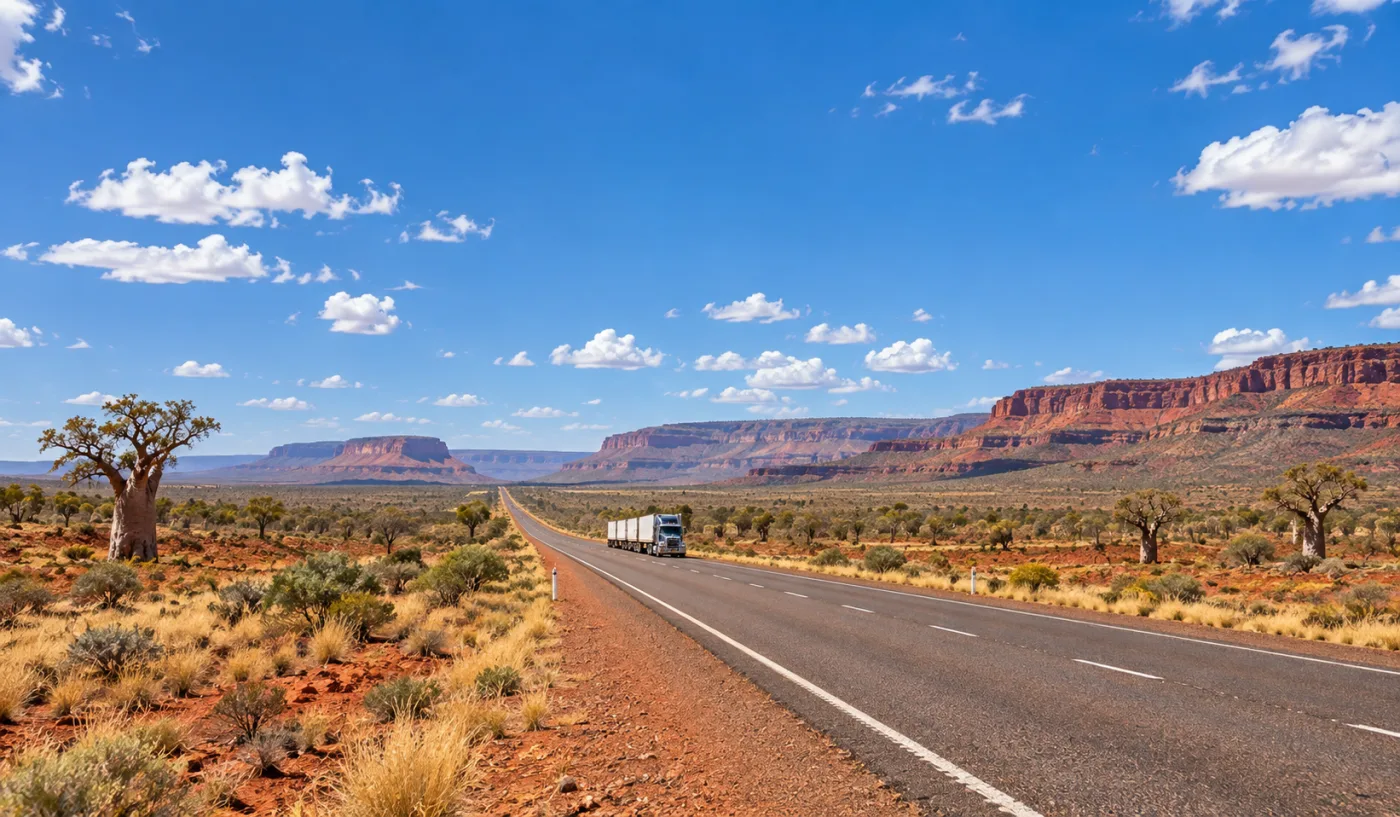
Through the Kimberley and the Pilbara
The most remote road freight corridor in the country
There is no comparable lane in Australia for sheer remoteness, and understanding that is most of what separates a carrier who runs this corridor from one who quotes it off a map.
The route crosses the Kimberley, through Kununurra, Halls Creek, Fitzroy Crossing and Broome, then works down through the Pilbara past Port Hedland and Newman. Between those towns the distances are genuinely long, the traffic is light, and services are widely spaced. A mechanical problem or a delay in this country is not resolved in an afternoon.
That shapes how the run is planned. Fuel range and rest stops determine the schedule as much as the distance does. Road trains carry the load because multi-trailer combinations are what make a corridor this long economic. And we plan conservatively rather than optimistically, because there is no margin to make up out there.
It also shapes what we ask of you. Tell us the real weight and dimensions rather than estimates, because equipment cannot be swapped at Halls Creek. Tell us if anything is fragile or temperature-sensitive, because the conditions through the Kimberley and Pilbara in summer are extreme. And tell us honestly how firm your deadline is, because on this lane a promise we cannot keep helps nobody.
What the corridor does well is move things that need space rather than speed: machinery, vehicles, camp supply, mining equipment, palletised volume. On that freight, road across the north is often the only practical option, and it works.
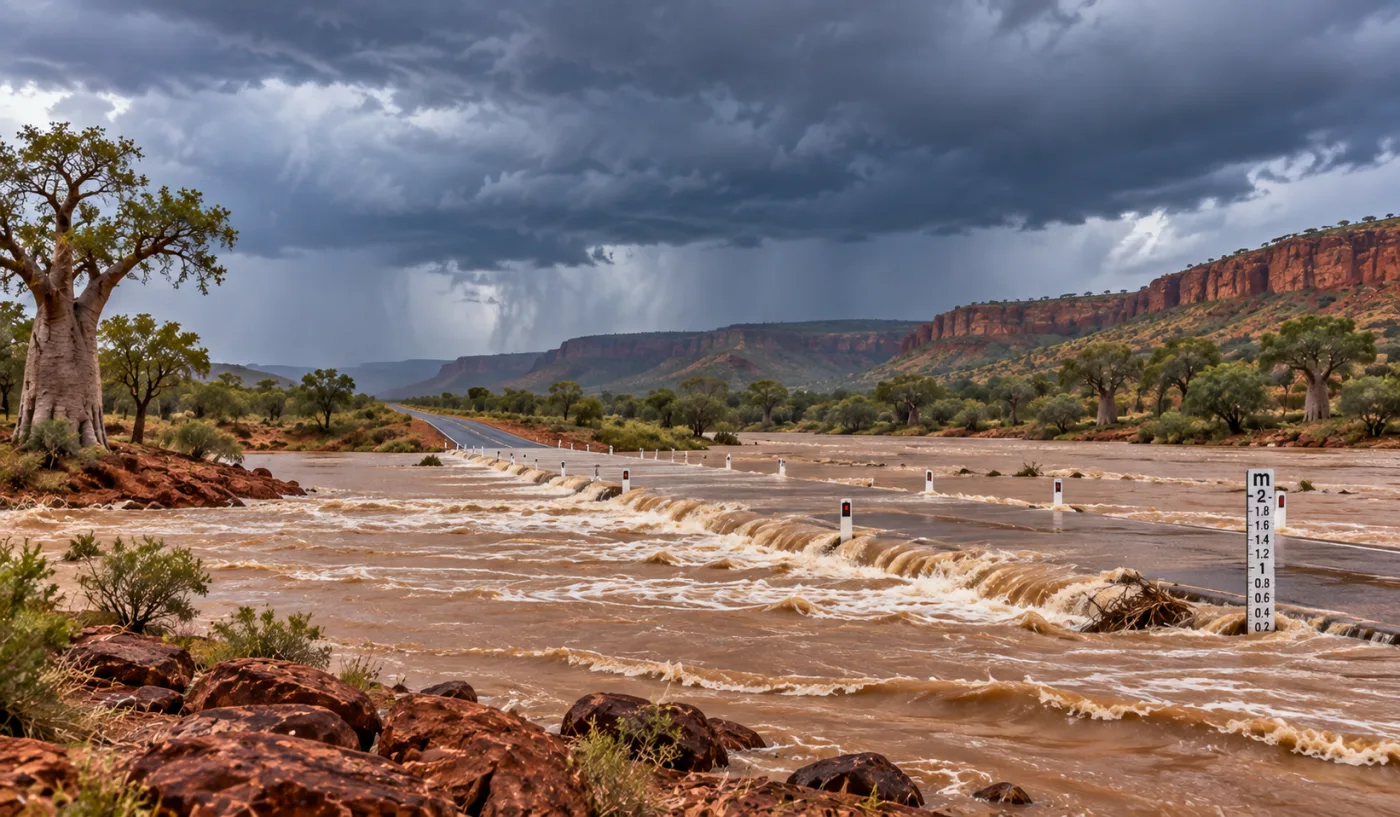
When the Wet Closes the Road
Why November to April changes the conversation
Most freight pages mention the wet season. On this corridor it needs more than a mention, because the Kimberley wet does not slow the road, it closes it.
From roughly November to April, monsoon systems bring rain in volumes that flood river crossings and cut highway sections outright. The Victoria Highway and parts of the Great Northern have been closed for extended periods in major seasons, and remote communities and towns have been isolated for weeks rather than days.
There is no parallel route. The only alternative is the southern road via the Stuart Highway to Port Augusta and the Eyre Highway across the Nullarbor, which adds roughly 2,000 km and several days. That is a genuine option rather than a theoretical one, but it is a substantial decision with a substantial cost, not a minor diversion.
So through the wet we do three things. We quote wider windows rather than the best case, and we explain why. We watch conditions across the corridor rather than assuming. And where the timing looks genuinely unrealistic, we say so before you book rather than after your freight is sitting at Fitzroy Crossing.
If your consignment is flexible, moving it in the dry season, roughly May to October, is the single best decision you can make on this lane. The corridor is predictable then, the towns are busy, and the transit is what we quote.
If it cannot wait, tell us and we will talk through the options honestly, including whether the southern route makes more sense for your particular freight.
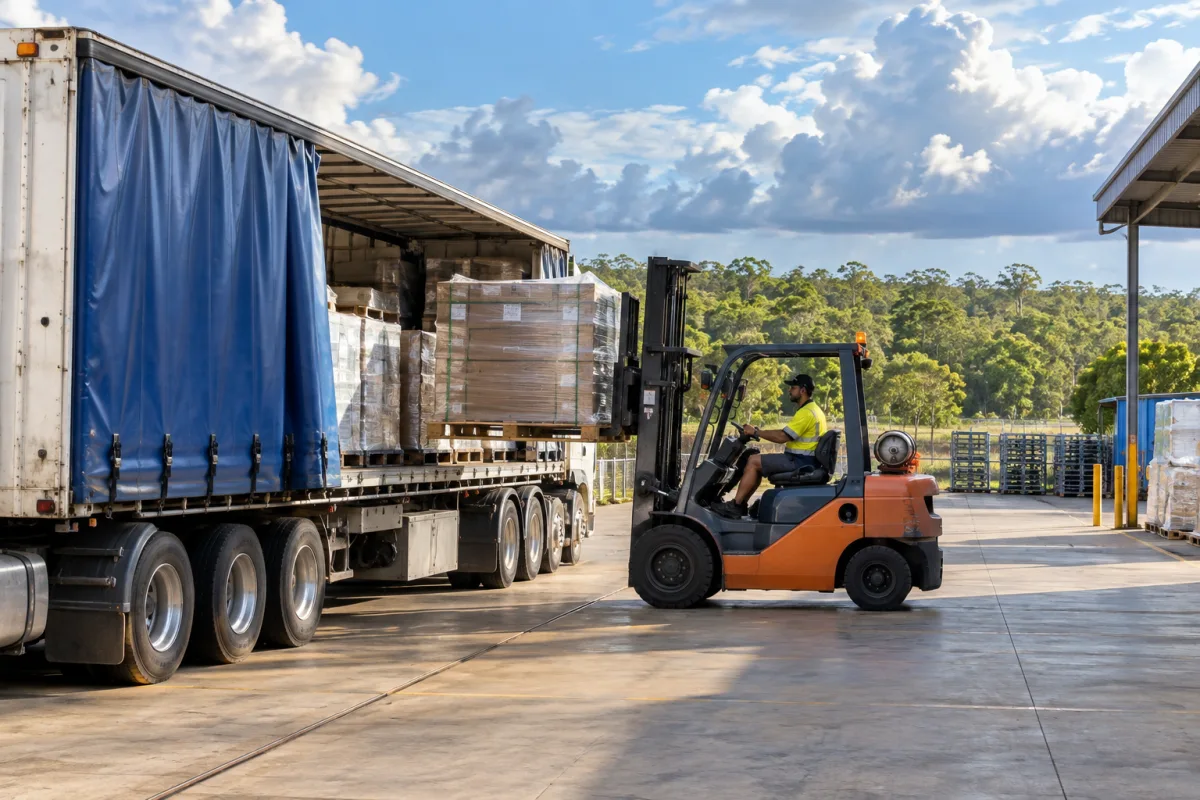
What we carry on this route
This corridor suits freight that needs space rather than speed, and it rewards flexible timing. These are what we move most often. If yours is not here, ring us, and tell us honestly how firm your deadline is.
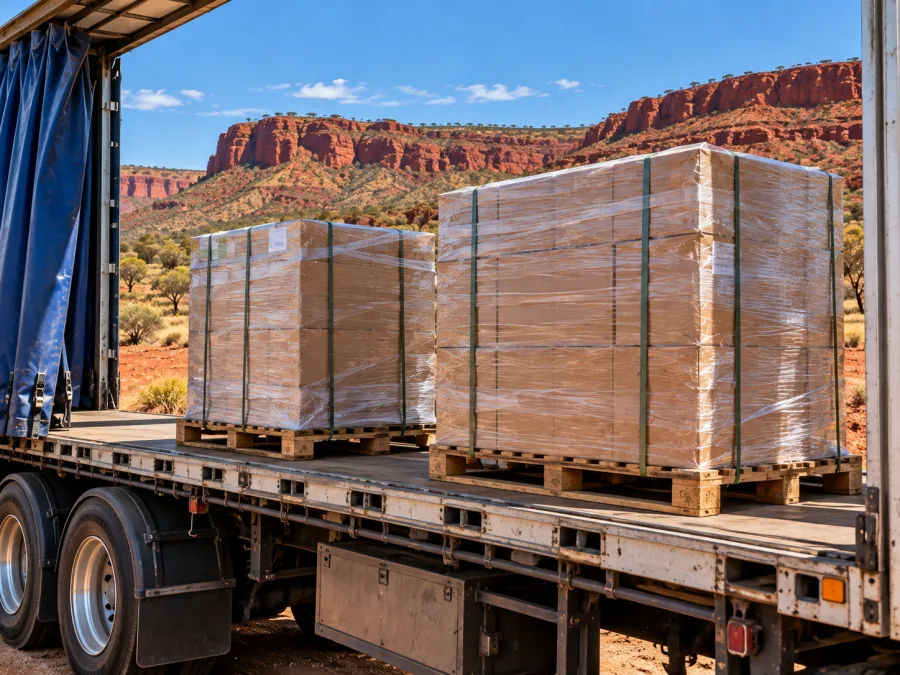
Palletised & General Freight
Standard and oversize pallets out of Berrimah, East Arm and Winnellie, consolidated for the run across the north.
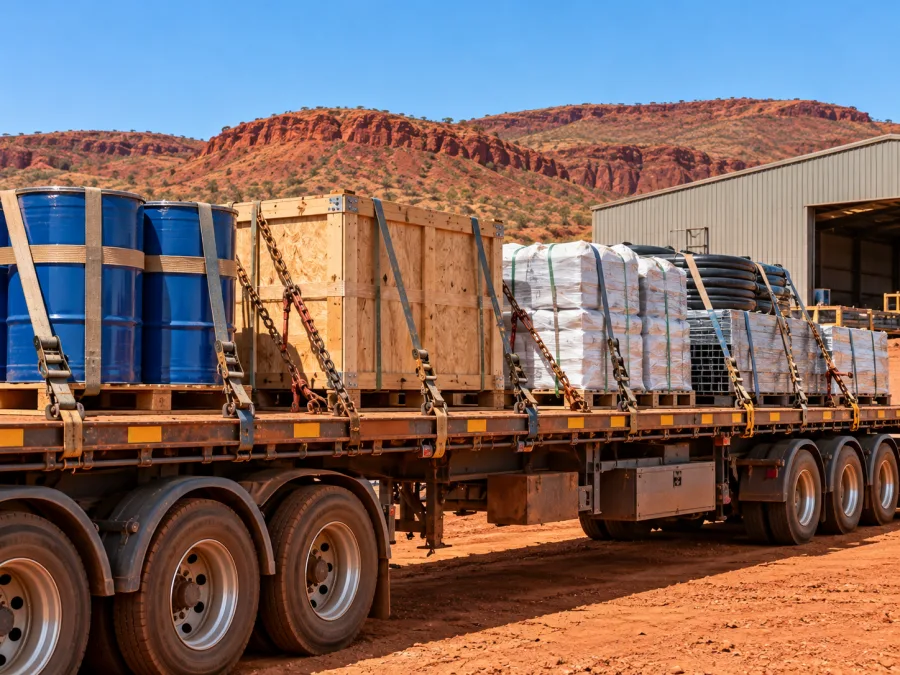
Mining & Resources Supply
Consumables, spares and equipment for Kimberley and Pilbara operations, and for the WA resources sector generally.
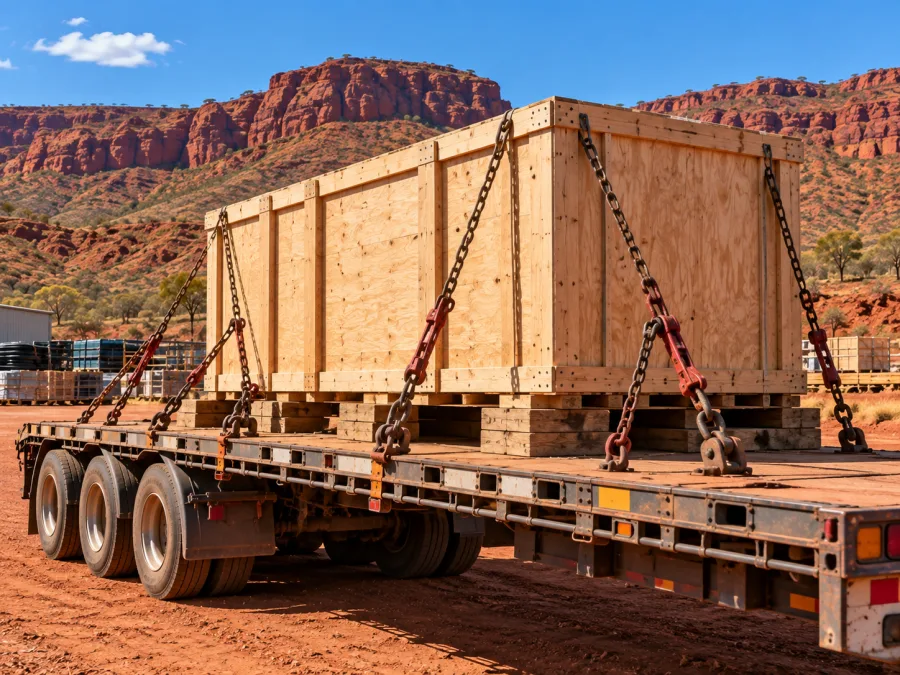
Machinery, Plant & Equipment
Crated components and plant that need space rather than speed. Lift and access confirmed before we load.
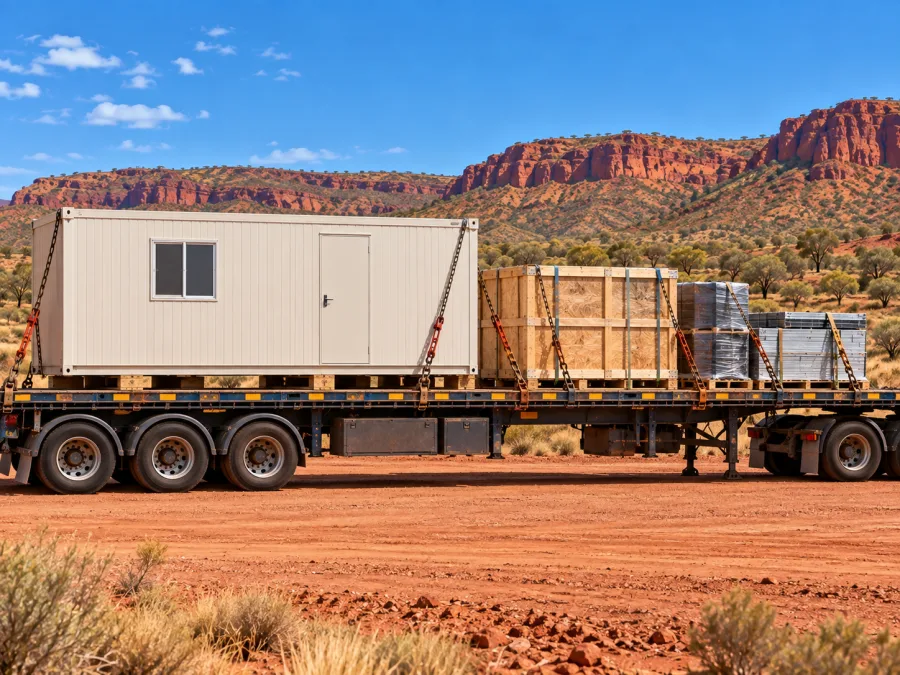
Camp & Remote Site Supply
Accommodation units, kitchen equipment, bedding and the consumables that keep remote camps running.
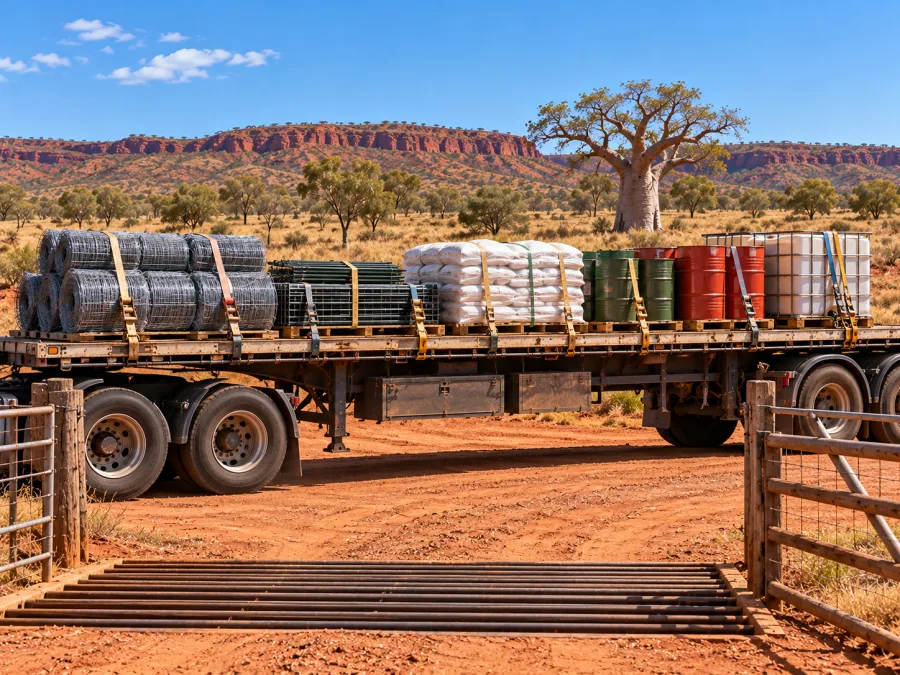
Station & Pastoral Supply
Fencing, feed, water gear and machinery parts for the cattle country across the north.
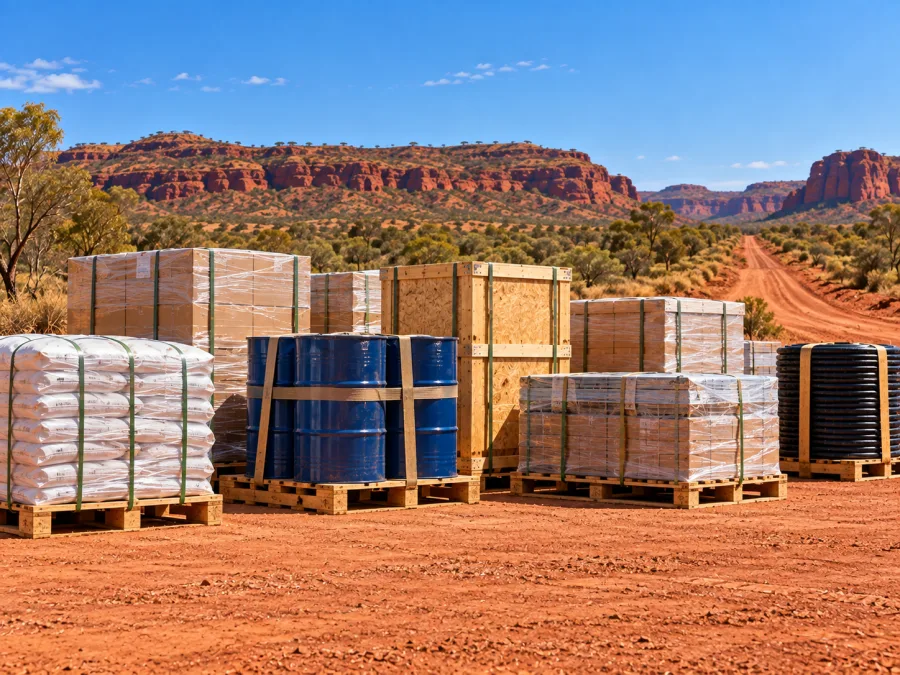
Remote Community Supply
Freight for the towns and communities along the corridor, timed carefully around the wet.
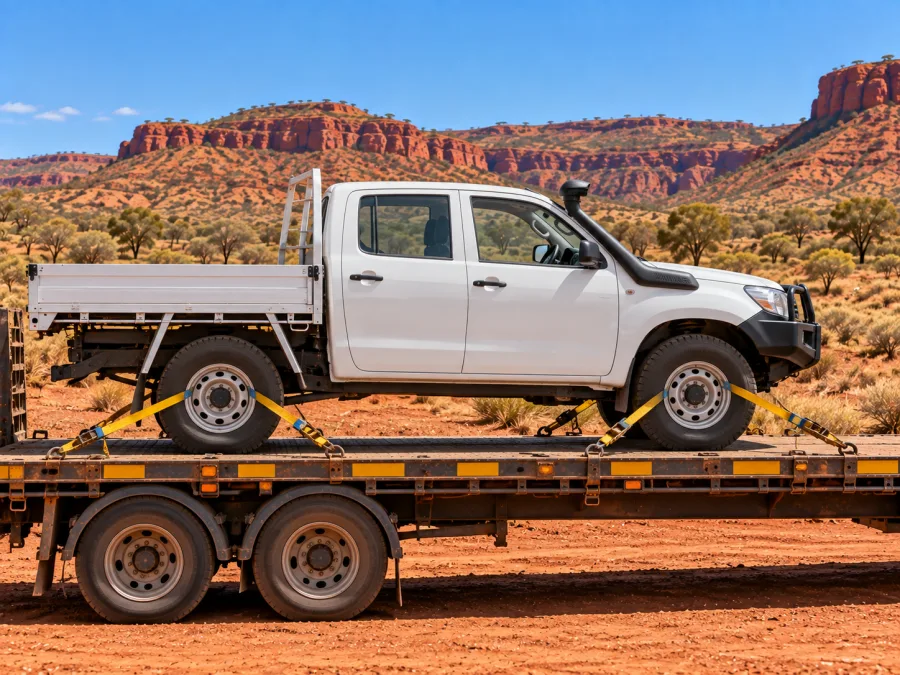
Cars & Light Vehicles
Relocations, fleet moves and dealer transfers. Tell us if it does not start, because a non-runner needs winching.
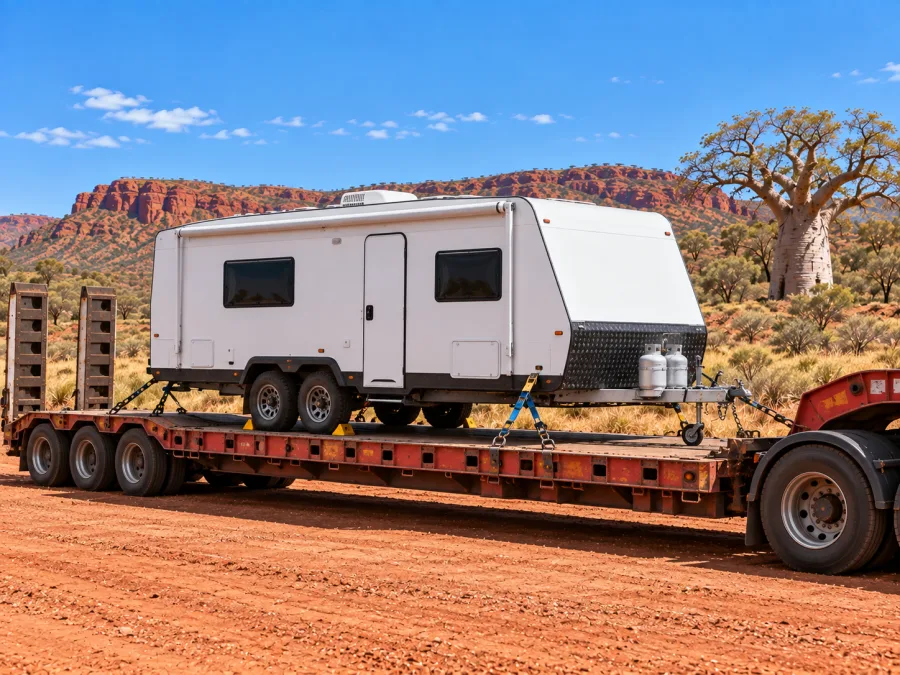
Caravans, Campers & Boats
Vans and hulls moving with owners, particularly at each end of the dry season.
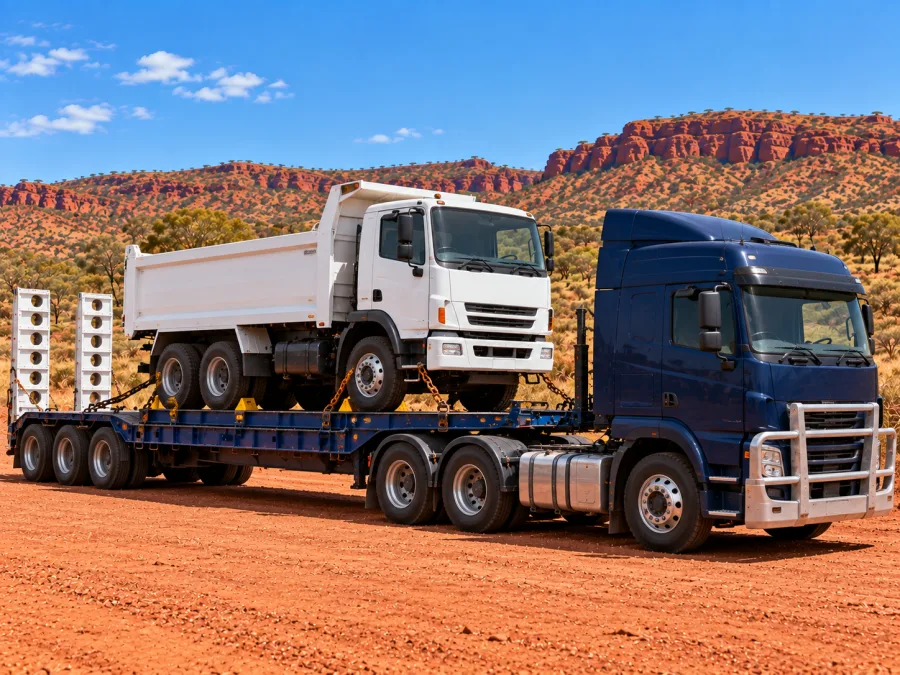
Trucks, Trailers & Plant
Relocated across the north, driven, towed or floated depending on registration and dimensions.
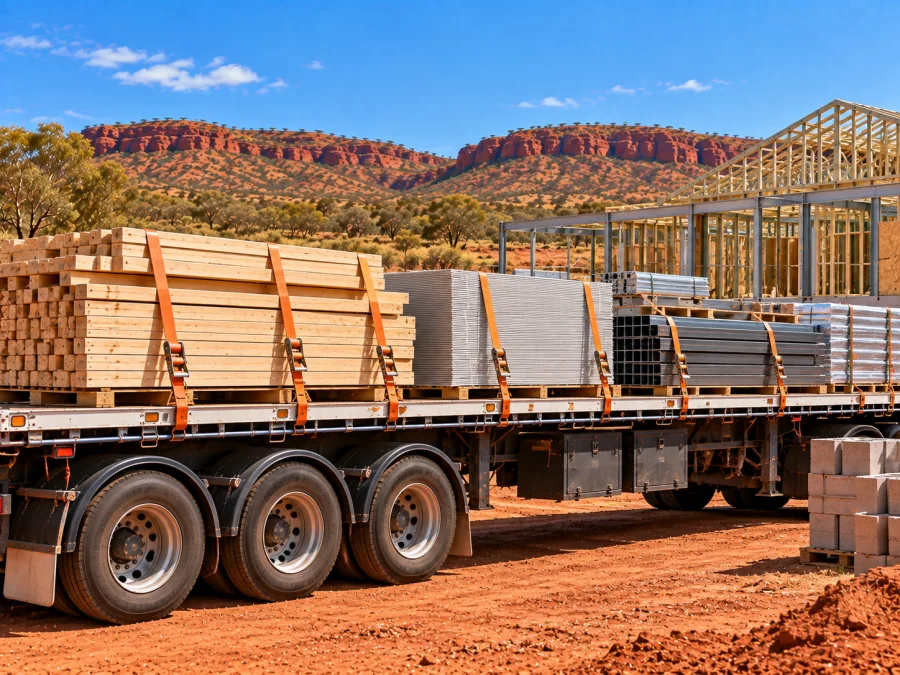
Building & Construction Materials
Fixings, framing, cladding and site consumables for remote towns and the Perth end.
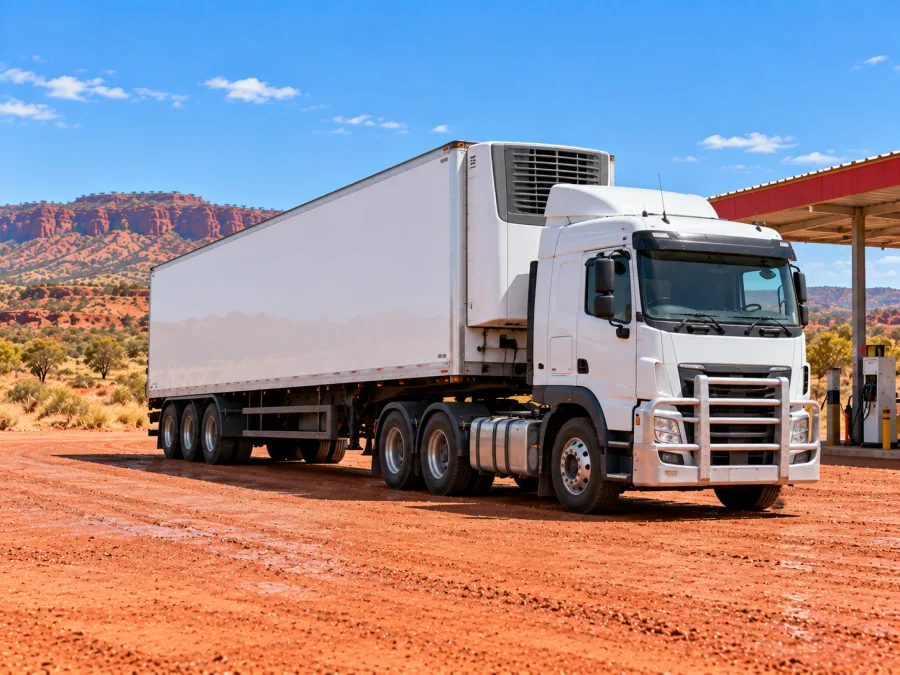
Chilled & Temperature-Controlled
Set-temperature capacity across extreme heat and a very long run. Discuss the tolerance before you commit.
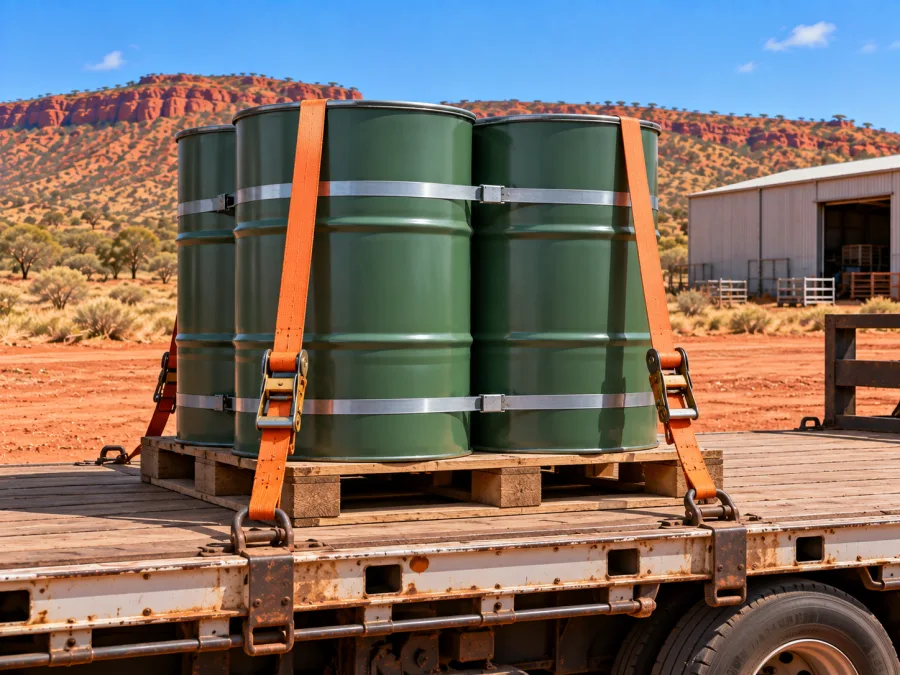
Dangerous Goods
Approved classes with correct documentation, segregation and placarding across two jurisdictions. UN number and class at quote stage.
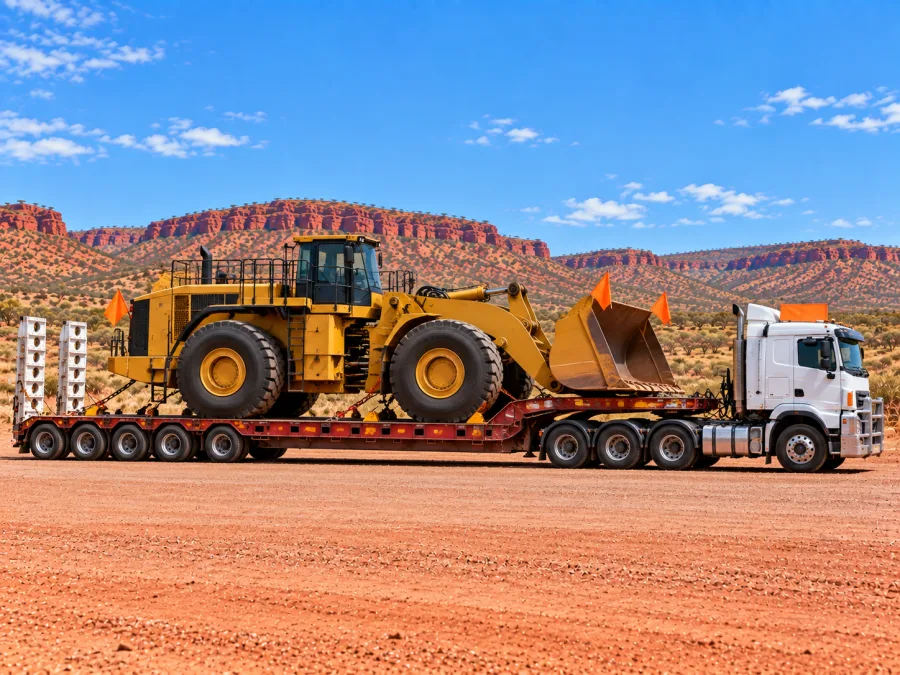
Oversize & Heavy Haulage
Over-dimensional and over-mass loads on permit across the Territory and WA. Long lead times on a corridor this remote.
Why choose Ozcoast for Darwin to Perth
We Plan for the Country, Not the Map
Fuel range, rest stops and recovery time decide this schedule as much as distance.
Honest About the Wet
November to April the Kimberley closes roads. We say so before you book, not after.
Road Trains Where They Belong
Multi-trailer combinations across the north keep the cost per tonne sensible.
Built for the Awkward Stuff
Machinery, vehicles, camp gear, mining equipment. Freight that needs space.
Flexibility Saves Real Money
Moving in the dry season rather than the wet is the best decision available on this lane.
Remote Access Sorted First
Camps and stations off the highway need arrangements made before the truck leaves.
A Name and a Direct Line
One coordinator on the most remote lane we run.
Collection & delivery areas
Darwin CBD, Berrimah, East Arm, Winnellie, Palmerston and the greater Darwin region
Perth CBD, Kewdale, Welshpool, Canning Vale, Malaga, Bibra Lake, Fremantle and Henderson
Frequently asked questions
How long does freight take from Darwin to Perth?
Which route does the freight take?
What happens during the wet season?
Should I wait until the dry season?
Can you deliver to towns along the way?
Can you deliver to a mine site, camp or station?
Do you carry freight from Perth back to Darwin?
Are road trains used on this route?
Can you hold temperature over a run this long?
Can you move oversize loads across the north?
Get a quote for Darwin to Perth
Tell us what you are moving and we will send a clear, itemised quote with no obligation, usually within business hours.