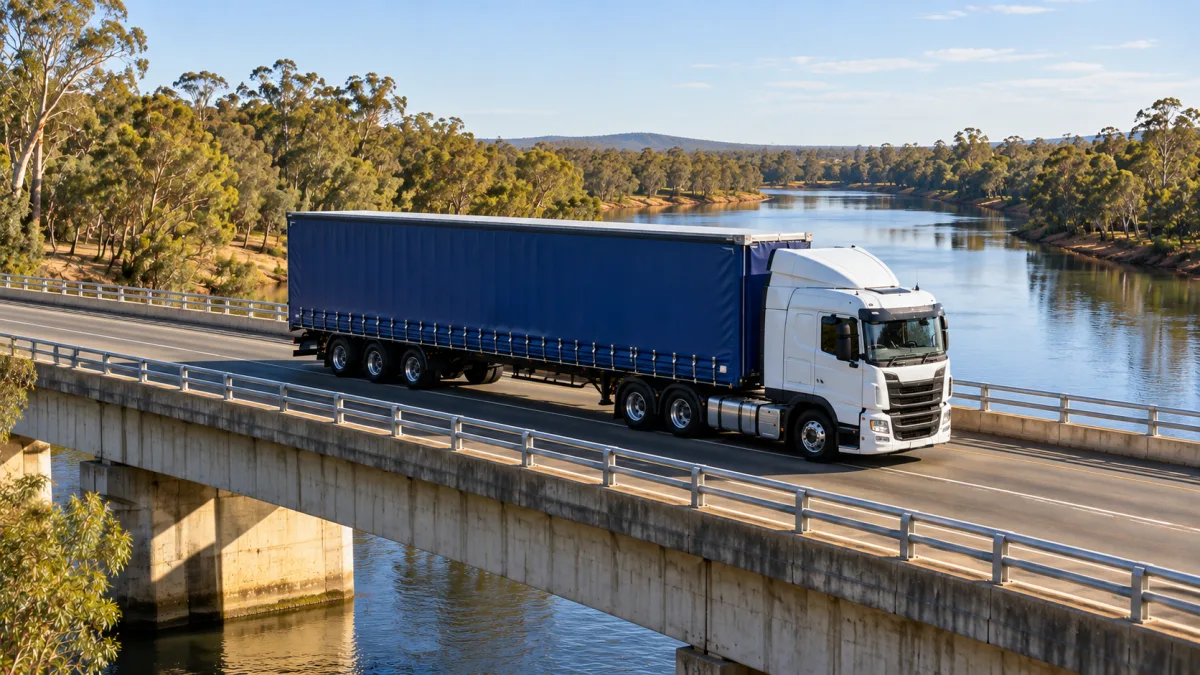
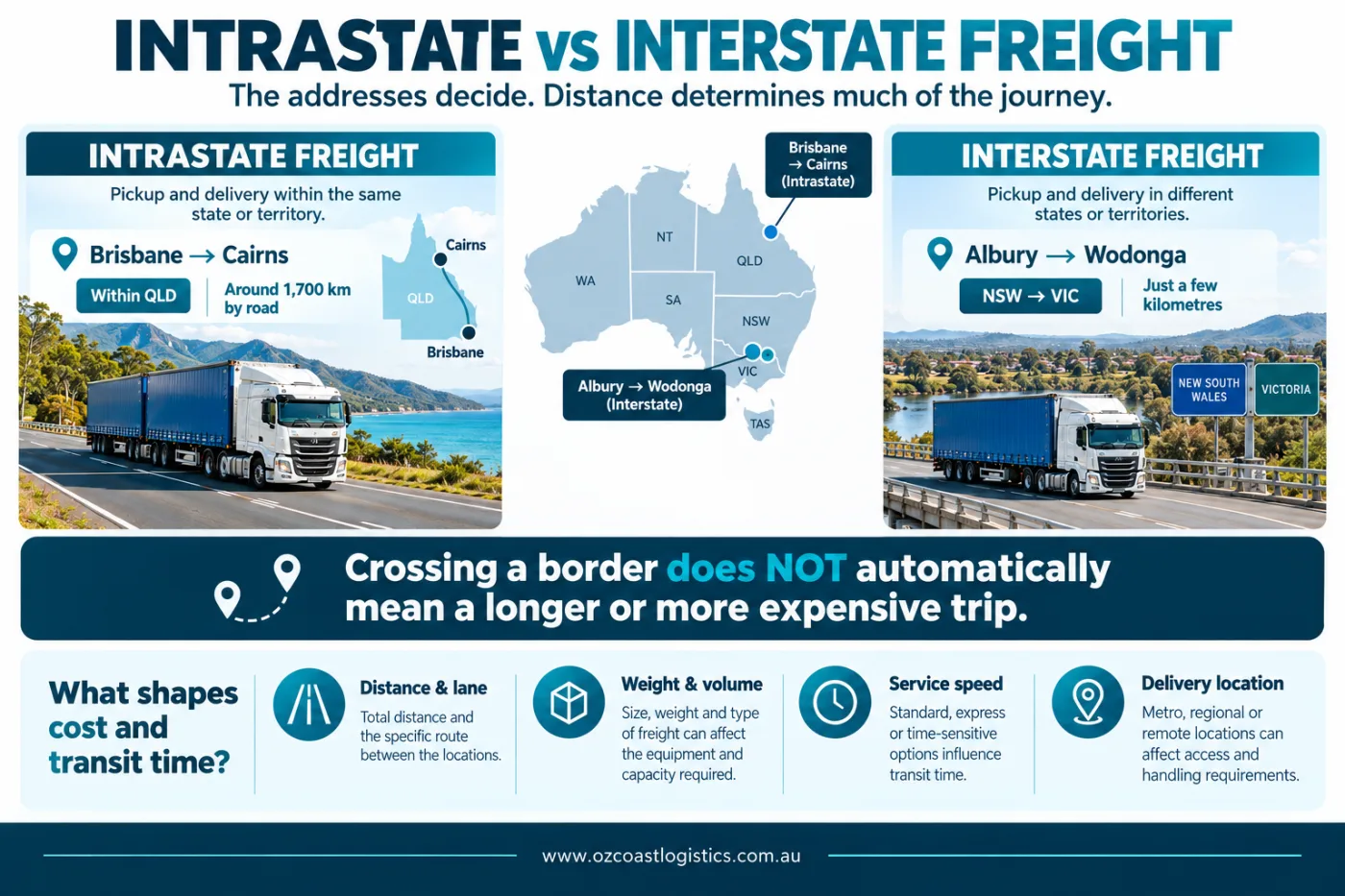
A carton going from Albury to Wodonga is interstate freight. It crosses the Murray River, leaves New South Wales, enters Victoria, and arrives a few minutes after it left. A pallet going from Brisbane to Mount Isa is intrastate freight. It never leaves Queensland, and it travels well over 1,500 kilometres to get there.
That comparison is a useful way into the intrastate vs interstate question, because it shows which part of the label actually affects your freight. The border matters in a handful of specific ways. For most day-to-day consignments, distance and destination matter far more.
The Short Answer
Intrastate freight starts and finishes in the same state or territory. Interstate freight starts in one state or territory and finishes in another. That's the whole definition. You don't choose between them the way you'd choose between standard and express. Your pickup and delivery addresses decide which one it is.
| Intrastate | Interstate | |
|---|---|---|
| Where it travels | Within one state or territory | Across at least one state or territory border |
| Short example | Brisbane to the Gold Coast | Canberra to Sydney |
| Long example | Darwin to Alice Springs | Perth to the east coast |
| Who decides which it is | The two addresses | The two addresses |
The more useful questions are what changes once a border is involved, and what doesn't.
Why the Border Changes Less Than People Think
It's easy to assume interstate always means slower and dearer, and intrastate always means quick and cheap. Australia's geography breaks that rule all the time.
| Trip | Type | Rough road distance |
|---|---|---|
| Albury to Wodonga | Interstate (NSW to VIC) | A few kilometres |
| Gold Coast to Tweed Heads | Interstate (QLD to NSW) | Around 25 km |
| Canberra to Sydney | Interstate (ACT to NSW) | Around 290 km |
| Sydney to Broken Hill | Intrastate (NSW) | Around 1,150 km |
| Darwin to Alice Springs | Intrastate (NT) | Around 1,500 km |
| Brisbane to Cairns | Intrastate (QLD) | Around 1,700 km |
| Perth to Broome | Intrastate (WA) | More than 2,000 km |
A long intrastate lane in Queensland, Western Australia or the Northern Territory can take longer and cost more than a short interstate hop on the east coast. What really shapes the job is how far it goes, how busy the lane is, and whether the last leg ends in a capital city or a small regional town.
That's why a quote for a busy corridor like Canberra to Sydney can look very different from one for Brisbane to Cairns, even though only the first crosses a border.
What Actually Changes When Freight Crosses a Border
The border isn't irrelevant. It just affects fewer things than people expect, and they're specific.
Heavy vehicle rules depend on the states, not the crossing
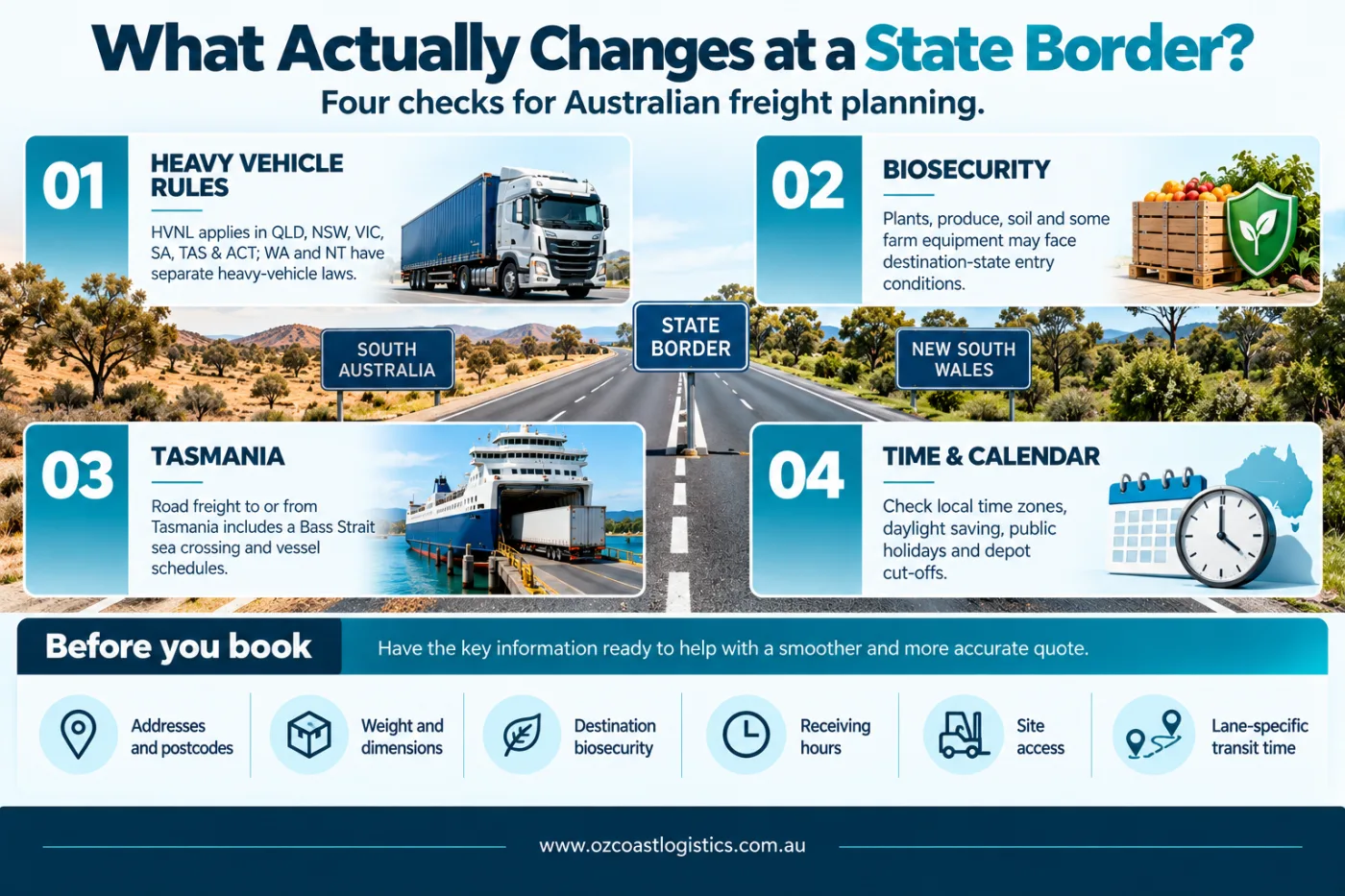
A common misunderstanding is that interstate freight falls under national law and intrastate freight falls under state law. In Australia it doesn't work that way. The Heavy Vehicle National Law (HVNL) applies in Queensland, New South Wales, Victoria, South Australia, Tasmania and the ACT, and it applies to a trip inside one of those jurisdictions exactly as it does to a trip between them. A run from Sydney to Newcastle and a run from Sydney to Melbourne are under the same heavy vehicle law.
Western Australia and the Northern Territory haven't adopted the HVNL and run their own heavy vehicle laws. So the border that changes the regulatory picture is the one into or out of WA or the NT. A truck from those jurisdictions has to comply with the HVNL once it enters a participating state. For shippers, the practical point is that your provider needs to operate correctly in every jurisdiction the freight passes through. Our posts on the 2026 HVNL reforms and the HVA scheme and the 2026 mass and dimension changes cover the recent changes in more detail.
Some goods face entry conditions
Most general freight crosses borders without anyone looking inside it. The exception is goods covered by biosecurity rules: mainly plants, fresh produce, soil, some agricultural products and used farm equipment. Some states restrict or inspect these on entry, and Western Australia and Tasmania are known for strict conditions. If you ship anything in those categories, check the destination state's entry requirements before booking. Don't assume that a product sold freely where you are can travel freely everywhere.
Tasmania adds a sea crossing to a road job
Freight between the mainland and Tasmania crosses Bass Strait on a vessel as part of the road journey, so ferry schedules become part of the timeline. Our guide to how freight gets to Tasmania explains that leg.
Clocks and calendars don't match
These catch people out more often than the law does:
- Time zones. Western Australia runs well behind the east coast, and South Australia and the Northern Territory are half an hour off. A 3 pm pickup cut-off in Sydney isn't 3 pm in Perth.
- Daylight saving. Queensland, Western Australia and the Northern Territory don't use it, so the gap between states changes in summer. Across the Gold Coast and Tweed Heads border, clocks differ by an hour for part of the year.
- Public holidays. Labour Day falls on different dates in different states, Melbourne Cup Day is a holiday in metropolitan Melbourne, and there are regional show days. A delivery that looks like two business days on paper can become three if the receiving state has a holiday your state doesn't.
None of these stop freight moving. They just need to be built into delivery promises to customers in other states.
What Drives Cost and Transit Time in Both
The same factors set the price and timeframe whether the freight crosses a border or not. Our interstate and intrastate freight services price on the same basis:
- Distance and lane. Busy corridors with regular departures are more cost-effective than thin lanes with less freight moving along them.
- Weight and volume. Freight is charged on cubic weight or dead weight, whichever is greater, so bulky light freight pays for the space it takes.
- Service level. Express and priority handling cost more than standard.
- Special equipment. Tail-lifts, drop decks and refrigerated units change the vehicle and the rate.
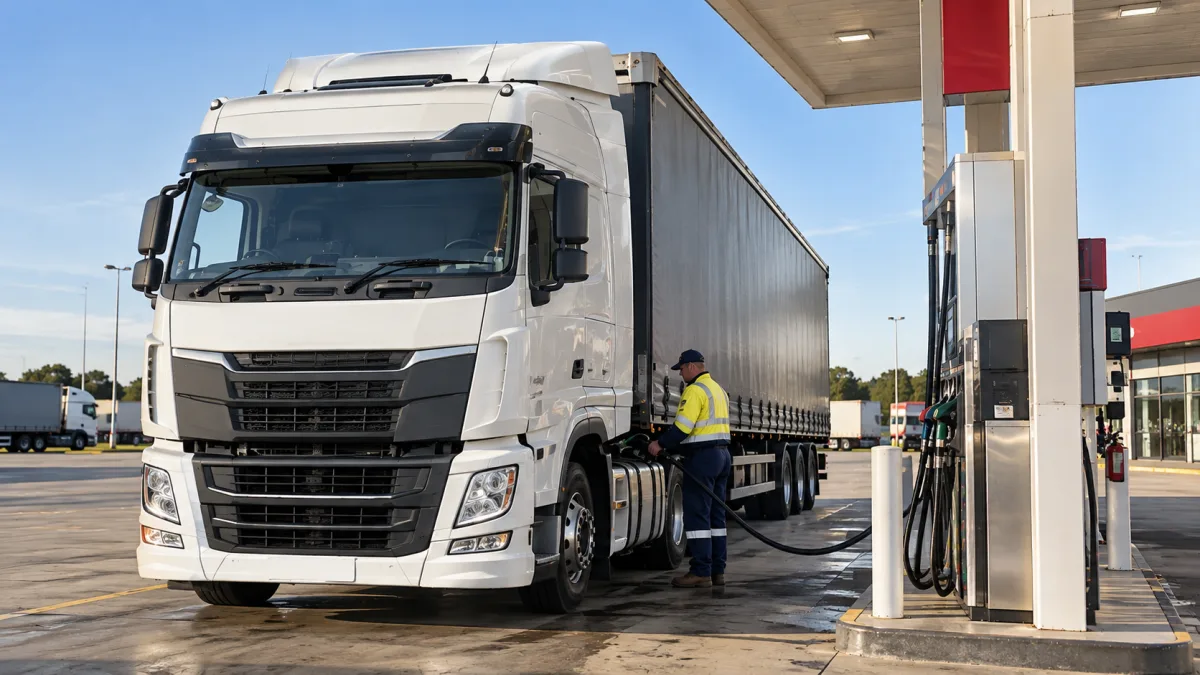
- Fuel levies and surcharges. These move with diesel prices. Our explainer on fuel levies covers how they work.
- The last leg. Delivering to a capital city address is usually quicker than delivering to a small regional or remote town, because regional runs are less frequent. This applies equally within a state and across one.
Notice that "crossed a border" isn't on the list. The border mainly matters through distance, and a short interstate trip doesn't carry a border surcharge just for crossing.
Three Scenarios
A Gold Coast supplier delivering to a customer in Tweed Heads. Technically interstate, practically local. It moves like metro freight. The only thing worth watching is the time difference during daylight saving if delivery windows are tight.
A Brisbane wholesaler supplying a store in Mount Isa. Intrastate, but a long regional lane. Expect a longer transit time than many interstate capital-to-capital runs, and plan stock levels at the store around it. See our Brisbane to Mount Isa route for that lane.
A Melbourne manufacturer shipping to every capital. Mostly interstate, so the main levers are consolidation and scheduling. Grouping orders by destination and dispatching on set days usually does more for cost and reliability than anything else. The receiving states' public holidays and time zones belong in the dispatch calendar.
A Pre-Booking Checklist
Before you book, whichever type of freight it is:
- Confirm the full pickup and delivery addresses, including postcodes, because a regional postcode affects transit time more than a state line does.
- Measure and weigh the freight so the quote reflects the real chargeable weight.
- Check whether anything in the consignment is subject to biosecurity entry rules in the destination state.
- Allow for time zones, daylight saving and public holidays at the receiving end.
- Tell your provider about receiving hours, site access and whether a forklift is available.
- Ask for the transit time for your specific lane rather than relying on a general estimate.
How Ozcoast Handles Both
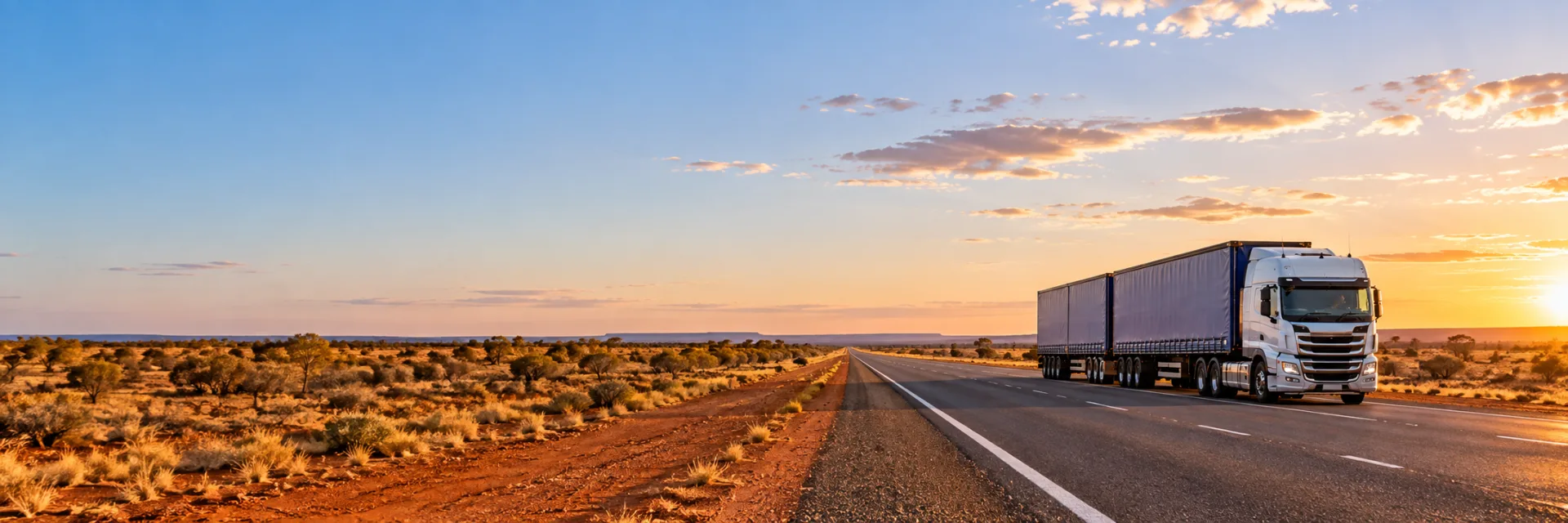
Our intrastate lanes run across NSW, VIC, QLD, SA and WA, from metro runs to regional and rural delivery, with next-day options on selected routes and electronic proof of delivery on every intrastate consignment. Our interstate network connects all Australian capital cities and major regional hubs, with daily departures on our main interstate lanes and vehicles from rigid trucks through to B-doubles.
Whichever it turns out to be, the quote needs the same details: pickup and delivery suburbs, weight, dimensions or pallet count, and when the freight will be ready. We'll confirm the lane, the service level that suits it, and the transit time for that route.