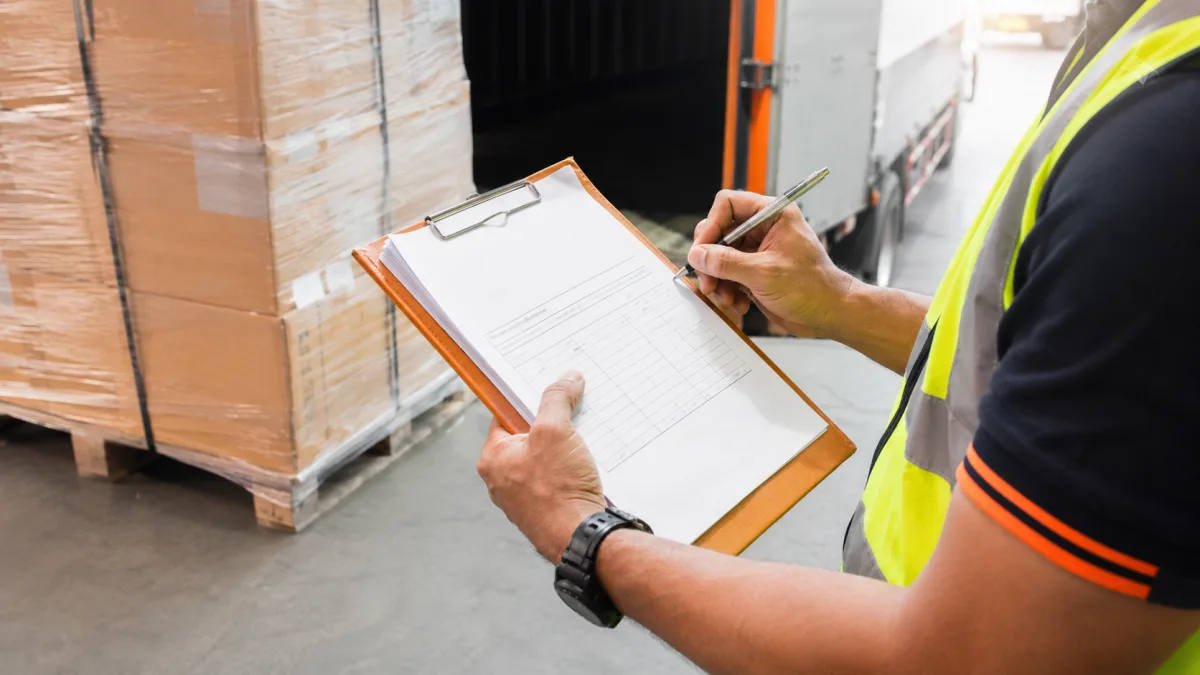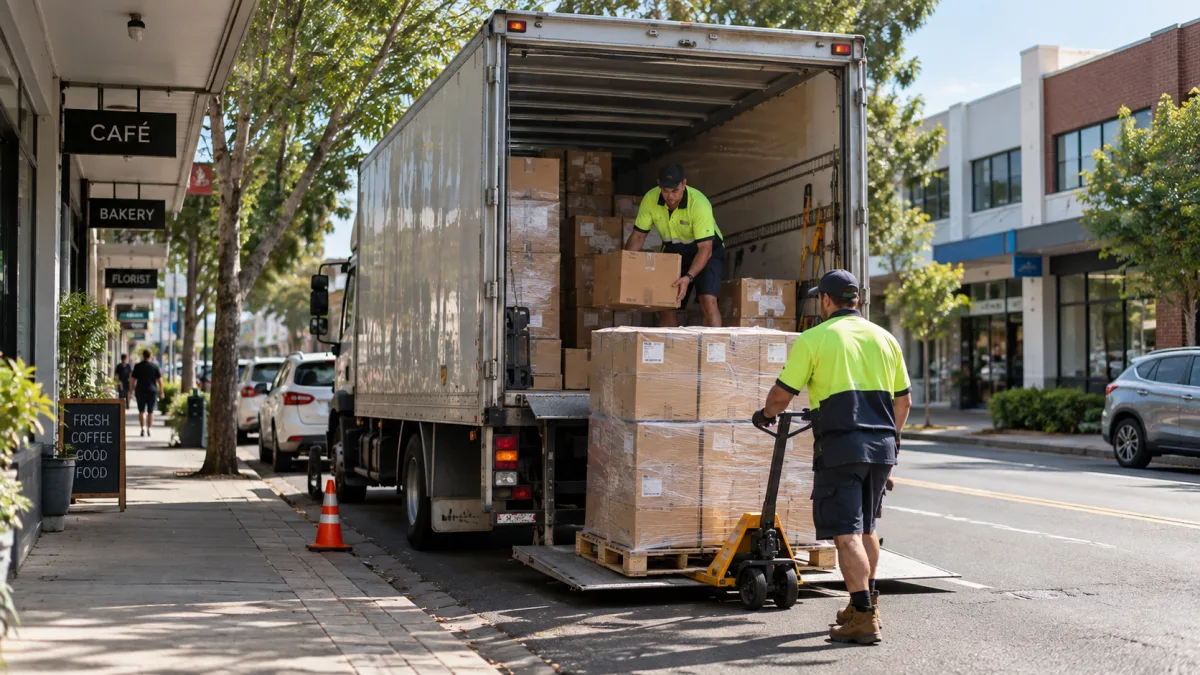
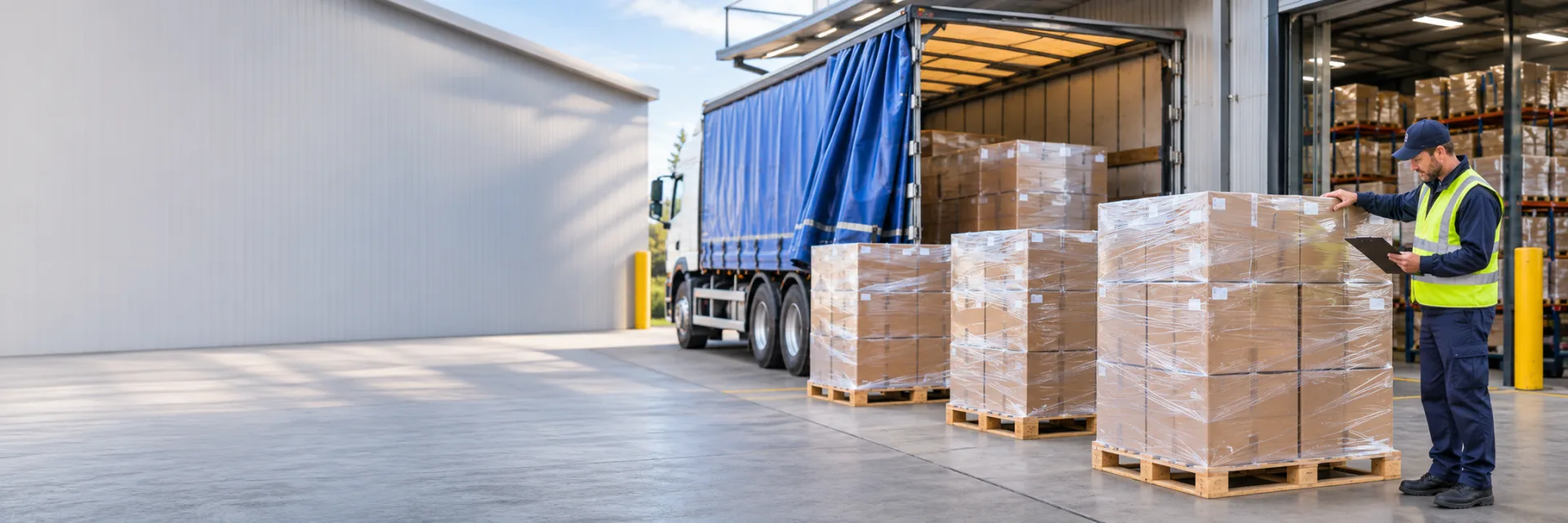
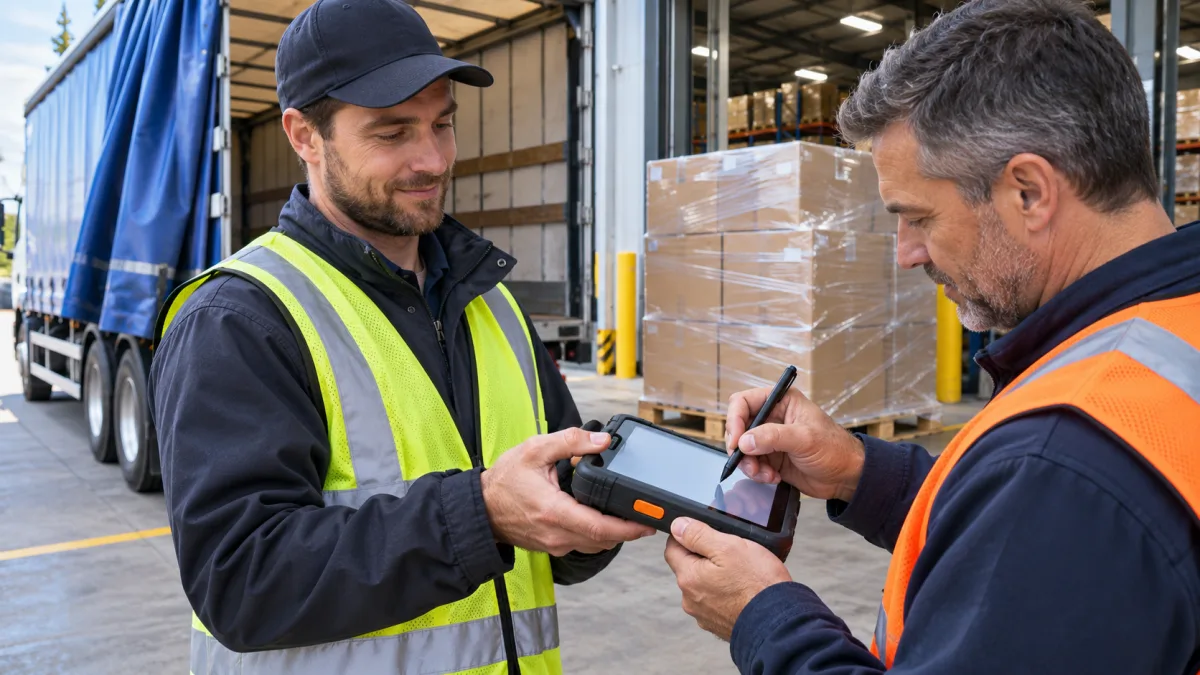
A driver backs onto your dock, unloads four pallets, holds out a handheld and asks for a signature. You're busy, the truck has three more drops, and the pallets look fine from where you're standing. So you sign. Two days later someone cuts the wrap on the third pallet and finds a crushed corner and a dozen broken cartons.
What happens next depends almost entirely on that signature. Proof of delivery is the most routine document in freight and one of the most important, and most of its value is decided in the thirty seconds before it's signed.
What Proof of Delivery Is
Proof of delivery (POD) is the record that a consignment reached its destination, who received it, when, and in what condition. It closes off the transport leg: up to that point the freight is in the carrier's care, and from that point it's with the receiver.
In Australian road freight, the POD is often the delivery section of the consignment note, signed by the receiver, or an electronic record captured by the driver at the point of delivery. Either way, it's the document everyone goes back to when there's a question about whether freight arrived, how much of it arrived, and what state it was in.
The Common Types of POD
| Type | How it's captured | What it shows |
|---|---|---|
| Signed paper POD | Receiver signs and prints their name on the consignment note or delivery docket | Signature, name, date, any handwritten notes |
| Electronic POD (ePOD) | Receiver signs on the driver's handheld device | Signature, name, date and time stamp, often location |
| Photo POD | Driver photographs the freight at the delivery point | Where the freight was left and how it looked |
| Authority to leave (ATL) | Freight is left without a signature, under the sender's or receiver's instruction | Usually a time stamp and a photo instead of a signature |
Electronic POD has largely taken over because the record is available almost immediately, can't be lost in a cab, and usually carries a time stamp. Photo POD is especially useful for deliveries where no one signs, because it shows where the freight was left and its condition at that moment.
What a Useful POD Records
A POD only helps if it records the right things clearly. A good one shows:
- The receiver's printed name, not just a signature that could belong to anyone.
- Date and time of delivery.
- The number of items received: pallets, cartons or pieces, matching what was consigned.
- The condition of the freight, including any damage, shortage or wrap that's been opened.
- The delivery location, especially if freight was left somewhere other than the main address.
A signature with no name, or a POD that records fewer items than were sent with no note explaining why, causes most of the disputes that follow.
Before You Sign: A Receiver's Checklist
If you're receiving freight, these checks take a couple of minutes and make a real difference:
- Count the items. Check the number of pallets or cartons against the consignment note or delivery docket.
- Walk around each pallet. Look for crushed corners, leaning stacks, torn or re-taped wrap, wet patches and broken pallet boards.
- Look at the labels. Make sure the freight is actually yours and addressed to your site.
- Note anything wrong on the POD itself, in specific terms. "Pallet 3 of 4, corner crushed, approx. 10 cartons damaged" is far more useful than "damaged".
- Photograph any damage before the driver leaves, with the truck or consignment note in shot if you can.
- Print your name clearly next to your signature.
"Unchecked" isn't a substitute for checking
Many receivers write "unchecked" or "subject to inspection" next to their signature. It's a common habit, but how much it protects you depends on the carrier's terms and the circumstances. It's far weaker than a specific note about visible damage made at the time. If you can see a problem, write it down. If the freight genuinely can't be inspected on the spot, say so on the POD and check it as soon as possible afterwards.
When Damage Is Found After Delivery
Sometimes damage only shows up once the wrap comes off. If that happens:
- Report it to your freight provider straight away, with the consignment number, photos and a description. Most providers' terms set a time limit for reporting damage or shortages, and it's often short, so check the terms on your account rather than waiting.
- Keep the damaged goods and packaging until the claim has been assessed. Throwing them out early can make a claim much harder.
- Check what cover applies. A carrier's liability is usually limited by its terms. Our guide to goods in transit insurance explains why many businesses arrange their own cover for higher-value freight.
The POD from the day of delivery will be part of any assessment. A clean signature with no notes makes it harder to show the damage happened in transit rather than afterwards.
Authority to Leave and Photo POD
Authority to leave means the freight can be delivered without anyone signing for it, usually because the receiver won't be there or has agreed in advance. It's convenient, but it moves the risk. Once freight is left as instructed, it's generally no longer in the carrier's care.
If you use authority to leave for business freight:
- Be specific about where freight can be left: "inside the side gate, under the awning", not just "leave at premises".
- Make sure the location is secure and protected from weather, especially for cartons rather than wrapped pallets.
- Check the photo POD soon after delivery, so any problem is picked up while it's still easy to trace.
Authority to leave usually isn't suitable for high-value, fragile or sensitive goods, or for anything that needs to be checked in by a person.
Getting a POD From Your Freight Provider
As a sender, you'll usually need a POD when your customer says something didn't arrive, when there's a damage or shortage dispute, or when a customer's payment depends on confirmed delivery. To make it easy:
- Keep your consignment numbers linked to your customer orders and invoices.
- Ask your provider how PODs are supplied: through tracking, by email, or on request.
- Request it quickly if a dispute comes up, while everyone still remembers the delivery.
- For multi-drop runs, make sure each drop gets its own POD, not one signature for the whole run.
Proof of Delivery With Ozcoast
On our intrastate freight service, electronic proof of delivery is captured on every consignment, so you have a signed, time-stamped record as soon as the freight is delivered. For any consignment, if you need a POD to resolve a query with your customer, give us the consignment number and we'll help track down the delivery record.
If you're setting up regular deliveries to a site where no one is available to sign, talk to us before the first delivery about where freight can safely be left and how it'll be recorded.