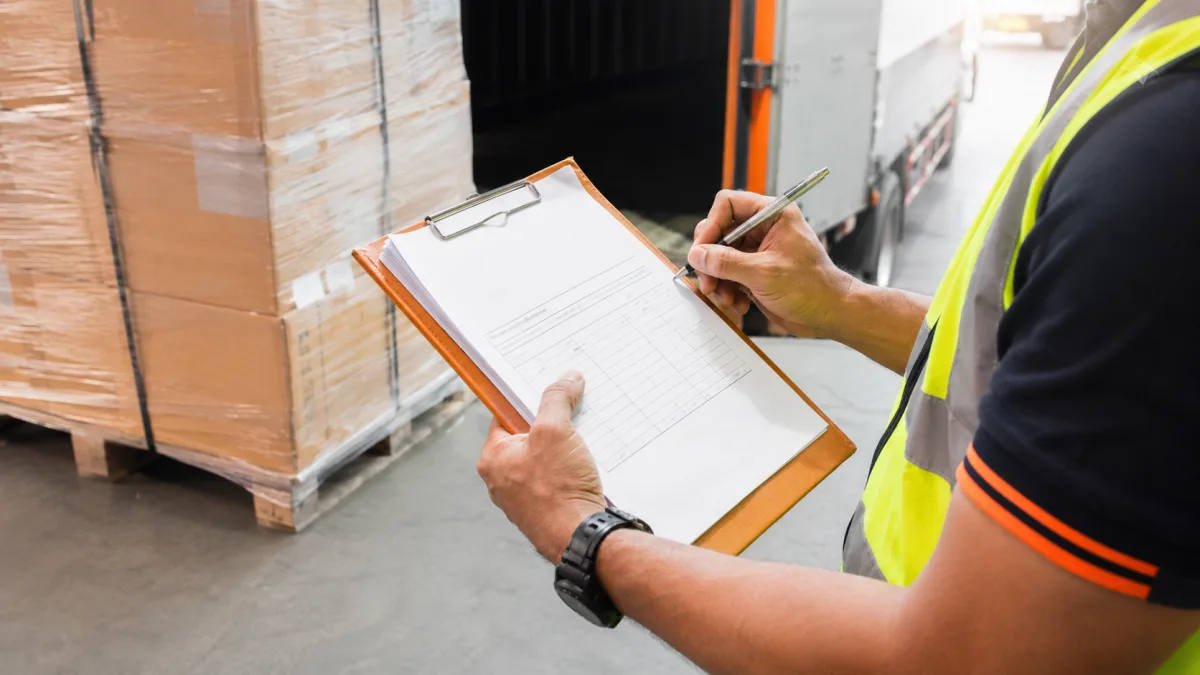
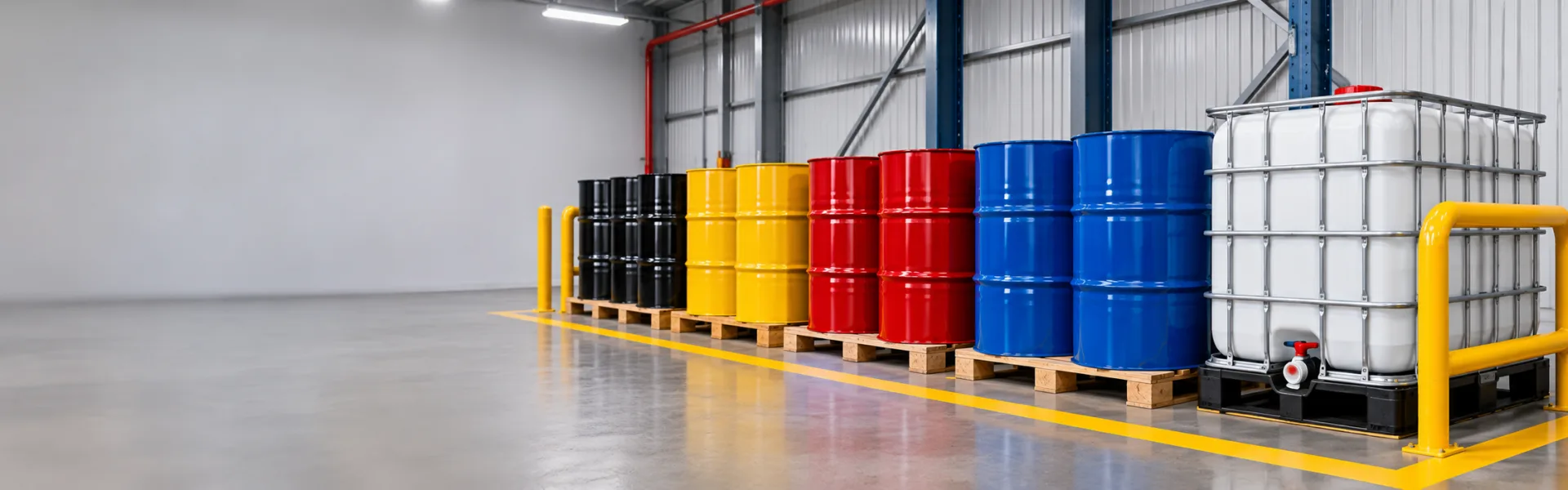
A pallet of twenty 20-litre drums of solvent-based paint is dangerous goods. It has to be classified, labelled, documented and segregated correctly. But on its own, it usually won't put placards on the truck. Add another thirty drums to the same load and it will. Swap the drums for a single 1,000-litre IBC and the truck, and the driver, need a dangerous goods licence as well.
That's the practical meaning of a placarded load: the point where a dangerous goods consignment is large enough, or hazardous enough, that the vehicle carrying it has to display placards and meet additional requirements. If you ship dangerous goods, knowing roughly where your consignments sit against those lines tells you what kind of vehicle and driver the job needs before you book.
What Is a Placarded Load?
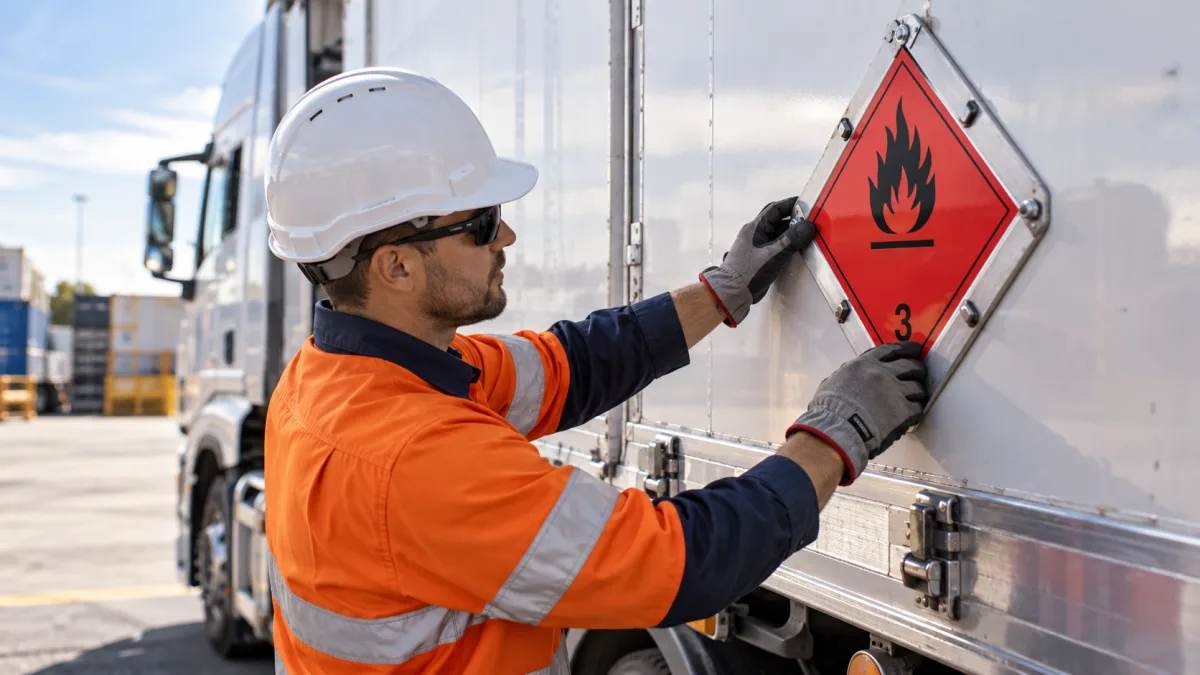
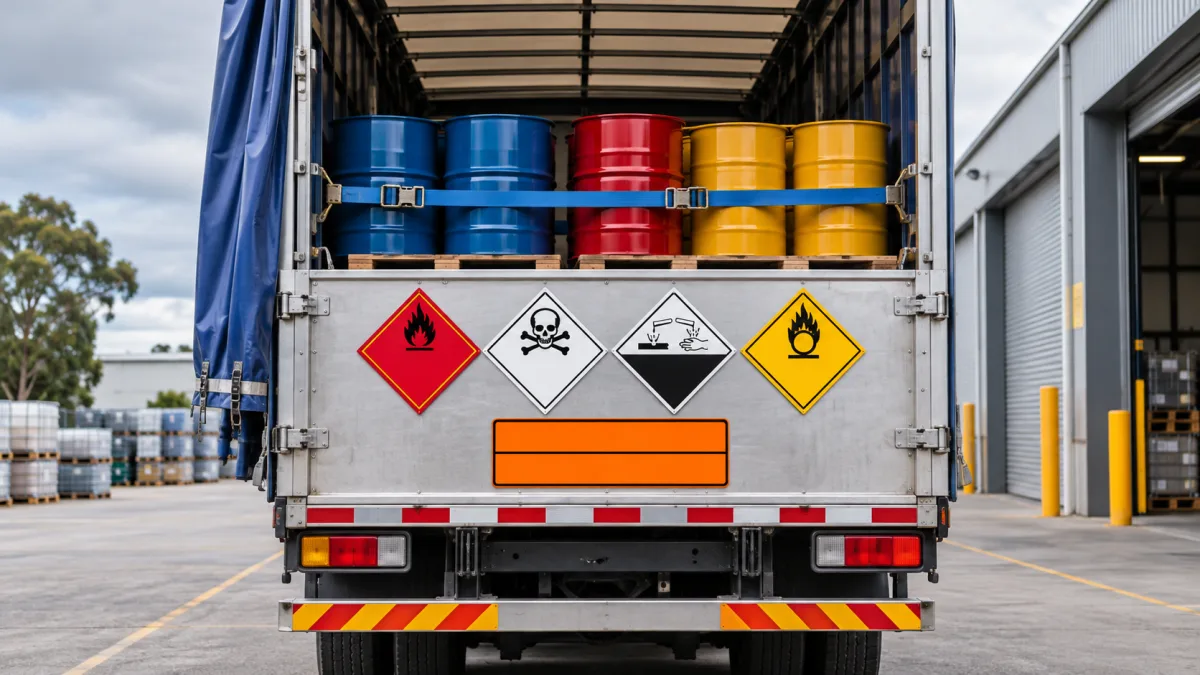
Under the Australian Dangerous Goods (ADG) Code, a placard load, often called a placarded load, is a load of dangerous goods that's large enough, or includes goods hazardous enough, that the vehicle or cargo unit carrying it must display placards. Placards are the class diamonds and, where required, emergency information panels on the outside of the vehicle. They tell emergency services what's on board at a glance.
The thresholds are set out in Table 5.3 of the ADG Code. Below them, dangerous goods still have to be packaged, labelled, documented and segregated correctly, but the vehicle doesn't need to be placarded. At or above them, it does.
The ADG Code covers dangerous goods transport by road and rail across Australia. Explosives (Class 1) and radioactive material (Class 7) have their own separate codes and thresholds.
The Placard Load Thresholds
These are the main thresholds in Table 5.3.1 of the ADG Code, for dangerous goods other than limited quantities:
| What's in the load | When it becomes a placard load | DG driver and vehicle licence? |
|---|---|---|
| Any receptacle over 500 litres or 500 kg (for example an IBC, a tank or a large bag) | With one or more such receptacles | Yes |
| Any quantity of Division 2.1 flammable gases (except aerosols), Division 2.3 toxic gases, or Packing Group I substances | When the total dangerous goods in the load reach 250 kg or 250 L | No |
| Division 6.2 infectious substances, Category A | Any quantity | No |
| Division 6.2 infectious substances, other than Category A | 10 kg or 10 L or more | No |
| Any other dangerous goods | When the total dangerous goods in the load reach 1,000 kg or 1,000 L | No |
Two things in that table catch people out.
Most placard loads don't need a licensed DG driver or vehicle. The licence requirement is triggered by receptacles over 500 litres or 500 kg, essentially bulk quantities. A truck carrying 1,200 litres of paint in 20-litre drums is a placard load, but it doesn't need a DG-licensed vehicle on that basis alone. A truck carrying the same paint in one large IBC does.
The threshold applies to the whole load, not your consignment. The quantities are aggregated across the cargo transport unit. If your 600 litres share a truck with someone else's 500 litres of dangerous goods, the load can cross the 1,000-litre line even though neither consignment would on its own. That's one reason your freight provider needs accurate DG details at booking: they're planning the load, not just your consignment.
Limited quantities have their own thresholds
Dangerous goods packed in limited quantities (small inner packagings, often consumer-sized products) and domestic consumables are assessed separately under Table 5.3.2. A load needs a limited quantities placard when it contains 2,000 kg or 2,000 L or more of any one UN number from a single consignor, or when the gross mass of limited quantity and domestic consumable goods reaches 8 tonnes.
Where a load mixes fully regulated dangerous goods with limited quantities, and each is below its own threshold, the ADG Code has a combined-quantity calculation that can still make the load placardable. Your freight provider will work this out, but only if the limited quantity goods are declared too.
Worked Examples
These are simplified to show how the thresholds work. Real loads depend on the exact classification, packing group and what else is on the vehicle.
| Load | Placard load? | Why |
|---|---|---|
| 20 × 20 L drums of a Class 3 flammable liquid (400 L), nothing else on the truck | No | Below the 1,000 L aggregate threshold |
| 50 × 20 L drums of the same liquid (1,000 L) | Yes | Reaches the 1,000 L aggregate threshold. No DG licence needed on that basis |
| One 1,000 L IBC of a Class 8 corrosive | Yes, and a DG driver and vehicle licence is needed | Receptacle over 500 L |
| 300 kg of dangerous goods, including some LPG cylinders (Division 2.1) | Yes | Division 2.1 is present, so the 250 kg threshold applies |
| A pallet of a single limited quantity product, 2.4 tonnes, from one consignor | LQ placard required | 2,000 kg or more of one UN number from a single consignor |
What Changes Once a Load Is Placarded
Crossing the placard threshold brings additional obligations for the vehicle and the trip, on top of the requirements that apply to all dangerous goods:
- Placards must be displayed on the vehicle or cargo unit, including emergency information panels where required.
- Emergency information and safety equipment requirements apply to the vehicle and driver.
- Route and parking restrictions can apply to placarded vehicles in some areas, such as certain tunnels.
- Licensing applies where the load includes receptacles over 500 litres or 500 kg.
The exact requirements depend on the classes involved and the jurisdiction. That's why dangerous goods freight is booked as dangerous goods from the start, not added to an ordinary consignment after the fact.
What Shippers Need to Get Right
As the consignor, you're responsible for correctly classifying, packaging, marking and documenting your dangerous goods, whether or not the load ends up placarded. For your freight provider to plan the vehicle and load correctly, they need:
- The UN number, proper shipping name, class and packing group for each product, from the safety data sheet.
- The quantity, and the size of each receptacle. A single IBC is very different from the same volume in drums.
- Whether any of it is packed in limited quantities.
- Accurate transport documentation on the consignment note or DG transport document.
If you're not sure which class your products fall into, our guide to the nine ADG dangerous goods classes explains each one.
Moving Dangerous Goods With Ozcoast
Our dangerous goods service uses ADG-compliant drivers and vehicles, with placarding, segregation and documentation handled for each consignment, and spill kits and fire suppression equipment on board. We carry Classes 2.1, 2.2, 3, 4, 5, 6, 8 and 9.
Send us the safety data sheet details, quantities, receptacle sizes and pickup and delivery addresses. We'll confirm how the load will be classed for transport and what vehicle it needs.
This is a general guide, not legal advice. The current edition of the ADG Code and your state or territory's dangerous goods authority are the source of truth for any specific consignment.