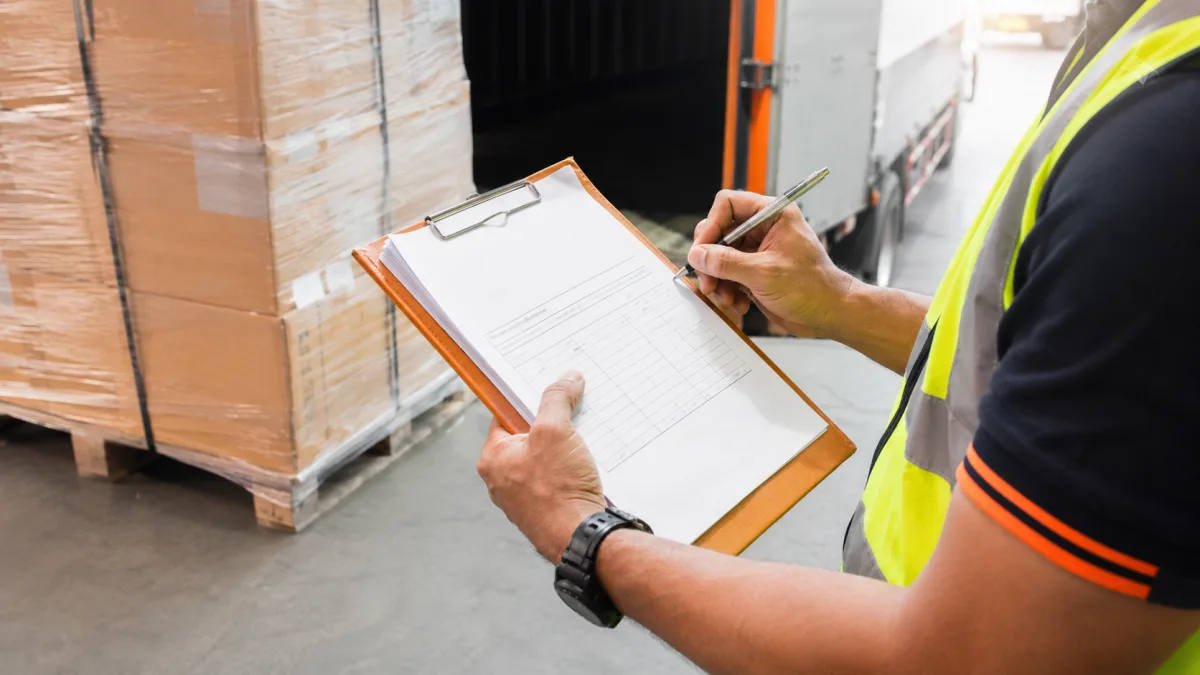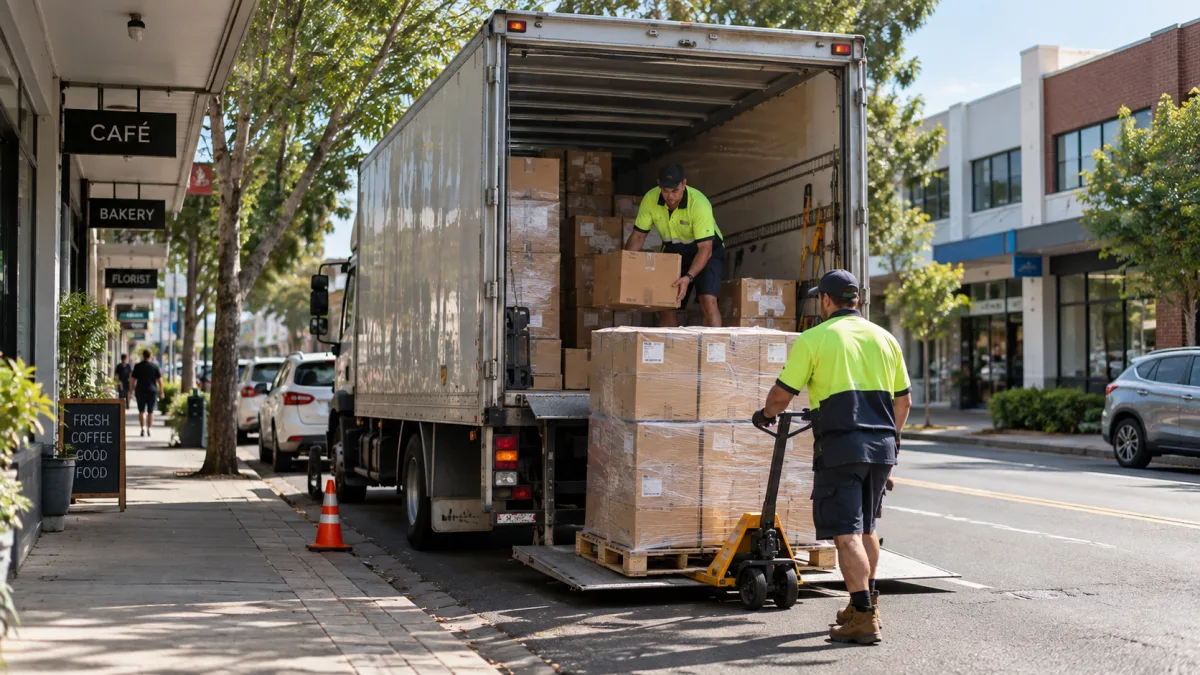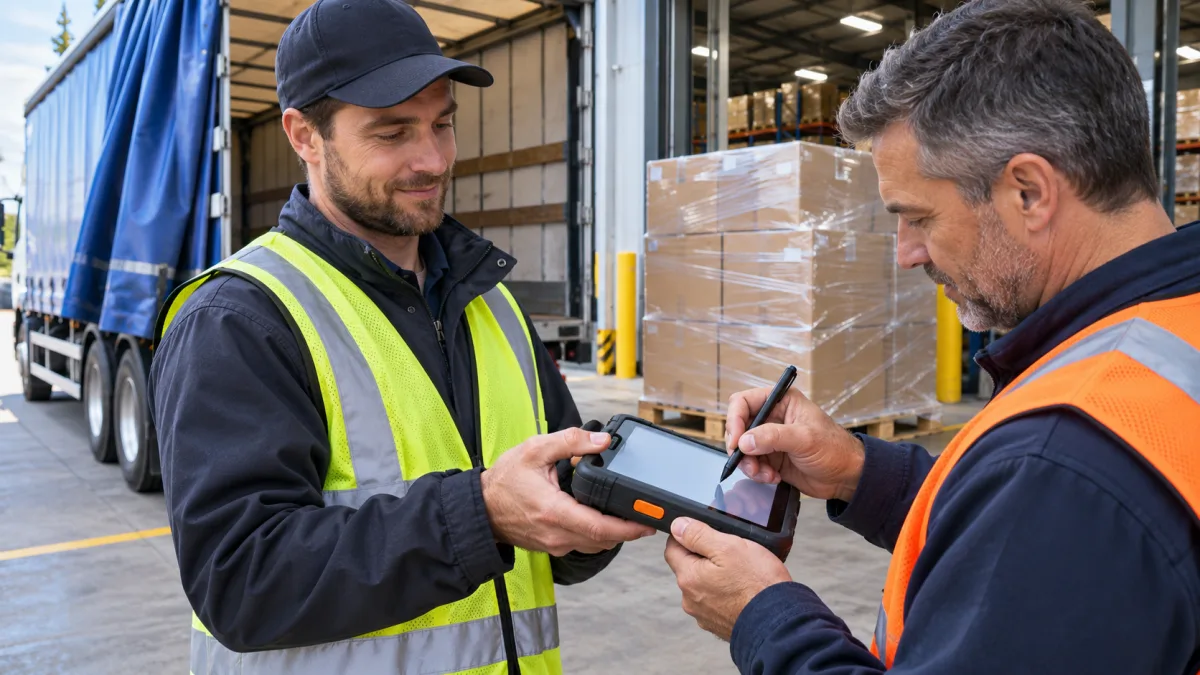

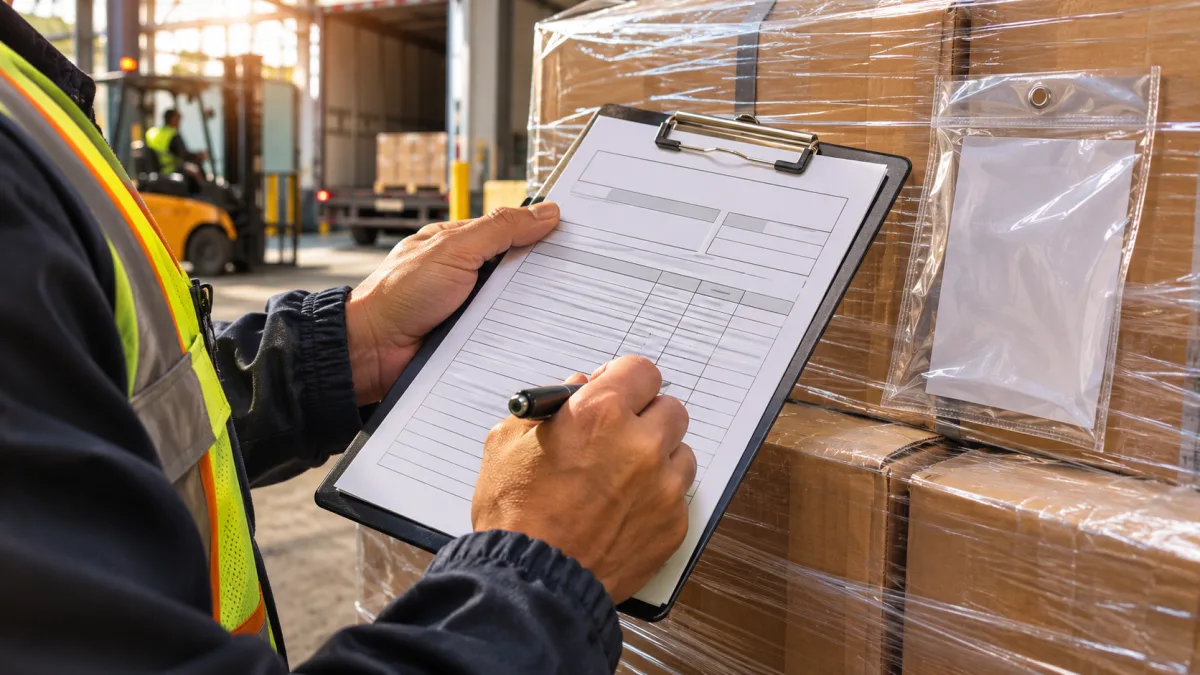
A pallet arrives at a hardware store with a plastic pouch stuck to the wrap. Inside is a sheet listing forty product lines and their quantities. The driver hands over a handheld to sign for one pallet. A week later an invoice turns up by email. Three documents, three different jobs, and when a customer rings to say four boxes of hinges were missing, which one settles it depends on knowing the difference.
The sheet in the pouch is the delivery docket. Here's what a delivery docket is, what it should include, and how it fits with the consignment note, proof of delivery and invoice that travel with the same order.
What Is a Delivery Docket?
A delivery docket is the document a supplier sends with goods to tell the customer what's been supplied: which products, how many of each, against which order. The customer checks the goods against it and signs it, or keeps it, as their record of what actually arrived.
It's an Australian term. You'll also hear delivery note, packing slip, packing list or despatch docket. Some businesses use these names for slightly different documents, and some accounting systems treat a packing slip and a delivery docket as the same thing. What they have in common is that they describe the contents of a delivery, not the transport.
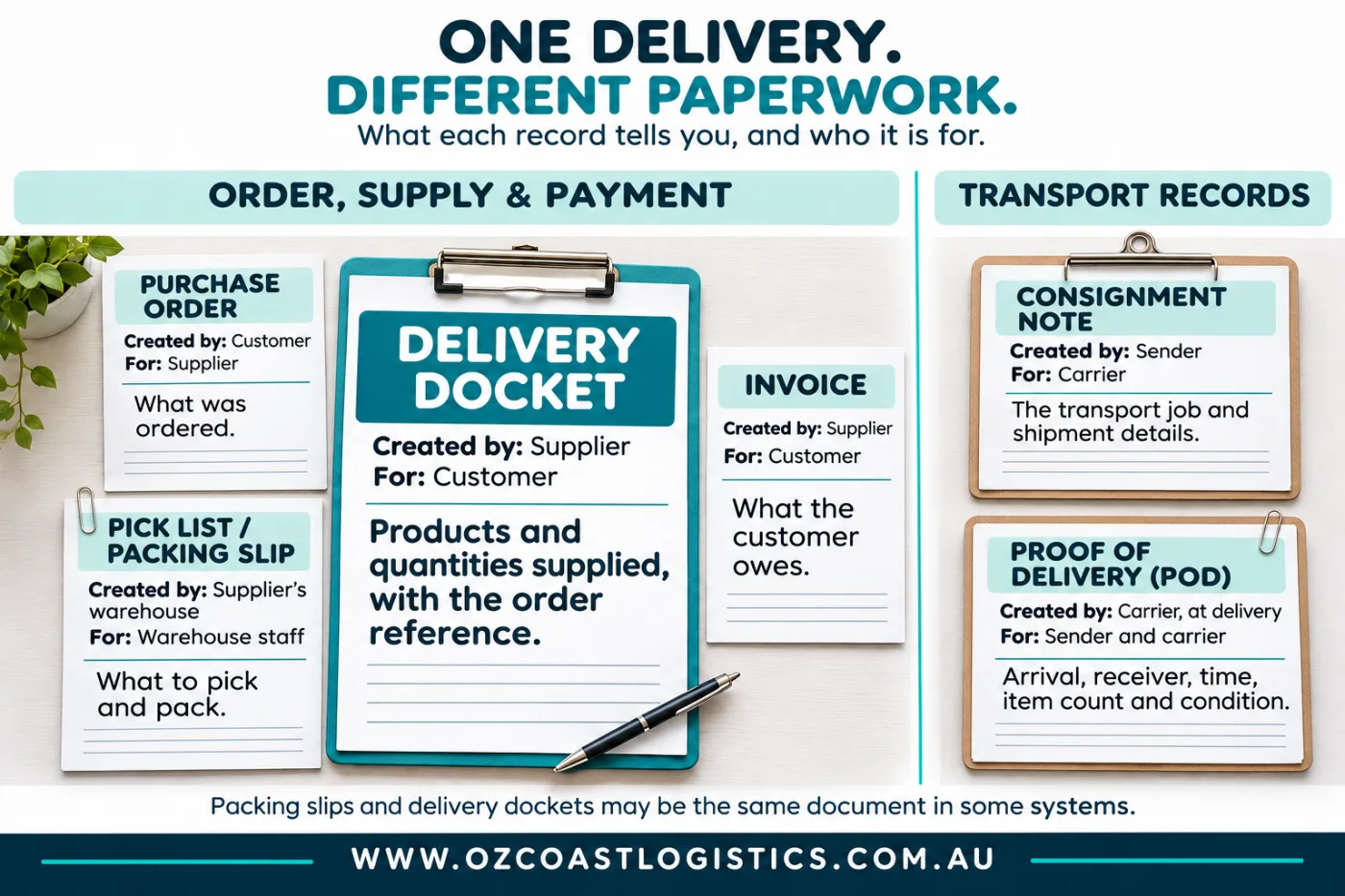
The Paperwork on One Delivery, and Who Each Piece Is For
For a typical B2B pallet delivery, several documents can exist for the same goods:
| Document | Created by | For | What it records |
|---|---|---|---|
| Purchase order | Customer | Supplier | What the customer ordered |
| Packing slip or pick list | Supplier's warehouse | Warehouse staff | What to pick and pack for the order |
| Delivery docket | Supplier | Customer | What was actually supplied: products, quantities, order reference |
| Consignment note | Sender, given to the carrier | Carrier | The transport job: sender, receiver, number of items, weight, dimensions, dangerous goods |
| Proof of delivery | Carrier, at delivery | Sender and carrier | That the consignment arrived, who received it, when, and its condition |
| Invoice | Supplier | Customer | What the customer owes |
The key distinction is between the contents documents (purchase order, packing slip, delivery docket, invoice), which are between supplier and customer, and the transport documents (consignment note, POD), which are about the freight job.
A carrier generally knows a consignment is "one pallet, 420 kg". The delivery docket is what says that pallet holds 24 cartons of six different products.
Why the Delivery Docket Matters
It's the customer's checklist
The receiver uses the delivery docket to check the goods: are all the lines there, and in the right quantities? Without it, a receiving team can only count pallets or cartons, not products.
It settles "short" disputes
When a customer says something was missing, there are two very different possibilities.
- Short-supplied: the goods were never packed. The delivery docket and the pick record will show it.
- Lost or damaged in transit: the goods were packed but didn't arrive intact. The POD, and any condition notes on it, will show the number of items delivered and their state.
A delivery docket that matches the pick, plus a clean POD for the right number of pallets, points to a counting or receiving issue rather than a freight problem. A POD that records fewer items than were consigned points to transit.
It drives the invoice and stock records
Many businesses invoice from the delivery docket, or reconcile the invoice against it. On the receiving side, it's often what goods are booked into stock against. Accurate dockets mean fewer credit notes and fewer stock discrepancies.
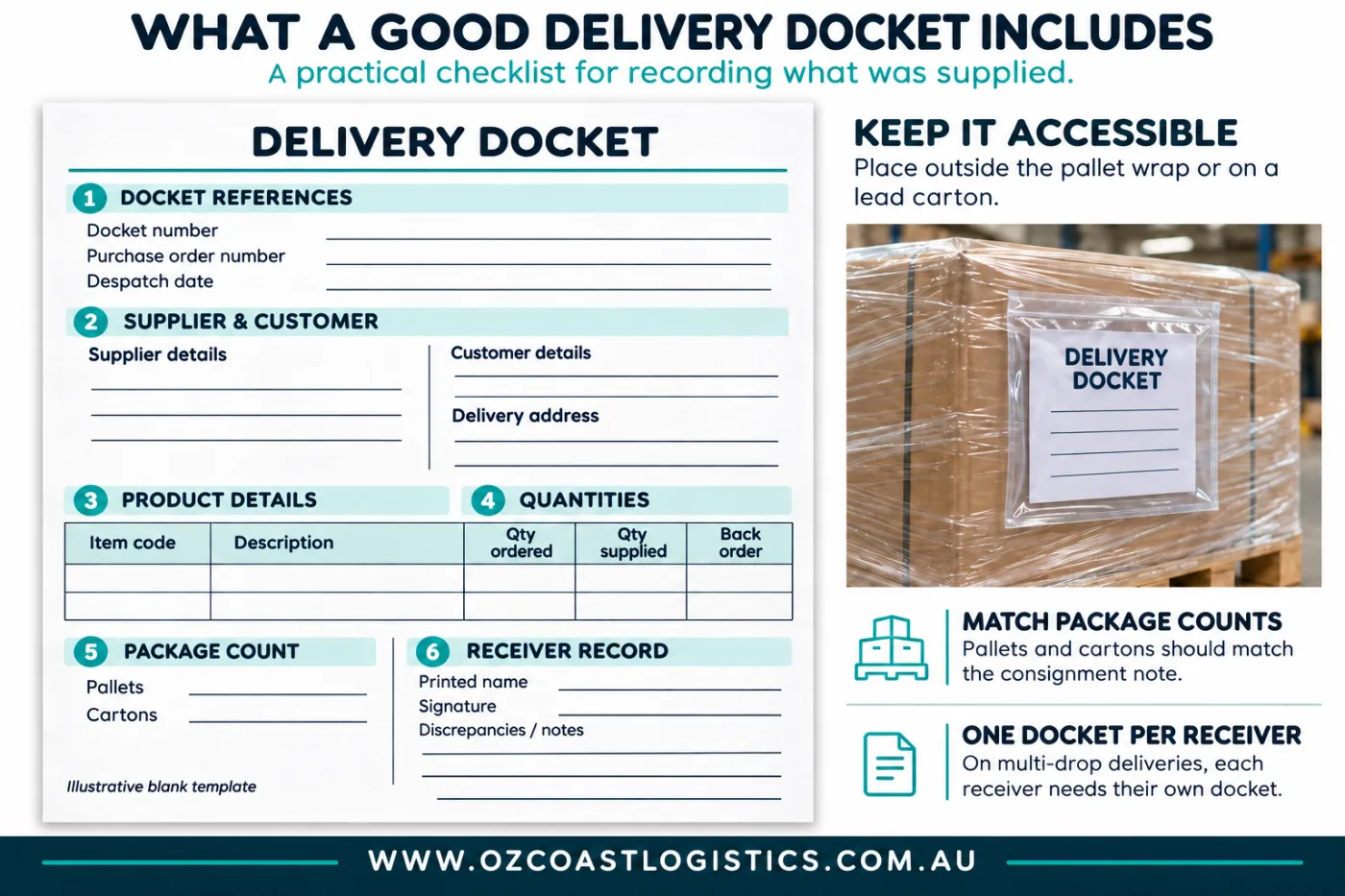
What a Good Delivery Docket Includes
There's no single legal format, but a docket that does its job usually has:
- A unique docket number, so it can be referenced later.
- Supplier and customer details, including the delivery address.
- The customer's purchase order number.
- Date of despatch.
- Each product line: item code, description and quantity supplied.
- Quantity ordered vs quantity supplied, if part of the order is on back order, so nobody counts the missing items as lost.
- Number of packages: pallets and cartons, matching what's on the consignment note.
- A space for the receiver to sign, print their name and note any discrepancies.
If you're looking for a delivery docket template, use those fields as your checklist. Most accounting and inventory systems can produce a docket with them from the order.
Where the Docket Travels, and Where It Goes Wrong
The delivery docket usually travels with the goods: in a document pouch on the outside of the pallet wrap or on a lead carton, often marked "docket enclosed". On multi-pallet consignments, it's normally attached to the first pallet or the pallet labelled 1 of 3.
The common problems are simple ones:
- No docket, or a docket inside the wrap. The receiver can't check the goods without unwrapping, so they sign for pallets and check later, which makes disputes harder.
- Docket and consignment note disagree on package count. If the docket says three pallets and the consignment note says two, someone has a problem before the truck even arrives.
- Back orders not marked. Missing lines look like a freight loss.
- One docket for several drops. On a multi-drop run, each receiver needs their own docket for their own goods.
Signing the Docket vs Signing the POD
At delivery, a receiver may be asked to sign two different things: the carrier's POD and the supplier's delivery docket. They're not the same:
- The POD confirms the carrier delivered a number of items in a given condition. That's the transport side.
- The delivery docket confirms what products and quantities were received from the supplier. That's the contents side.
If the driver can't wait while the receiver checks every product line, it's common for the receiver to sign the POD for the pallets and note their condition, then check the contents against the docket afterwards and report any product discrepancy to the supplier quickly. A shortage of whole pallets or visible damage belongs on the POD at the time. A shortage of individual product lines inside an intact pallet is usually a matter for the supplier.
Paper or Digital?
Plenty of delivery dockets are still printed, especially in trades where carbon-copy docket books are standard. More businesses now email the docket ahead of delivery or attach it to an electronic advance notice, so the receiving team knows what's coming. A digital copy in advance plus a printed copy on the freight is a practical combination for most B2B deliveries.
Delivery Dockets and Ozcoast
Delivery dockets are your document, between you and your customer, but they work best when they line up with the freight paperwork. When you book pallet delivery with us, make sure the number of pallets or cartons on your docket matches the consignment note, and attach the docket where the receiver can find it without cutting the wrap.
On our intrastate freight service, electronic proof of delivery is captured on every consignment, which gives you the transport-side record to set against your docket if a question comes up. If we're also storing and despatching your stock through our warehousing and distribution service, tell us how you want dockets included with each order and we'll build it into the despatch process.