Moving a piece of heavy machinery isn't like booking a pallet of general freight. The equipment is often worth far more than a standard shipment, the transport itself may need a permit, and getting it wrong can mean a delayed project, a damaged machine, or both. A few questions before you book make the difference between a smooth job and an expensive surprise.
Here's what actually matters when you're choosing a provider for heavy machinery transport.
What Makes Heavy Machinery Transport Different From Standard Freight
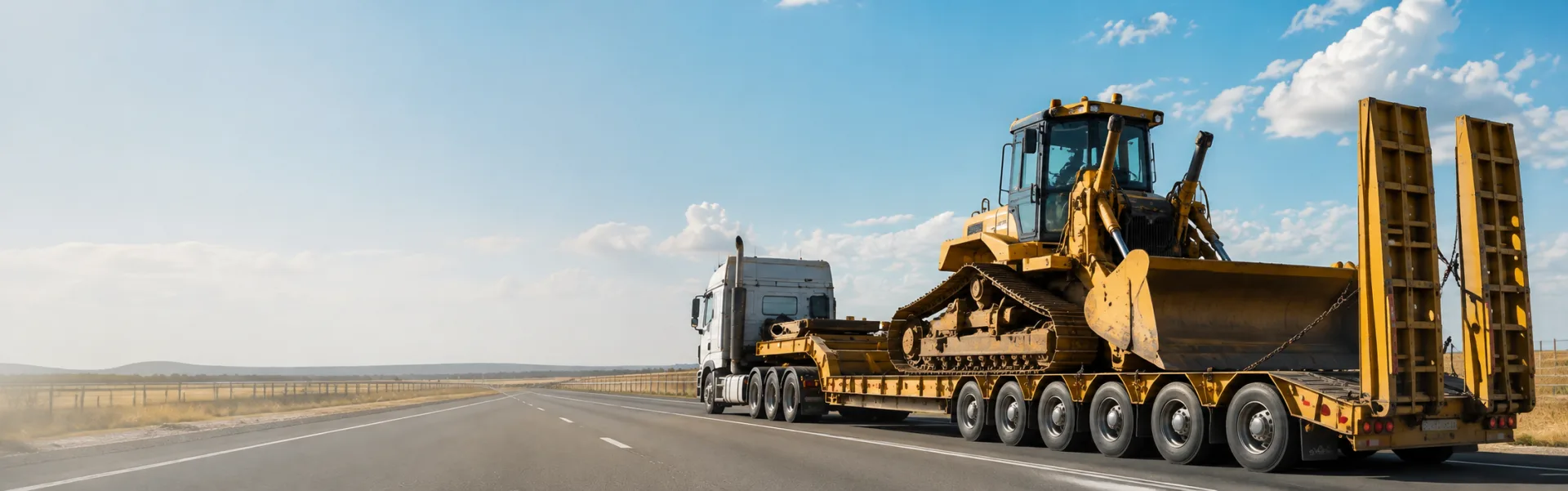
Weight, dimensions and value all sit well outside general freight territory. Machinery often needs a low loader or drop deck trailer rather than a standard curtainsider, may exceed standard mass or dimension limits requiring a permit, and typically needs specific load restraint and securing methods suited to its shape and centre of gravity, not a generic strapping approach.
Questions to Ask Before Booking Heavy Machinery Transport
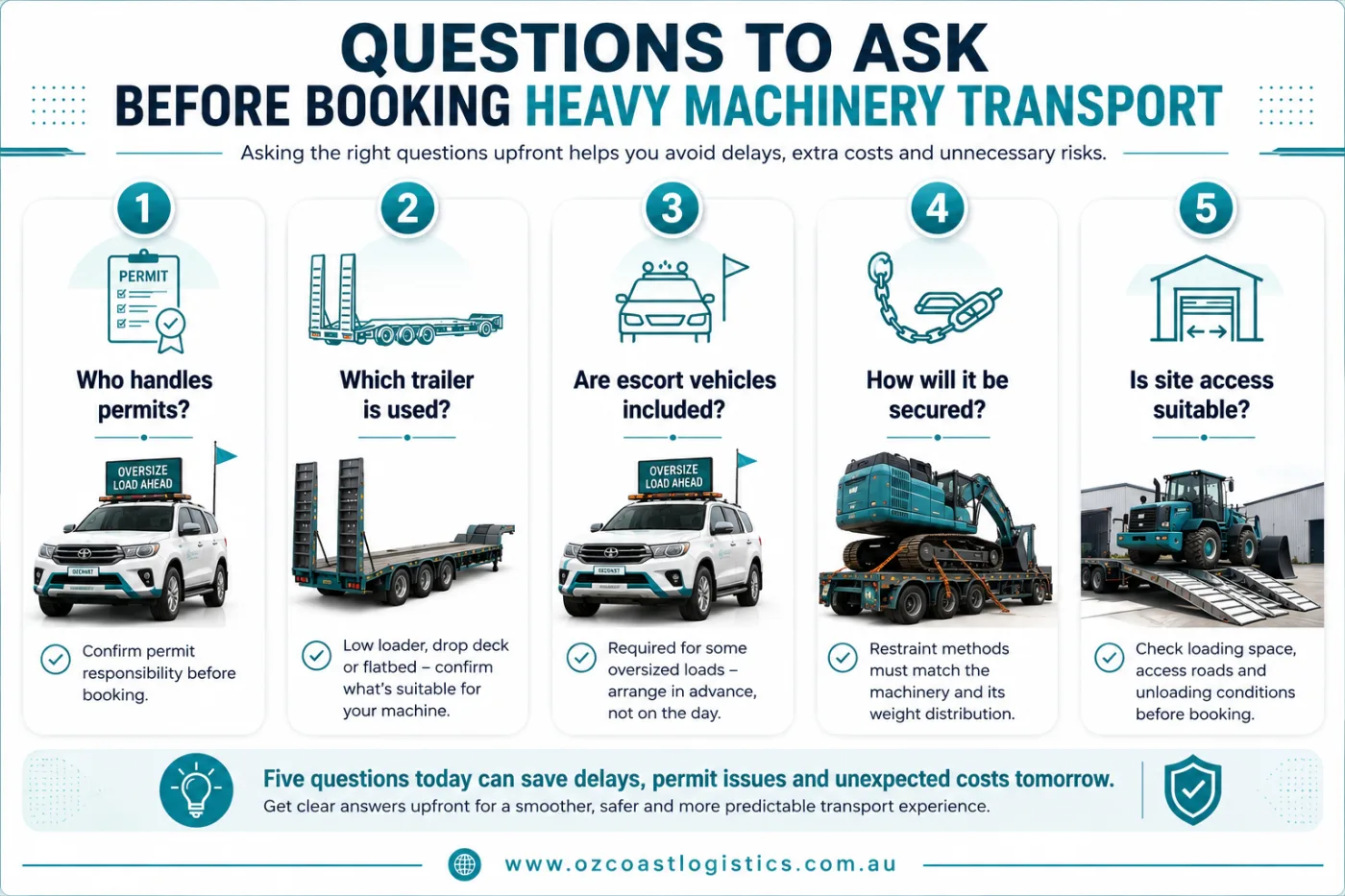
- Do they arrange permits themselves, or leave that to you? Oversized or overmass loads generally need a permit, and it's worth knowing upfront who's responsible for sorting it.
- What trailer type will actually be used? A low loader, drop deck or standard flatbed all suit different machinery, and a vague answer here is worth pushing on.
- Do they handle pilot or escort vehicles if the load needs them? Some oversized loads legally require an escort vehicle, and this needs to be arranged in advance, not on the day.
- How is the machinery secured for transport? A generic answer isn't reassuring, the method should match the specific equipment.
- What happens if the machine needs to be loaded or unloaded at a site with limited access? Site access issues are common with machinery moves and worth raising before booking, not discovering on the day.
Permits and Pilot Vehicles: What to Expect
Permits are typically required when a load exceeds standard mass or dimension limits, and requirements vary by state and by the specific load. A provider that's genuinely equipped for this work should be able to tell you early whether your machinery is likely to need one, rather than leaving it as a surprise closer to the move date. The same applies to pilot or escort vehicles, needed for some oversized loads to manage other road users safely, which is part of oversized loads planning rather than something arranged at the last minute.
How Machinery Type Affects the Transport Plan
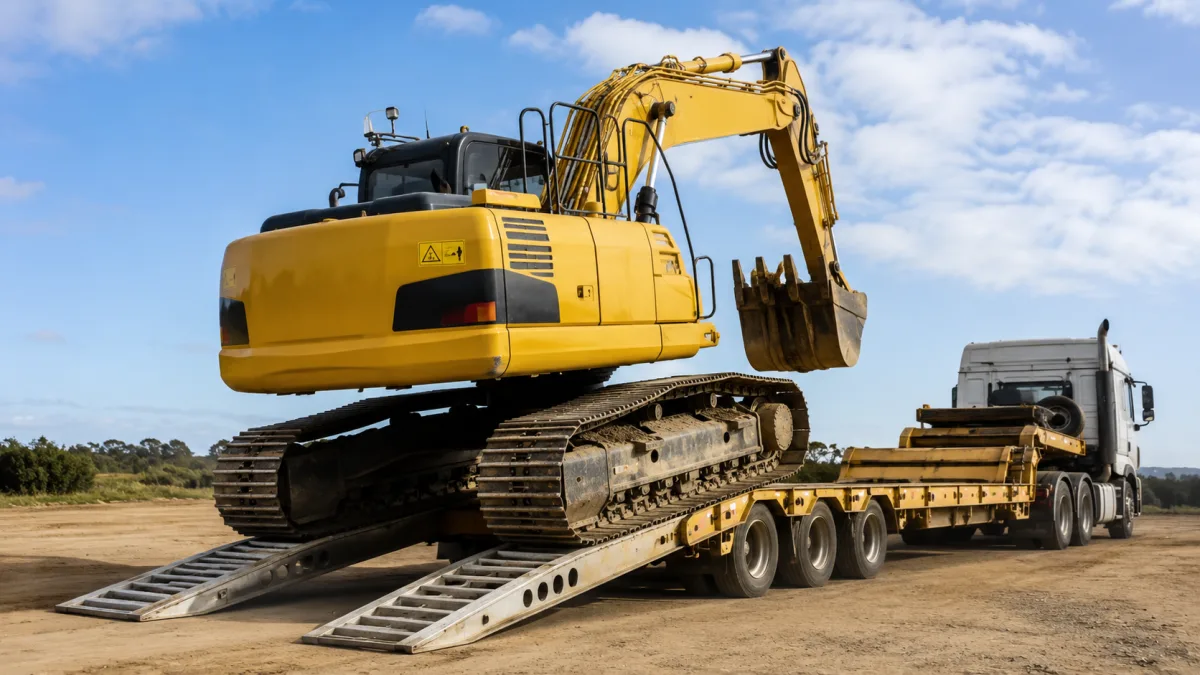
An excavator, a crane, and a piece of agricultural equipment all have different weight distributions, centres of gravity and attachment points, which means they're secured differently, not loaded the same way just because they're all "machinery." This ties into the same load restraint principles covered in our guide to how freight is actually secured on the road, restraint has to match the specific load, not follow a generic default.
Red Flags When Choosing a Heavy Machinery Transport Provider
- A quote given without asking about site access, machine dimensions, or weight
- No mention of permits at all for a load that's clearly oversized or overmass
- Vague answers about how the machine will actually be secured
- No clarity on who's liable if something goes wrong in transit
None of these are automatically disqualifying on their own, but more than one together is worth pausing on before you book.
Getting Machinery Moved With Ozcoast
We handle permits, trailer selection and pilot vehicle arrangements as part of heavy haulage and oversized load bookings, worked out at quote stage based on the actual machine, not a generic assumption. If you're not sure whether your load needs a permit or an escort vehicle, tell us the dimensions and weight and we'll confirm it before anything's booked, not after.