Harvest doesn't run on a freight company's schedule. It runs on weather, moisture content and a window that can close faster than expected, and every grower in the same region tends to need trucks in the same few weeks. That's the real challenge behind grain and hay transport, and it's a timing problem more than a pricing one.
Here's what makes this freight different, and why booking ahead matters more than shopping around once the header's already moving.
What Makes Grain and Hay Freight Different From Standard General Freight
Grain and hay are bulk, seasonal, and weather-dependent in a way most general freight isn't. A pallet of packaged goods can wait a day without consequence. A paddock of cut hay or a bin of harvested grain often can't, moisture, weather and storage capacity all put a genuine clock on when it needs to move. That urgency is concentrated into short windows, harvest season, rather than spread evenly across the year.
Why Timing Is the Real Challenge, Not Distance
The distance from farm to processor, port or storage is usually well understood and doesn't change year to year. What changes is how much freight capacity is available in the exact window it's needed, and that's where most of the actual difficulty sits. When every grower in a region is trying to move product in the same few weeks, a transport arrangement made in advance is worth more than a slightly cheaper rate found after harvest has already started.
How Far Ahead Should You Book Harvest Freight?
Well before the header starts moving, not once it has. Freight capacity during peak harvest weeks gets committed early, and a business trying to arrange transport once harvest is already underway is competing with every other grower doing the same thing at the same time. If there's any uncertainty about exact timing, an early conversation about likely capacity needs is still more useful than waiting for a firm date.
Grain and Hay: Different Freight, Different Considerations
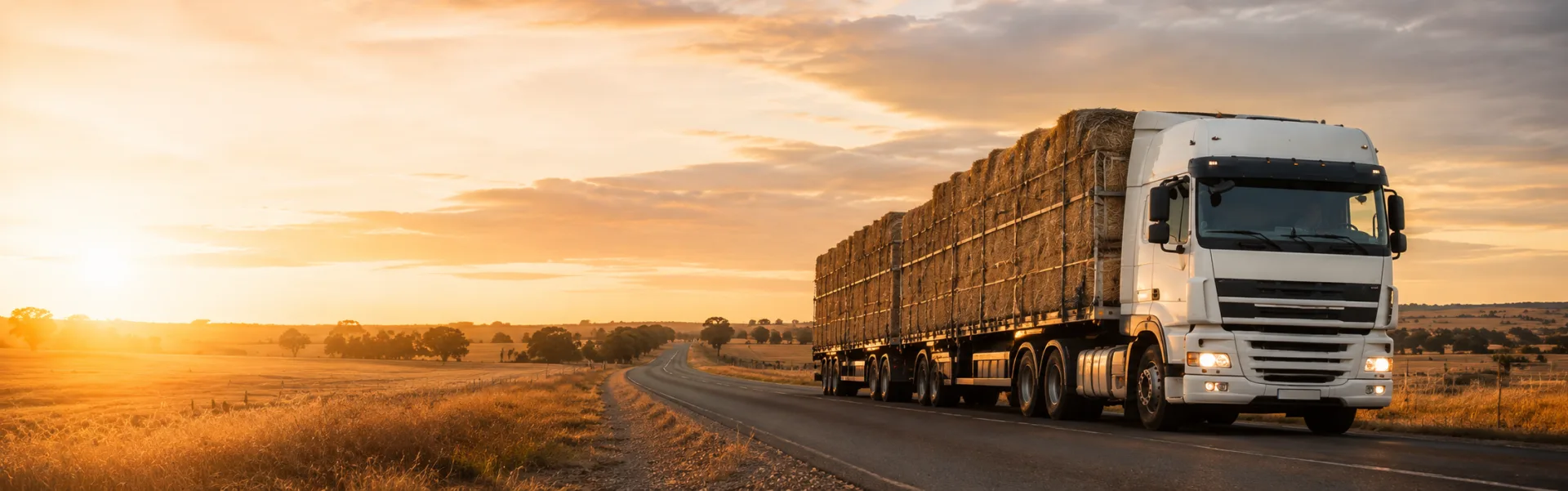
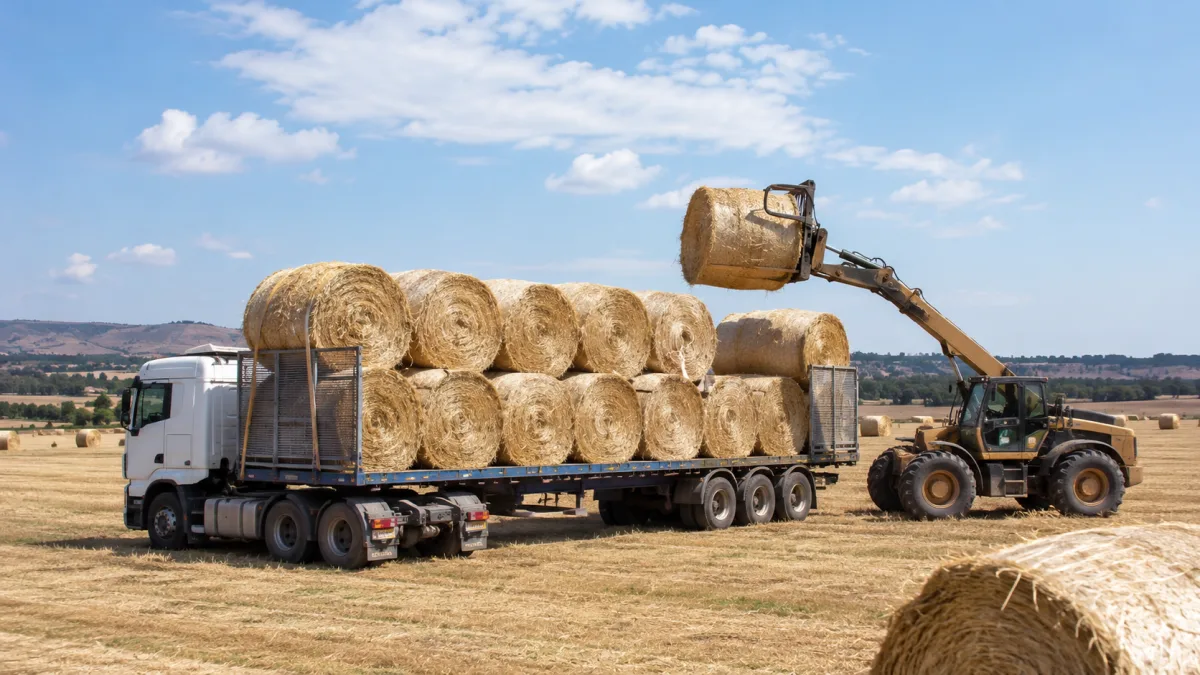
Grain and hay aren't interchangeable when it comes to how they're moved. Bagged or palletised grain travels through general freight in much the same way as other bulk goods, hay is typically baled and loaded as dimensional freight rather than bulk product. If your grain requires specialised bulk handling, silo-to-silo movement with dedicated bulk equipment, that's worth raising directly so it can be confirmed rather than assumed, since not every general freight network carries that specific equipment.
The Adelaide to Port Lincoln Corridor
Some regions have particularly strong agricultural freight flows, and our Adelaide to Port Lincoln route is one of them, a corridor that regularly carries both seafood and grain. If you're moving product along this route specifically, it's worth mentioning at booking, since established corridors are easier to plan capacity around than a one-off regional pickup.
Booking Grain and Hay Freight With Ozcoast
We arrange bagged and palletised grain and hay freight through our general freight network, and we'd rather have an early conversation about your expected harvest timing than a late one about why capacity wasn't available. If your freight needs specialised bulk grain handling, tell us upfront so we can confirm what's genuinely possible rather than assume it fits a standard general freight booking.
The single most useful thing you can do for a smoother harvest season is talk to us before the header starts moving, not after.