Freight is one of the largest controllable costs in most supply chains, yet it is often treated as a fixed line item that nobody questions. With a little structure you can usually find savings of 10 to 20 per cent without dropping your service standards. Below are ten strategies that consistently work for Australian businesses, from small online sellers to established manufacturers and distributors.
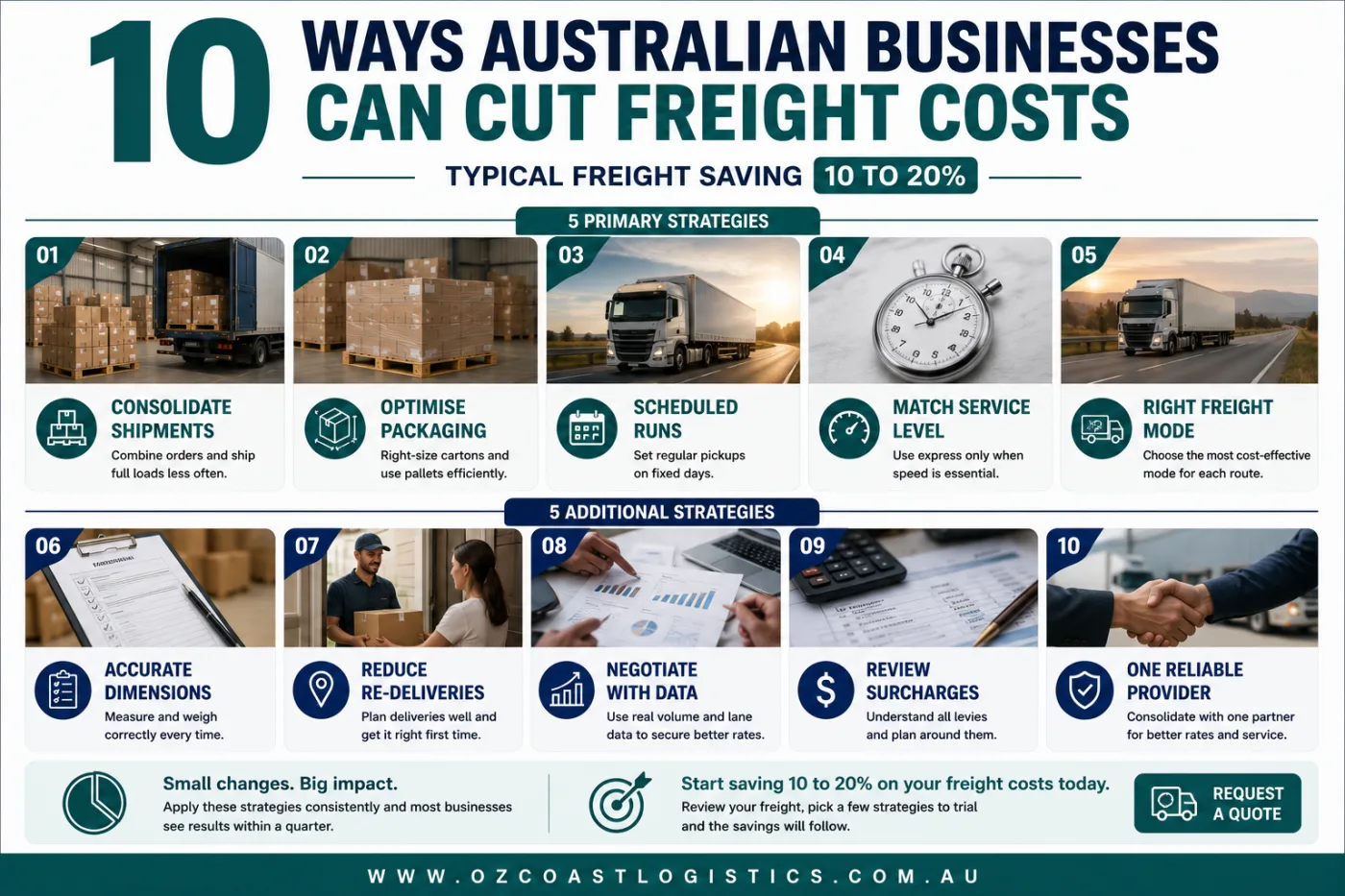
1. Consolidate shipments wherever you can
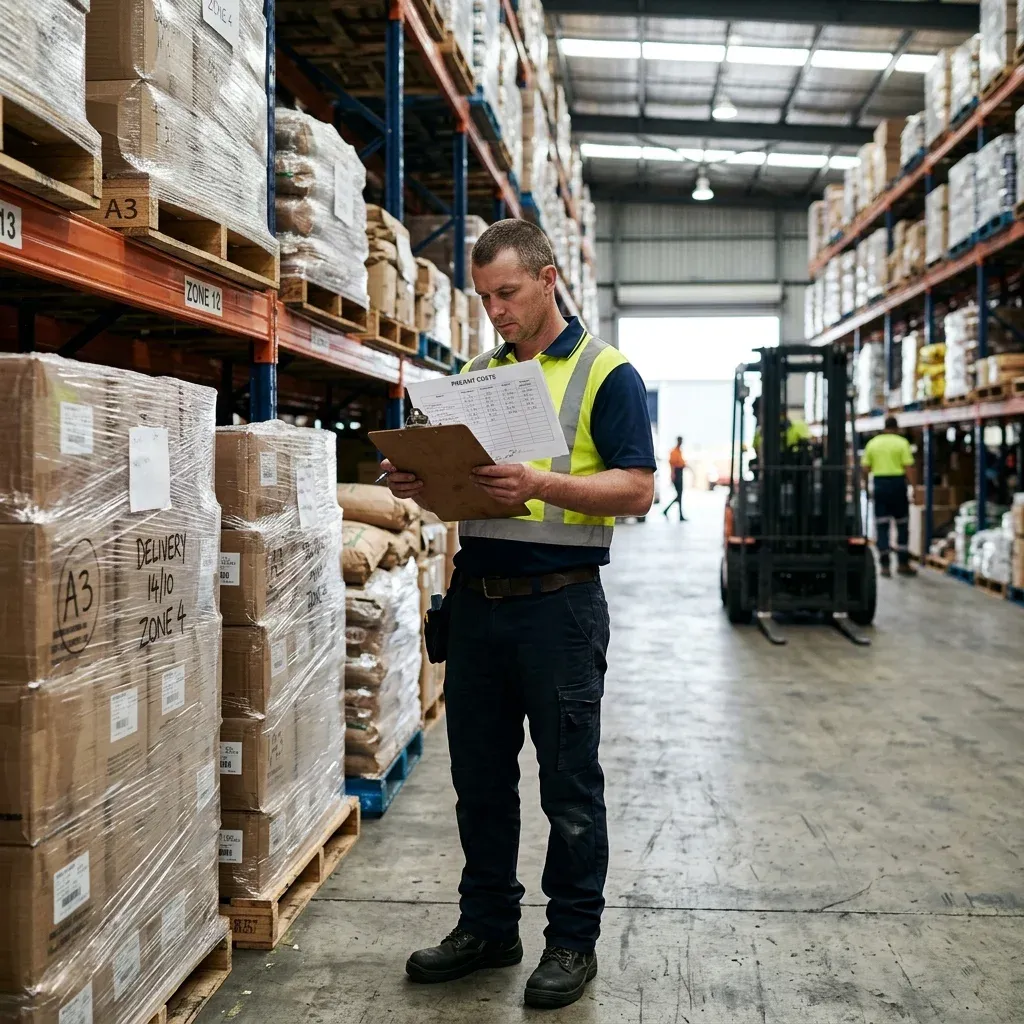
Sending three half-full pallets on three different days almost always costs more than sending one full consignment. Look at your dispatch patterns over a month and group orders heading to the same region. Even shifting from daily to two or three planned dispatch days can cut your per-unit freight cost noticeably. If you move regular volumes, combining freight into full pallet or full truckload movements gives you the best rate per kilogram.
Plan around your busiest lanes
Most businesses send the bulk of their freight along a handful of routes. Map those lanes, then build your consolidation and scheduling around them so trucks leave full and on a predictable rhythm.
2. Optimise your packaging and pallet use
Carriers charge on whichever is greater: actual weight or cubic (volumetric) weight. Oversized boxes with too much void fill quietly inflate your costs. Right-size your cartons, stack pallets squarely to the edges, and keep the load within a standard footprint. Our guide on preparing goods for pallet delivery walks through this in detail.
3. Use scheduled or dedicated runs
If you ship to the same areas regularly, a scheduled run on fixed days gives the carrier certainty and gives you a sharper price. It also removes the scramble of last-minute bookings. Talk to your provider about setting up a regular pickup that matches your order flow.
4. Match the service level to the job
Not everything needs to move on express. Reserve premium services for genuinely time-critical orders and use standard road freight for the rest. Splitting your freight by urgency rather than defaulting everything to the fastest option is one of the quickest wins available. Our general freight range lets you mix service levels under one account.
5. Choose the right freight mode
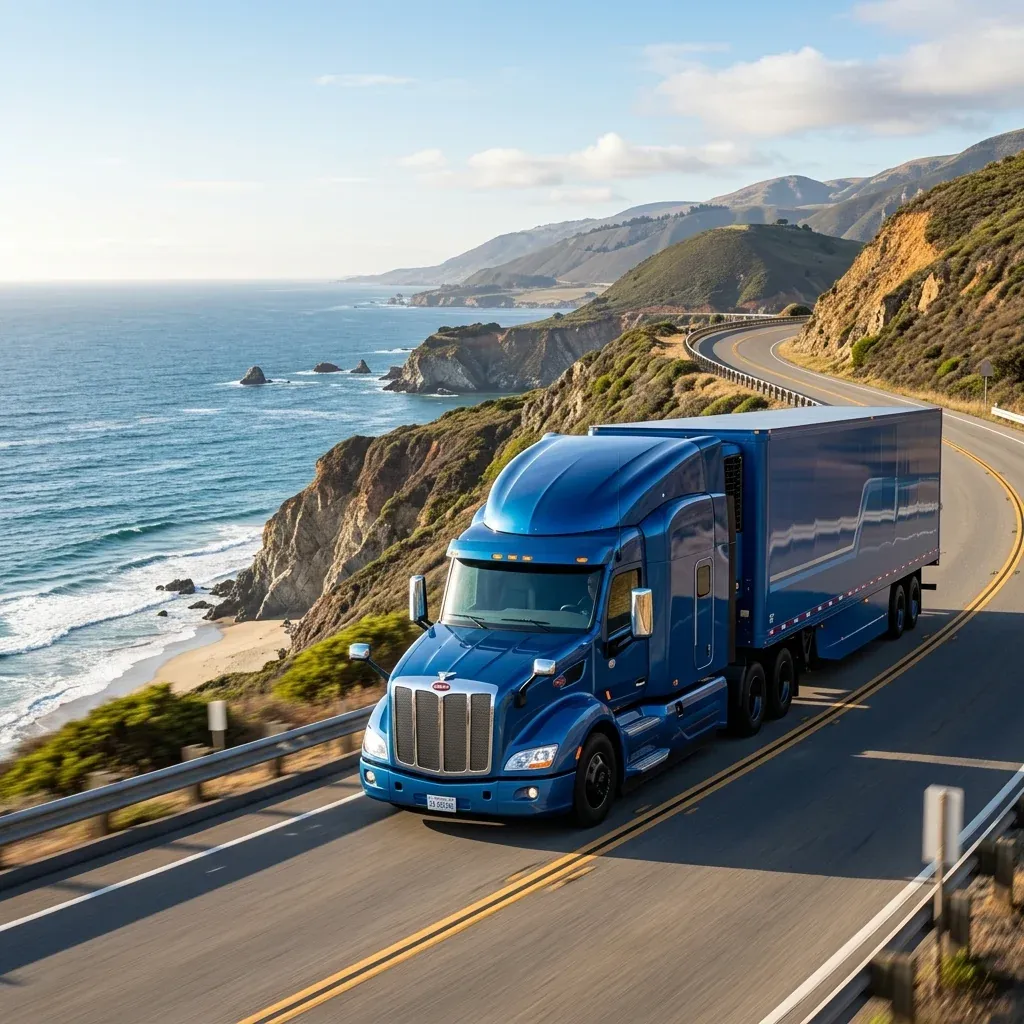
For longer distances, full pallet and full truckload road freight is usually the most economical way to move palletised goods within Australia. For interstate work, batching orders into linehaul departures rather than ad-hoc bookings keeps the rate low. See how interstate freight can be planned around regular departures.
6. Provide accurate dimensions and weights
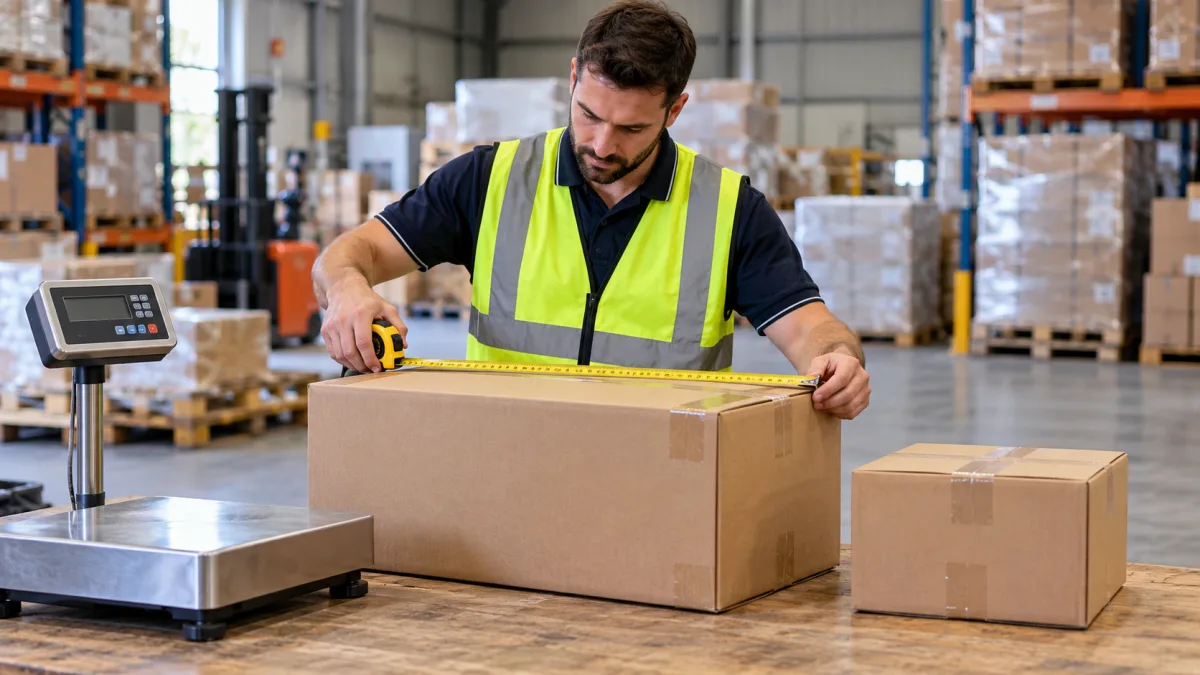
Reweigh and re-measure adjustments are a common source of unexpected charges. When the details you give at booking match the freight that turns up, your quote stays your quote. Build a quick measure-and-weigh step into your dispatch process so every consignment is described correctly the first time.
7. Reduce failed deliveries and re-deliveries
A re-delivery is essentially paying for the same leg twice. Confirm the receiver's hours, contact details and access requirements before dispatch, and flag whether a tail-lift or hand unload is needed. Getting it right on the first attempt protects both your cost and your customer relationship.
8. Negotiate on real volume data
You will get a better rate by showing a carrier your actual monthly volumes, lanes and pallet counts than by asking for a generic discount. Bring the data, commit to consistent volume, and ask for pricing that reflects it. A single provider that handles all of your freight, such as pallet delivery and general freight together, can usually price more keenly than several fragmented suppliers.
9. Review fuel levies and surcharges
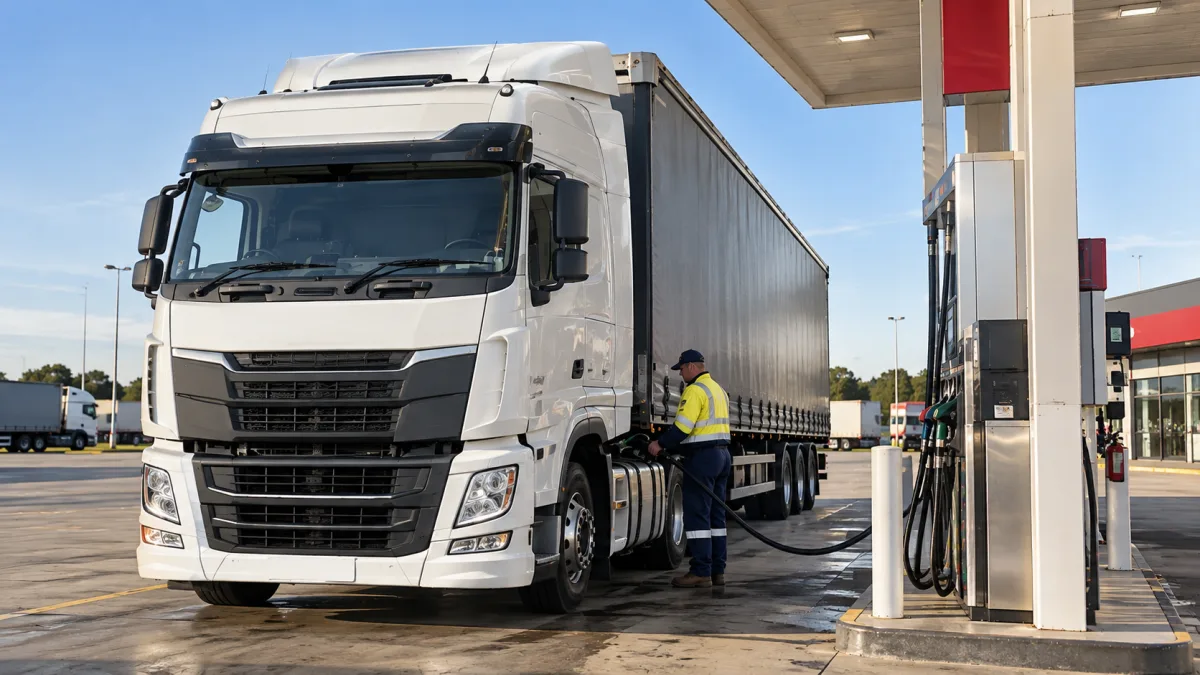
Fuel levies, tolls, after-hours fees and remote area charges all add up. Ask your provider for an itemised quote so you can see exactly what you are paying for. Once the charges are visible, you can plan around them, for example by scheduling deliveries within standard hours or grouping remote-area orders.
10. Partner with one reliable provider
Spreading freight across many carriers feels like it spreads risk, but it usually weakens your buying power and complicates your admin. Consolidating with a single provider that covers metro, regional and remote areas gives you one point of contact, consistent service and better rates. Across Ozcoast Logistics we cover more than 3,000 postcodes nationwide, which means most of your freight can sit under one agreement.
Bringing it together
None of these strategies is complicated on its own. The savings come from applying them consistently: consolidating loads, packaging efficiently, matching service to need, and working from real data with a provider who covers your routes. Start by reviewing one month of freight invoices, identify your busiest lanes, and pick two or three changes to trial. Most businesses see results within a quarter. For more practical advice, browse the rest of our freight and logistics blog.
Want a sharper freight rate?
Send us your lanes and volumes and we will put together a clear, itemised quote across our national network.
Request a Quote