Preparing Your Goods for Pallet Delivery: Packaging Tips to Prevent Damage
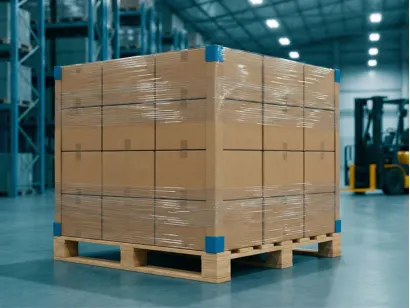
reparing pallets properly before they leave the warehouse helps reduce the risk of consignments being damaged during transport or delivery. It also helps prevent delays and limits the number of damage claims raised with carriers.
In most cases, pallet damage occurs at the point of origin, when goods are being loaded onto the pallet, rather than during transit due to mishandling. Pallet delivery has become a popular and cost-effective option for many Australian businesses using reliable pallet delivery services across Australia.
However, damage can still occur if goods are not packaged correctly for carrier handling.
This blog outlines how to prepare your goods for pallet delivery, helping reduce potential issues, protect your products from damage, and minimise financial losses.
Why Does Proper Packaging Matter in Pallet Deliveries?

When you book a pallet delivery, responsibility is shared between you and the carrier. The carrier is responsible for handling your goods with care and professionalism. However, the pallet must be presented in a condition suitable for freight transport at the time of pickup. This is especially important for businesses using general freight transport for regular pallet movements.
Good packaging provides several key benefits:
- Protects your goods: Properly secured loads are less likely to move, tip, or collapse during transit.
- Reduces costs: Damaged goods often lead to replacement expenses and dissatisfied customers.
- Prevents delays: Pallets that are not prepared correctly may be refused at pickup, causing delivery delays.
- Supports damage claims: Carriers may decline liability if packaging does not meet required standards.
During transport, your pallet may be moved by forklift, pass through multiple depots, sit alongside other freight, and travel over uneven road surfaces. Your packaging should be strong enough to withstand all of these conditions.
Things to Review Prior to Preparing a Pallet

Before you begin, review the following checklist carefully.
Pallet Condition
- Are there any cracked boards or protruding nails?
- Are all boards solid and securely fastened to the pallet?
- Can the pallet safely support the total weight of the load?
Weight, Size, and Dimensions
- Combined weight of the pallet and packaged goods
- Total height from the base to the top of the load
- Ensure nothing extends beyond the pallet edges
Packaging Materials Required
- Stretch wrap or shrink wrap
- Corner protectors for stacked cartons
- Strapping for heavy or unstable loads
- Foam inserts or padding for fragile items
Delivery Details
- Confirm pickup and delivery addresses are accurate
- Note any unusual access conditions at either location
- Record any special handling or delivery instructions
Step-by-Step Guide to Preparing Goods for Pallet Delivery

Step 1: Choose the Right Pallet
Most Australian businesses use standard 1165 mm x 1165 mm pallets. This size works with almost every forklift and freight setup across the country.
Make sure your pallet is clean, dry, free from damage, and strong enough to support the goods being placed on it.
Step 2: Stack and Distribute Weight Correctly
How you stack your goods matters. Get it wrong and items can shift, crush, or tip over during transport.
Follow these basics:
- Heavier items go on the bottom
- Lighter items go on top
- Line up boxes with the pallet edges so nothing hangs over
- Fill gaps with smaller items or padding
- Spread weight evenly across the entire pallet
Two common stacking patterns work well:
- Column stacking (boxes directly on top of each other) works best for uniform cartons
- Interlocking stacking (rotating each layer 90 degrees) provides better stability for mixed loads
Step 3: Secure the Load
Stretch wrap holds everything together and helps keep the load stable.
How to wrap properly:
- Start at the bottom and wrap around both the pallet and the goods
- Overlap each wrap by about half
- Apply at least 4 to 6 full layers for standard consignments
- Pull tighter at the top and bottom
- Wrap around the pallet base 2 to 3 times to anchor the load
If your load weighs over 500 kg, add strapping around the outside for extra security.
Step 4: Protect Fragile or Irregular Items
For fragile goods, wrap each item in bubble wrap before palletising, use corner protectors, add extra layers of stretch wrap, and place “Fragile” labels on multiple sides.
For odd-shaped items, create a flat base using plywood or cardboard and fill any gaps with padding.
For moisture-sensitive goods, use shrink wrap or suitable pallet covers.
Step 5: Label Clearly
Place labels on at least two sides of the pallet. Labels should include the delivery address, contact number, booking reference, and handling instructions such as “This Side Up” or “Fragile”.
Common Packaging Mistakes That Cause Pallet Damage

- Boxes hanging over the edge: Keep everything within the pallet footprint to reduce damage during handling
- Not enough wrapping: Two or three wraps are not enough. Use at least 4 to 6 tight layers
- Heavy boxes on top of light ones: Always stack from heavy to light, bottom to top
- Making the pallet too tall: Most carriers accept pallets up to 1.8 metres. Exceeding this may lead to extra charges or refusal
- No labels or unclear labels: Labels must be clear and easy to see
- Using damaged pallets: Always inspect pallets before use. Weak pallets often lead to damaged goods
- Skipping corner protection: Corner guards are inexpensive and help prevent carton damage
What Are the Pallet Delivery Guidelines in Australia?
Each freight provider has its own set of guidelines. These requirements are particularly important for interstate pallet delivery, where pallets move through multiple depots. However, most providers follow very similar rules.
Commonly used guidelines include:
- Most freight providers set a weight limit per pallet, typically between 500 kg and 1,000 kg
- A maximum pallet height of 1.8 metres
- Standard pallet dimensions of 1165 mm x 1165 mm
- Freight must be securely wrapped to prevent movement while the pallet is in transit
- Correct and complete details must be entered into the freight provider’s system to ensure accurate pricing and the correct vehicle allocation
It is also important to inform the freight provider of any access restrictions, such as the absence of forklift access. Providing accurate information allows the provider to allocate the appropriate vehicle for collection and delivery.
You should always confirm each freight provider’s rules and requirements before making a booking.
Do I Need Insurance for My Pallet Delivery?
Many freight providers include a basic level of liability cover, but additional freight insurance may be worth considering for high-value or fragile goods. While this may be sufficient for some goods, it is generally not enough to fully cover items that are high in value or fragile.
If an incident occurs during transport, one of the first factors assessed by the freight provider will be how well the goods were packaged. If packaging is considered inadequate, claims may be rejected or payouts significantly reduced.
If you are moving high-value or breakable goods, you may wish to consider additional insurance to ensure adequate protection in the event of damage or loss.
Ways to Minimise Damage and Additional Costs

1. Do not rush the process
Last-minute packing often leads to mistakes. Allow enough time to prepare your goods properly.
2. Train your team
Ensure all staff follow the same packing procedures. Consistency helps reduce damage.
3. Keep packaging supplies on hand
Stock up on stretch wrap, corner protectors, and padding materials to make preparation quicker and easier.
4. Verify dimensions and weight before booking
Entering accurate measurements and weights helps ensure the correct vehicle is allocated and avoids unexpected charges.
5. Ask questions when unsure
Freight providers expect questions. Clarifying details upfront helps prevent misunderstandings and disputes.
6. Take photos before collection
Taking clear photos of your goods before collection provides helpful documentation if an issue arises later.
Ozcoast Logistics’ Commitment to Safe Pallet Delivery
At Ozcoast Logistics, we focus on providing a clear and straightforward service to our customers. As a relatively new business, we are building our reputation through responsiveness, transparency, and a customer-first approach.
We assist clients with pallet delivery preparation, help coordinate reliable freight providers across Australia, and keep customers informed about what to expect throughout the process. We place strong importance on correct pallet preparation, as it plays a key role in ensuring deliveries are completed smoothly and without issues.
Do You Need Assistance with Domestic Pallet Delivery in Australia?
Ozcoast Logistics provides domestic pallet delivery services across Australia. Whether you have a single pallet or require regular pallet movements, our team is happy to assist with simple, direct, and prompt service.
If you have questions about preparing your goods or would like to arrange a pallet delivery, you can contact Ozcoast Logistics today and we will help determine what you need.
For further assistance with your domestic pallet delivery requirements, please feel free to contact Ozcoast Logistics.

Conclusion
Preparing your pallet correctly is not difficult, but it is important. Using a good-quality pallet, placing heavier items at the bottom, securing the load with 4 to 6 layers of stretch wrap, adding corner protectors, and clearly labelling the pallet can help prevent most damage during transport.
By taking the time to prepare your pallet properly, you can reduce issues, minimise financial loss, and improve overall logistics efficiency, which also supports efforts to reduce freight costs.
If you are unsure about any aspect of pallet preparation, it is always best to clarify requirements with your carrier before collection.
Yes. To help ensure your goods arrive safely, use a solid pallet (not a hollow one), place the heaviest items at the bottom, apply 4 to 6 layers of stretch wrap around the entire pallet (including the pallet base), use corner protectors where required, ensure all items remain within the pallet edges, and label the pallet clearly.
The most used pallet size in Australia is 1165 mm x 1165 mm, which is compatible with most Australian freight networks.
Yes, it is likely that pallets may be stacked during transport. To allow for safe stacking, place heavier items at the bottom and ensure the pallet is strong enough to support additional weight if required.
Liability depends on the cause of the damage. The carrier may be liable if damage results from poor handling. However, if the packaging is considered inadequate, liability may fall back on the sender.
Most carriers accept pallets up to 1.8 metres in height and 500 to 1,000 kg in weight. Limits can vary, so it is important to confirm these details before booking.
In most cases, yes. Properly applied stretch wrap combined with 4 to 6 layers is usually sufficient. Heavier or fragile pallets may require additional protection such as strapping or individual padding.
At a minimum, pallet labels should include:
• Delivery address
• Contact phone number
• Booking reference
• Handling instructions such as “Fragile”, “Handle with Care”, or “This Side Up”
This information should appear clearly on at least two sides of the pallet.
Freight Transport by Road in Australia: A Practical Guide for Businesses
Freight transport by road plays a central role in how goods move across Australia. From metropolitan deliveries to long-distance interstate...
Read More
How to Reduce Freight Costs: 10 Proven Strategies for Australian Businesses
The Real Talk About Freight Costs in AustraliaLet's be honest: freight costs are killing your margins right now.Fuel prices are...
Read More